
Which SwimSafer Stage Should a Primary School Child Reach?
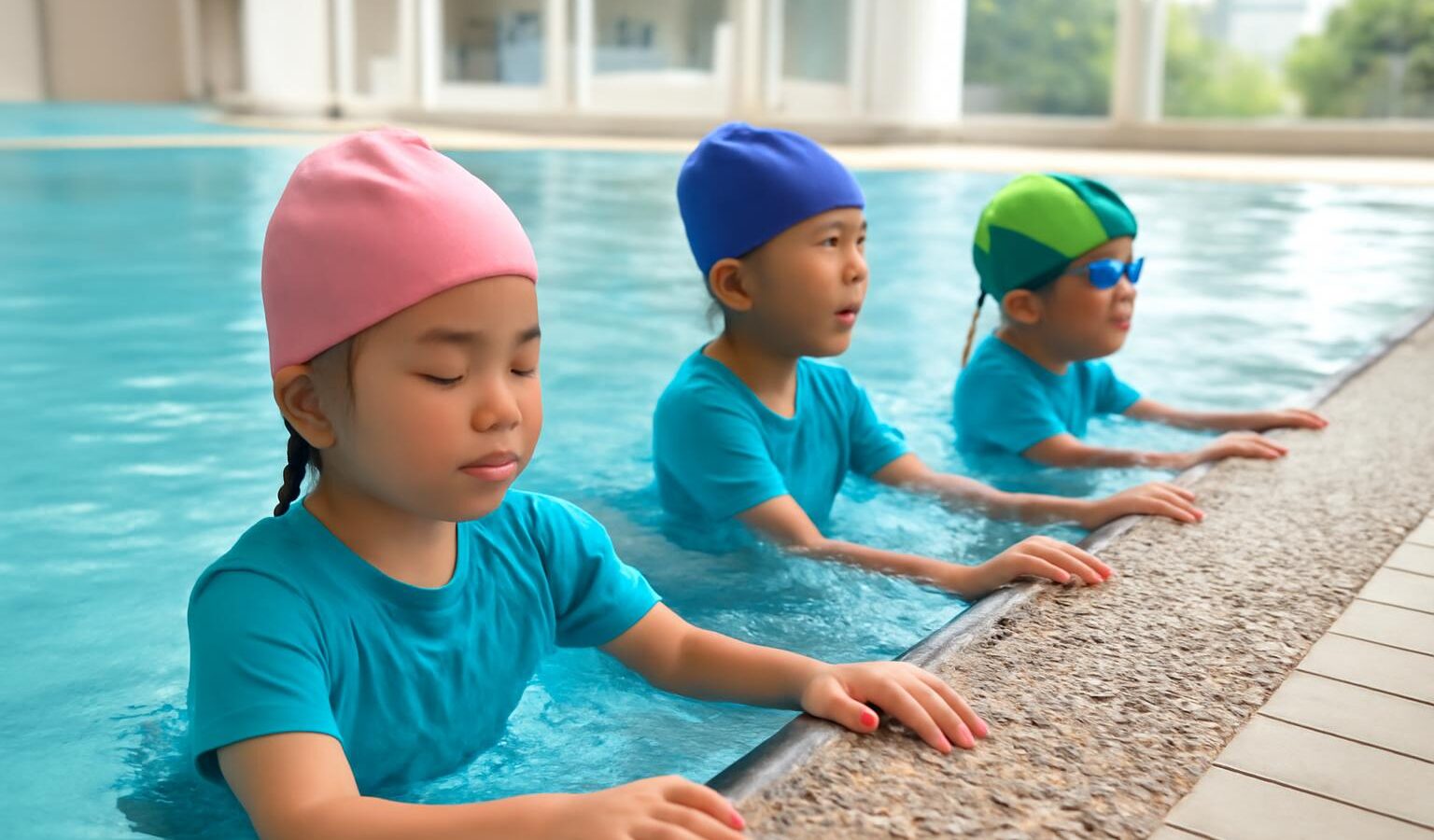
Many Singapore parents ask the same sensible question: which SwimSafer stage should a primary school child realistically reach? While there is no single rule, this guide explains how the stages map to a child’s development and what makes a meaningful water safety goal during the primary years.
SwimSafer is Singapore’s national water safety programme, structured as a progression of stages that build from basic confidence in shallow water through to stronger swimming and survival skills. As an independent swim school that coaches and prepares students for the SwimSafer syllabus — we are not the official programme — our aim here is to give you a realistic, supportive framework rather than rigid targets. Every child develops at their own pace, and the official stage criteria can change, so always confirm current requirements with the official SwimSafer syllabus or Singapore Aquatics.
How the SwimSafer stages are structured
The programme runs as a ladder of stages, each building on the last. In broad terms:
- The early stages focus on water confidence, breath control, floating, gliding and short propulsion in shallow water.
- The middle stages develop recognisable strokes, deeper-water competence, and survival skills such as treading water and self-rescue.
- The later stages and awards build endurance, refine multiple strokes, and extend rescue and survival skills.
Because the exact distances, times and skills for each stage are set by the programme and can be updated, treat any figures you read as approximate and verify them against the official syllabus before counting on them.
What is realistic during the primary years?
Primary school in Singapore spans roughly ages seven to twelve, which is a wide developmental range. A child’s progress depends far more on how regularly they swim, the quality of their coaching, and their individual confidence than on their exact age.
Lower primary (around Primary 1 to 3)
For younger primary children, the priority is genuine water confidence and the foundations of safe swimming — being comfortable submerging, floating, gliding and moving through the water without panic. Reaching the early stages of the programme during these years is a healthy, realistic goal, and the focus should be on safety and enjoyment rather than rushing up the ladder.
Upper primary (around Primary 4 to 6)
By the upper primary years, many children who swim regularly progress into the middle stages, developing proper strokes alongside essential survival skills such as treading water and self-rescue. A sensible aim for the end of primary school is for a child to be a safe, competent swimmer who could look after themselves in difficulty — which matters far more than any particular certificate.
Why safety matters more than the stage number
It is tempting to fixate on reaching a specific stage by a certain age, but the real goal of SwimSafer is water safety, not collecting awards. A child who can confidently float, tread water, swim a sustained distance, and get themselves to safety is well served — regardless of exactly which stage that maps to.
Singapore is surrounded by water, with pools, beaches and reservoirs all part of family life, so practical competence is what truly protects a child. A coach focuses on whether a child can genuinely keep themselves safe, using the stages as a helpful structure rather than a finish line to be raced towards.
What affects how quickly a child progresses
Several factors shape how fast a primary school child moves through the stages:
- Frequency: a child who swims weekly will naturally progress faster than one who swims occasionally.
- Confidence: a nervous child may take longer in the early stages, and that is perfectly normal — rushing tends to backfire.
- Coaching quality: attentive, well-paced teaching makes a substantial difference to progress.
- Physical development: coordination, strength and stamina grow with age, helping the later skills click into place.
- Starting age: a child who began swimming earlier often reaches higher stages sooner, though late starters frequently catch up quickly.
How to support your child’s progress
Whatever stage your child is working towards, you can help them get there steadily and happily. Keep lessons regular so skills build rather than fade between sessions. Celebrate effort and small milestones rather than only the stage pass. Practise informally through fun pool time, and avoid comparing your child to classmates, since each one develops on their own timeline.
Above all, choose coaching that matches your child’s temperament. Coach U.K. has coached primary school children since 1999, including nervous beginners and children with additional needs, and a patient, child-led approach helps each swimmer reach a genuinely safe standard at a pace that suits them. Keep all practice supervised, and let confidence — not a calendar — guide how quickly your child advances.
Frequently asked questions
Which SwimSafer stage should my primary school child reach?
There is no single rule, but a realistic aim is for younger primary children to reach the early stages and build solid water confidence, while upper primary children who swim regularly often progress into the middle stages with proper strokes and survival skills. The official criteria can change, so confirm current details with the official syllabus or Singapore Aquatics.
Is there a required SwimSafer stage for primary school in Singapore?
Requirements can vary and may be set by individual schools or the programme, and they can change over time. Rather than rely on a fixed number, check directly with your child’s school and the official SwimSafer programme for the current expectations.
My child is behind their classmates — should I worry?
Not at all. Children develop water skills at very different rates, and confidence, frequency of swimming and coaching all matter more than age. A nervous swimmer who progresses slowly but safely is doing exactly what they should; rushing tends to set children back.
What matters more, the stage or actual water safety?
Water safety matters most. The real goal of SwimSafer is a child who can float, tread water, swim a sustained distance and reach safety in difficulty. The stages are a helpful structure, but genuine competence in the water is what protects your child.
How can I help my child progress through the stages?
Keep lessons regular so skills build steadily, celebrate effort and small milestones, add fun informal pool time, and avoid comparisons with other children. Choosing patient coaching that suits your child’s temperament makes a big difference.
How long does each SwimSafer stage take?
It varies widely depending on how often a child swims, their confidence and their coaching, so there is no fixed timeframe. A regular swimmer with good coaching typically moves through the early stages faster than an occasional one, but steady, safe progress matters more than speed.
Set the right SwimSafer goal for your child
If you would like an honest assessment of where your primary school child stands and a sensible plan for their next stage, message Coach U.K. on WhatsApp at +65 9021 1254. With AUSTSWIM accreditation and coaching since 1999, he will set a realistic, safety-first path. Explore the SwimSafer stages explained, our kids swimming lessons, and indicative rates on the pricing page.