
Water Safety for Babies & Toddlers
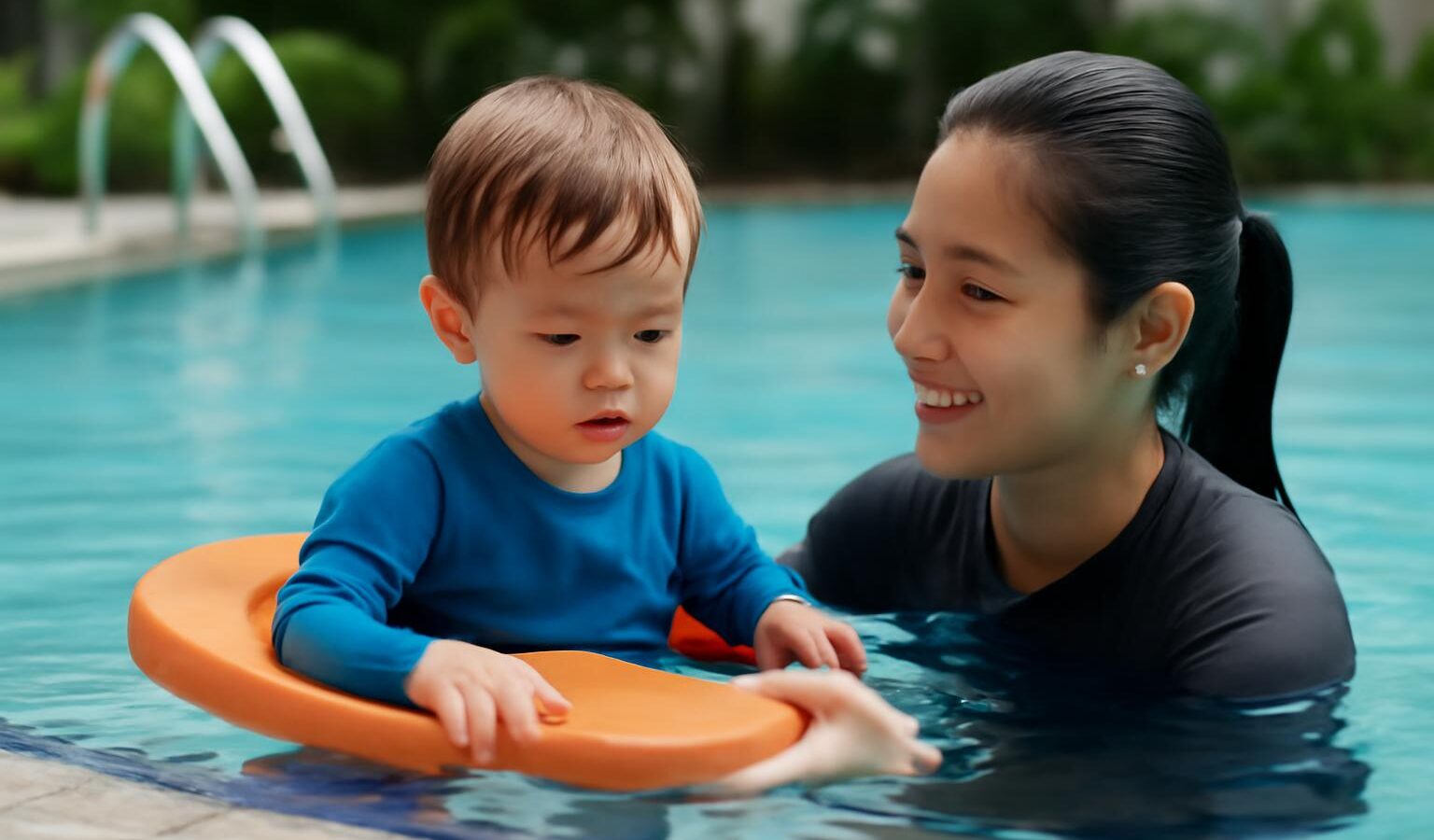
Water safety for toddlers is something every Singapore parent should take seriously, because little ones are naturally drawn to water yet have no sense of its danger. The good news is that a few consistent habits — close supervision, barriers and early water familiarity — dramatically reduce the risks for babies and toddlers.
Toddlers are curious, fast and top-heavy. They can topple into water headfirst and struggle to right themselves, and they can drown silently in surprisingly little water — a bath, a pail, a paddling pool or a decorative pond. Unlike older children, they cannot call for help or pull themselves out. This is why water safety for the youngest age group relies far less on the child’s own ability and far more on the adults and the environment around them. At our independent swim school, Coach U.K. works with babies, infants and toddlers to build gentle water familiarity, and the guidance below complements those early lessons with the everyday safety habits that matter most.
Supervision is everything for this age group
For babies and toddlers, nothing replaces an attentive adult within arm’s reach. The phrase professionals use is “touch supervision” — close enough to reach out and grab the child instantly.
- Stay within arm’s reach whenever a toddler is in or near water, including the bath.
- Avoid distractions. Phones, books and conversations are the most common reasons supervision lapses. Designate one adult as the “water watcher” who does nothing else.
- Never rely on an older sibling to watch a toddler in the water — that responsibility belongs to an adult.
- Watch during transitions. Most incidents happen during small gaps — answering the door, fetching a towel — so take the child with you or have another adult take over.
Barriers: the second line of defence
Supervision can lapse for a moment, so physical barriers provide crucial back-up. In Singapore, where many families live near condo pools, barriers are especially important.
- Pool gates and fences should be self-closing, self-latching and kept shut — never propped open.
- At home, keep bathroom doors closed, use toilet-lid locks if needed, and never leave buckets or pails of water standing where a toddler can reach them.
- Empty paddling pools and water-play tubs immediately after use and store them upturned so they cannot collect rainwater.
- Decorative water features and ponds in condos and gardens deserve the same caution as a pool.
Bath-time and home water safety
It is easy to focus on swimming pools and forget that the home holds the most frequent water risks for toddlers. A baby can drown in just a few centimetres of water.
- Never leave a baby or toddler alone in the bath, even for a few seconds. If you must leave, take the child with you.
- Drain the bath immediately when bath time ends.
- Keep nappy pails and mop buckets emptied and stored out of reach.
- Bath seats and rings are not safety devices — they can tip over and give a false sense of security.
Building early water confidence safely
Early, positive experiences in the water help toddlers become comfortable rather than fearful, and they introduce gentle skills like blowing bubbles, kicking and turning back to a parent. These experiences are about familiarity and enjoyment, not “drown-proofing” — no young child can ever be made completely safe in water, and skills must never replace supervision.
In our baby and toddler sessions, Coach U.K. guides parents through holds, songs and simple games that build trust in the water. Children learn to be calm with water on their face, to hold the wall, and to turn back towards a carer — small skills that lay a foundation for swimming later while keeping the experience joyful and pressure-free.
A note on floatation aids
Armbands, rings and inflatable seats can help a toddler enjoy the water but are toys, not safety equipment. They can deflate, slip off or tip a child face-down, and they can make a toddler over-confident. A properly fitted life jacket is the right choice for genuine flotation around open water such as boats and reservoirs, but even then an adult must stay close.
When you are out and about
Singapore offers wonderful family water spots — beaches, water-play parks and reservoirs — and each needs a moment’s thought for toddlers.
- At water-play parks, floors are slippery and water sprays can startle little ones; keep a hand ready and choose calmer zones for toddlers.
- At the beach, stay in the shallows, hold your toddler in waves, and remember soft sand and currents can unbalance them quickly.
- Near reservoirs and canals, keep toddlers well back from edges, which can be steep and slippery.
An important note on official guidance
This article offers general parenting and water-safety education. For first-aid and infant CPR skills, we strongly encourage every parent to complete an accredited course, as practical, hands-on training is irreplaceable in an emergency.
Frequently asked questions
At what age can babies start water familiarisation?
Many families begin gentle, parent-supported water sessions in the first year, once a baby is settled and healthy. The focus is comfort, bonding and familiarity rather than swimming. We are happy to advise on the right starting point for your child.
How much water is dangerous for a toddler?
Very little — a few centimetres is enough, which is why baths, pails and paddling pools deserve the same care as a pool. Always supervise closely and empty containers of water after use.
Do armbands and floats keep my toddler safe?
No. Armbands, rings and inflatable seats are toys, not safety devices. They can slip, deflate or tip a child face-down. Only a properly fitted life jacket offers genuine flotation, and an adult must still stay within reach.
Can toddlers be “drown-proofed” through lessons?
No child can be made completely safe in water. Early lessons build comfort and useful skills, but they never replace constant supervision and barriers. Think of lessons as one layer of protection among several.
What is the most common place toddlers have water accidents?
The home — particularly the bathtub — is where the most frequent toddler water incidents happen, followed by pools and water features. Close supervision and emptying water containers are the key defences.
Should I take an infant CPR course?
Yes. We strongly recommend every parent and carer complete an accredited infant and child CPR and first-aid course. Practical training prepares you to act calmly and correctly in an emergency.
Start your little one’s water journey with Coach U.K.
Gentle, positive early water experiences build a foundation of confidence and safety that lasts for life. To arrange independent baby, toddler or small-group sessions, WhatsApp Coach U.K. on +65 9021 1254. Coach U.K. is an AUSTSWIM-accredited teacher and certified Singapore Armed Forces life-saver who has specialised in babies, infants and toddlers since 1999. Discover our baby and toddler swimming lessons, our kids swimming lessons, and the water survival and life-saving skills we build over time. For indicative rates by class size, see our pricing page and message us to confirm current details.