
SwimSafer Theory Test: A Practice Guide for Parents
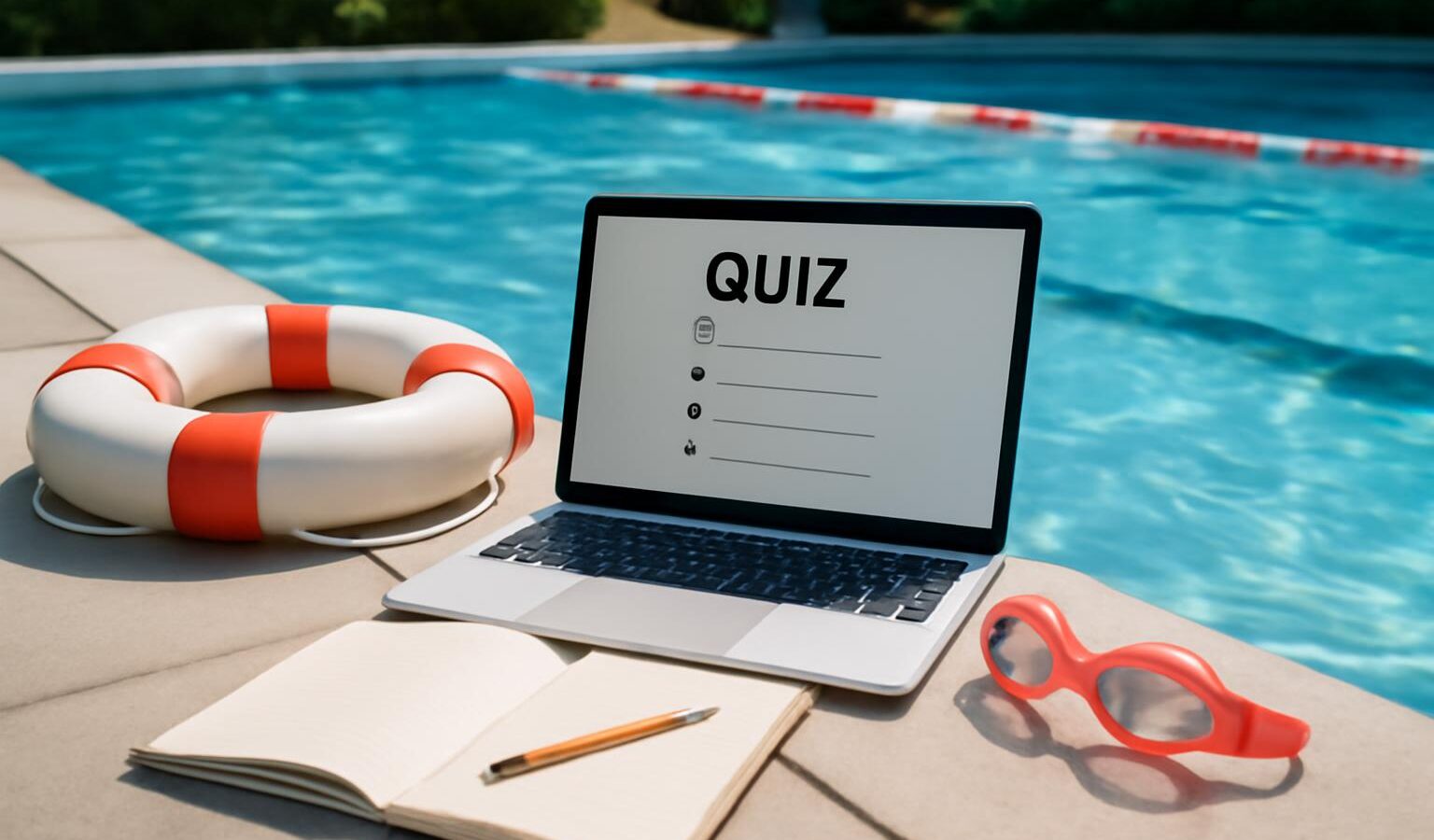
The SwimSafer theory test checks that a young swimmer truly understands water safety — not just how to swim, but how to stay safe in, on and around water. This parent-friendly guide explains what the theory component is about and how to help your child revise without simply memorising answers.
At SwimSafer (swimsafer.sg) we are an independent private swim school that coaches and prepares students for the national SwimSafer syllabus. We are not the official programme and are not affiliated with SportSG, Singapore Aquatics or the National Water Safety Council — but as full-time coaches we work with the theory side every week, and parents often ask us how to help their child prepare for it. Here is the practical guidance we share.
What is the SwimSafer theory component?
SwimSafer is built around practical swimming skills, but water-safety knowledge runs through every stage. As learners progress, they are expected to recognise hazards, understand basic rescue principles and make safe decisions. The theory or knowledge element is woven into this — it is about understanding, not memorising trivia.
Rather than a single high-stakes exam, water-safety knowledge is assessed alongside the practical skills appropriate to each stage. The exact format, weighting and any written elements can change over time and may vary by provider, so we always tell parents to confirm the current details with the official SwimSafer syllabus or Singapore Aquatics before test day. Treat everything below as approximate guidance to revise the right topics — not a script of test answers.
Topics the theory side typically covers
Across the SwimSafer stages, the water-safety knowledge a child is expected to grasp generally grows in this kind of progression:
- Personal safety: entering and exiting water safely, recognising deep versus shallow areas, and the importance of swimming where it is supervised.
- Recognising hazards: understanding currents, slippery surfaces, sudden depth changes, and why open water (sea, reservoirs, canals) behaves very differently from a pool.
- Rules around water: why we never run on pool decks, never swim alone, and always follow lifeguard instructions.
- Helping others safely: the principle of “reach or throw, don’t go” — assisting without putting yourself at risk.
- Survival concepts: floating to conserve energy, calling for help, and staying calm if you get tired.
- Weather and environment: recognising when conditions are unsafe and getting out of the water.
As you can see, none of this is about tricky wording — it is genuinely useful knowledge that keeps children safer for life.
How to help your child revise
Talk it through, don’t drill it
Children remember safety concepts best when they understand the “why”. Instead of quizzing your child on definitions, ask open questions: “What would you do if you saw a friend struggling in the water?” or “Why do we walk, not run, near the pool?” When they explain it in their own words, the knowledge sticks.
Link theory to real moments
Every visit to a pool, beach or reservoir is a chance to point things out — the lifeguard tower, the depth markings, the no-diving signs, the flags at the beach. Connecting the ideas to real surroundings turns abstract rules into common sense.
Use stories and scenarios
Young learners respond well to simple “what if” stories. Walk through a scenario together and let your child decide the safe choice. This builds judgement, which is exactly what the theory side is trying to develop.
Keep sessions short and positive
A few minutes of relaxed chat beats a long revision session. Praise effort, keep it light, and reassure your child that the knowledge test is about being safe, not about catching them out.
How coaching supports theory naturally
In our lessons, water-safety knowledge is not bolted on at the end — it is part of how Coach U.K. teaches every skill. When a child learns to float, we explain why floating conserves energy. When they practise entering the water, we explain why we check depth first. By the time the theory element comes around, much of it already feels familiar.
Coach Umesh “U.K.” Singh is an AUSTSWIM-accredited swim teacher, a certified Singapore Armed Forces life-saver and an open-water swim trainer who has been coaching since 1999 — over 25 years. That life-saving background means safety thinking is built into our teaching from the very first lesson, for nervous beginners and confident swimmers alike.
Common parent worries
“My child is a strong swimmer but freezes on questions”
This is common and very fixable. Confident swimmers sometimes haven’t put the safety ideas into words. A little conversational practice at home usually closes the gap quickly.
“English isn’t my child’s strongest subject”
The water-safety concepts matter more than perfect phrasing. Assessors are looking for understanding. Practising in whatever language helps your child grasp the idea, then linking it to the simple English terms, works well.
Frequently asked questions
Is there a separate written exam for SwimSafer?
Water-safety knowledge is generally assessed alongside the practical skills at each stage rather than as one big written paper, but formats can differ and change over time. Confirm the current arrangement with the official SwimSafer syllabus or Singapore Aquatics.
Can you give me the theory test answers to practise?
No — and we would not, because memorising answers defeats the purpose. The goal is genuine understanding of water safety. We focus on the right topics and help children think through scenarios so the knowledge is real and lasting.
At what stage does theory matter most?
Water-safety knowledge builds across all SwimSafer stages and deepens as children progress. It is best to weave it in from the start rather than cram before a test.
How long does revision take?
For most children, short, regular conversations over a few weeks are far more effective than a single long session. Little and often wins.
Does the theory content ever change?
Syllabus details can be updated over time, so always treat figures and formats as approximate and confirm current requirements with the official SwimSafer syllabus or Singapore Aquatics.
Do you cover theory in your lessons?
Yes. Water-safety knowledge is built into every session, so your child absorbs it naturally alongside their stroke and survival skills.
Get personalised help preparing for SwimSafer
Want your child to feel confident in both the water and the water-safety knowledge behind it? WhatsApp Coach U.K. on +65 9021 1254 for a friendly chat about your child’s stage and goals. You can read more about our approach on our SwimSafer stages guide, explore kids swimming lessons, or see how we help nervous beginners build confidence step by step.