
SwimSafer Stage 1, 2 & 3: Skills & Requirements
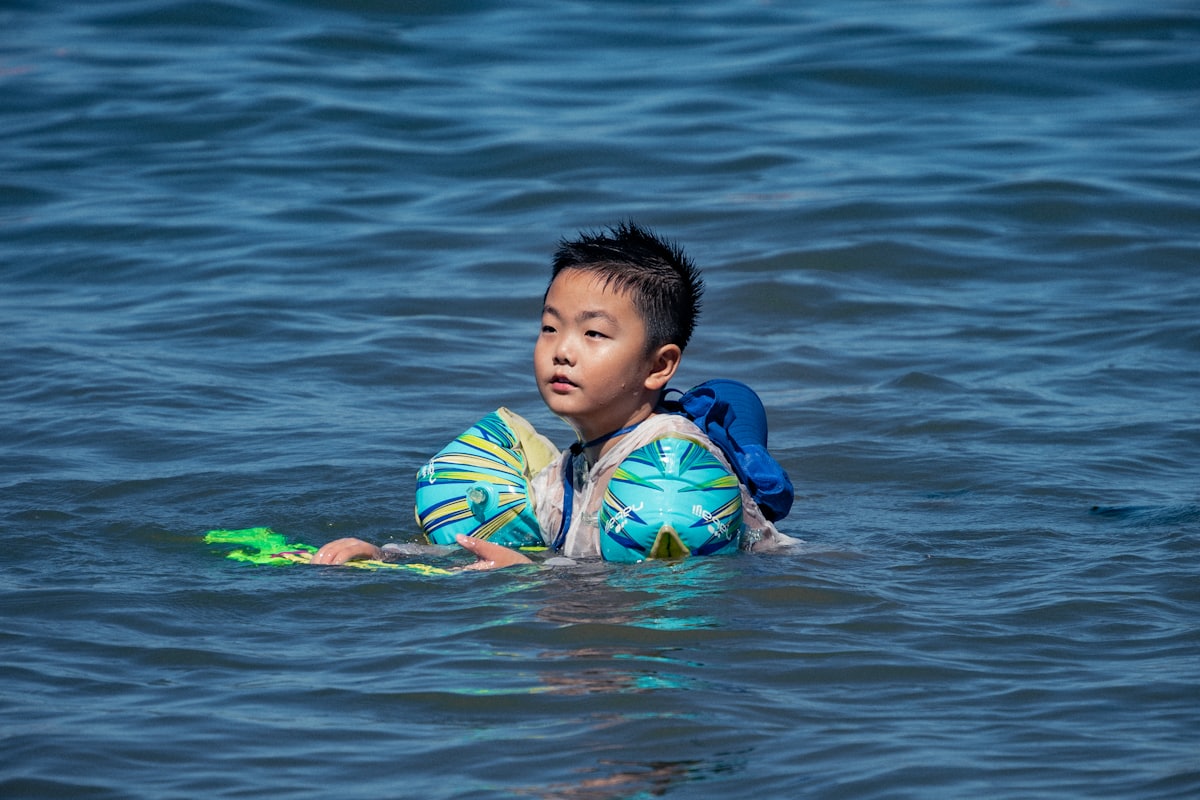
If you are trying to understand SwimSafer Stage 1 and how it flows into Stage 2 and Stage 3, this guide walks through the practical skills your child actually learns at each of these foundational stages. At SwimSafer (swimsafer.sg) we are an independent private swim school that coaches and prepares students for Singapore’s national SwimSafer syllabus. We are not the official programme body and we are not affiliated with SportSG, Singapore Aquatics or the National Water Safety Council. What we do is prepare swimmers, patiently and personally, for the SwimSafer syllabus and its stage assessments. This page is the detailed, skills-per-stage companion to our broader overview, covering the first three stages where water confidence, independent movement and early survival skills are built.
The SwimSafer journey is a deliberate progression. Each stage builds on the breath control, buoyancy and movement introduced in the one before it, so the early stages matter enormously. No two children move through them at the same speed, and that is entirely normal. As a rough guide, many learners need somewhere in the region of twelve hours of instruction per stage, but some need less and others need more. What counts is that your child feels safe, enjoys the water and genuinely owns each skill before advancing. Below we describe Stage 1, Stage 2 and Stage 3 in turn. Please treat all distances and times here as approximate illustrations rather than exact rules, and always confirm the current requirements against the official SwimSafer syllabus or Singapore Aquatics, as these can be updated from time to time.
SwimSafer Stage 1: getting comfortable and safe in the water (Yellow cap)
Stage 1, marked by the yellow cap, is all about helping a child feel calm, confident and safe in the water. This is the foundation, and it is often the most important stage because everything that follows depends on a child trusting the water and trusting their coach. Many children arrive nervous, which is exactly what this stage is designed to handle. The goal is not speed or distance but a relaxed, happy relationship with the pool, paired with the first lessons in personal water safety.
Typical skills introduced at Stage 1
- Safe entry and exit — getting into and out of the pool safely and learning simple pool rules.
- Submersion and breath control — putting the face under and blowing bubbles, learning to breathe out steadily rather than holding the breath in a panic.
- Front and back floats — holding a float on the front and on the back for roughly five seconds each, discovering that the water supports the body.
- Gentle movement — travelling a short way through the water, around ten metres on the front and about five metres on the back, then recovering to a standing position.
- Signalling distress — learning how to call for help and show that something is wrong.
- Using a personal flotation device (PFD) — putting on and trusting a PFD, including floating for about thirty seconds in deeper water while wearing one.
Signs your child is ready to move on from Stage 1
A child is usually ready to progress when they can submerge and exhale without distress, hold short front and back floats, travel a little way through the water and recover to standing happily. Just as telling is their attitude. When a nervous beginner starts to smile, ask to go under again, or let go of the wall on their own, the confidence foundation is solid.
How Coach U.K. coaches Stage 1
This stage is where Coach Umesh “U.K.” Singh’s patience-first approach really shows. He never rushes a child under the water or forces a float. Instead he works at the child’s pace, uses games and small wins to build trust, and is especially experienced with anxious beginners. AUSTSWIM-accredited and coaching since 1999, he makes this gentle start the difference between fear and joy, then prepares each learner for the stage assessment, which combines a practical demonstration with a short theory quiz on water safety. When lessons are held at a public swimming complex, a certified coach from his island-wide network brings the same gentle, confidence-first approach.
SwimSafer Stage 2: building independent movement (Orange cap)
Stage 2, marked by the orange cap, is where the confidence built in Stage 1 starts turning into recognisable swimming. Children become more independent, spend more time without support, and begin to develop the coordination needed for proper strokes. This is an exciting stage because parents often see their child swim a continuous distance for the first time, with a goal of around twenty-five metres of unbroken swimming.
Typical skills introduced at Stage 2
- Independent entry — entering the pool unassisted, such as a step entry.
- Sculling and surface dives — learning to scull with the hands and to perform feet-first surface dives.
- Longer floats and treading — holding floats for around ten seconds and sculling or treading water for roughly thirty seconds.
- Object recovery — retrieving an object from the bottom in chest-deep water.
- Swimming distance — covering roughly twenty-five metres on the front and around fifteen metres on the back, working towards about twenty-five metres of continuous swimming.
- Introduction to clothed survival — swimming around twenty-five metres while wearing a PFD in deeper water of about 1.4 metres or more.
What the SwimSafer Stage 2 assessment typically looks at
When parents ask about the Stage 2 test, what they really want to know is whether their child can demonstrate the stage’s skills consistently and on their own. In practice this means floating, sculling, treading and swimming a meaningful distance independently, alongside the relevant water-safety knowledge in the theory quiz. Rather than treating it as a one-off exam to stress over, Coach U.K. prepares children so these skills become second nature, which means the assessment simply confirms what your child can already do. As always, check the exact, current test items against the official SwimSafer syllabus.
How Coach U.K. coaches Stage 2
At Stage 2 the focus shifts to refining technique without losing the joy of swimming. Coach U.K. breaks each skill into small, achievable steps, gives lots of positive feedback, and adjusts the pace for each learner. Because lessons are private one-to-one or in small groups, he can spend the time a particular skill needs rather than moving a whole class along at once. Children who took a little longer in Stage 1 often flourish here once their confidence catches up. The same individual attention applies when a certified network coach teaches your child at a public complex.
SwimSafer Stage 3: stroke development and the first survival skills (Green cap)
Stage 3, marked by the green cap, is where swimming becomes more refined and the first proper survival skills appear. By this point your child is a confident swimmer who can move independently through the water. Stage 3 develops endurance, stroke quality and the practical survival abilities that make a swimmer genuinely water-safe, which is the whole purpose of the SwimSafer journey.
Typical skills introduced at Stage 3
- Advanced entries — entering the water with a stride or straddle entry.
- Sculling and treading — headfirst sculling on the back for about five metres, and sculling or treading water for roughly fifty seconds.
- Underwater skill — an underwater task such as moving through hoops over a distance of about two metres.
- Combined distance swim — a continuous swim of around fifty metres combining front crawl, roughly twenty-five metres, with backstroke, roughly twenty-five metres.
- Stroke range — covering about twenty-five metres of breaststroke and around twenty-five metres of survival backstroke.
- Survival and rescue principles — an introduction to personal survival and basic rescue ideas, plus clothed swimming with a PFD over about fifty metres.
Signs your child is thriving at Stage 3
At this stage you will see a child who can swim recognisable strokes for a sustained distance, tread water with composure, and handle deeper water confidently. They move through the pool with ease and a clear sense of safety, which is exactly the outcome these stages are designed to produce as your child progresses towards the bronze, silver and gold awards.
How Coach U.K. coaches Stage 3
Stage 3 draws on the full breadth of Coach U.K.’s background. As an AUSTSWIM-accredited swim teacher, a certified Singapore Armed Forces life-saver and an open-water swim trainer, he brings genuine water-safety and survival expertise to this stage. He helps children polish their strokes while making sure the survival skills are practised until they are reliable, so your child leaves these stages not just able to swim, but able to keep themselves safe. Our certified network coaches share this safety-first emphasis at public-pool lessons too.
Every child progresses at their own pace
It is worth repeating: children do not all move through Stage 1, 2 and 3 at the same rate, and that is perfectly fine. As a rough benchmark, around twelve hours of instruction per stage is common, but age, temperament, previous water experience and individual learning styles all play a part. A nervous beginner, an anxious adult, a toddler, or a child with autism, Down syndrome, ADHD or a physical disability may follow a path that looks quite different from a confident six-year-old, and a good coach honours that difference rather than fighting it.
This is exactly why we focus on private one-to-one and small-group lessons. With undivided attention, your child is never compared to a roomful of others or pushed past the point where they feel safe. Coach U.K. teaches personally at your own condominium, landed-home or private pool, and for families who prefer a public swimming complex, a certified coach from his island-wide network can take the lessons there — both options island-wide, with flexible timings to fit your family’s schedule, so the experience is built around your child rather than the other way round.
Frequently asked questions
What age can my child start SwimSafer Stage 1?
There is no single right age. Stage 1 is about water confidence and personal safety, so children can begin once they are comfortable being in the pool with a coach. We also welcome nervous beginners of any age, including adults, and tailor each lesson to the individual.
How long does it take to complete each SwimSafer stage?
It varies a great deal. A common rough guide is around twelve hours of instruction per stage, but some learners need less time and others need more, and both are completely normal. Because we teach privately and in small groups, we move at your child’s pace rather than to a fixed timetable, and we will always be honest with you about progress.
What does the SwimSafer Stage 2 assessment involve?
Broadly, Stage 2 looks at whether a child can scull, tread, float and swim a continuous distance independently, around twenty-five metres, along with PFD use and water-safety knowledge in a theory quiz. Coach U.K. prepares children thoroughly so these skills feel natural well before any assessment. For the exact, current test items, please refer to the official SwimSafer syllabus.
Are the distances and times on this page exact?
No. The distances and times here are approximate and intended to give you a feel for each stage. Official requirements can change, so please confirm the current criteria with the official SwimSafer syllabus or Singapore Aquatics before relying on any specific figure.
Are you the official government SwimSafer programme?
No. We are an independent private swim school. We coach and prepare students for the national SwimSafer syllabus, but we are not SportSG, Singapore Aquatics or the National Water Safety Council. What we offer is experienced, personalised coaching that helps your child master the skills the syllabus covers.
Where do lessons take place?
You can choose between two settings. Coach U.K. personally coaches at your own condominium, landed-home or private pool, travelling to you island-wide. Or, if you prefer to learn at a public swimming complex, we can pair you with a certified, NROC-registered coach from Coach U.K.’s island-wide network. Both come with flexible timings to suit your schedule — just let us know your preferred location and we will arrange it. SwimSafer assessments themselves are held at a public pool with our certified assessors.
CTA
Whether your child is beginning at Stage 1 or building towards confident, water-safe swimming at Stage 3, Coach U.K. is here to help with a patient, friendly, individual approach. WhatsApp Coach U.K. today on +65 9021 1254 to chat about your child’s needs and arrange a lesson, whether privately at your own pool or with a certified coach from our network at a public complex. You can read our SwimSafer stages explained overview, see how the early stages lead into SwimSafer Bronze, Silver and Gold, or browse our kids swimming lessons in Singapore.