
Swimmer’s Ear: Prevention & Care
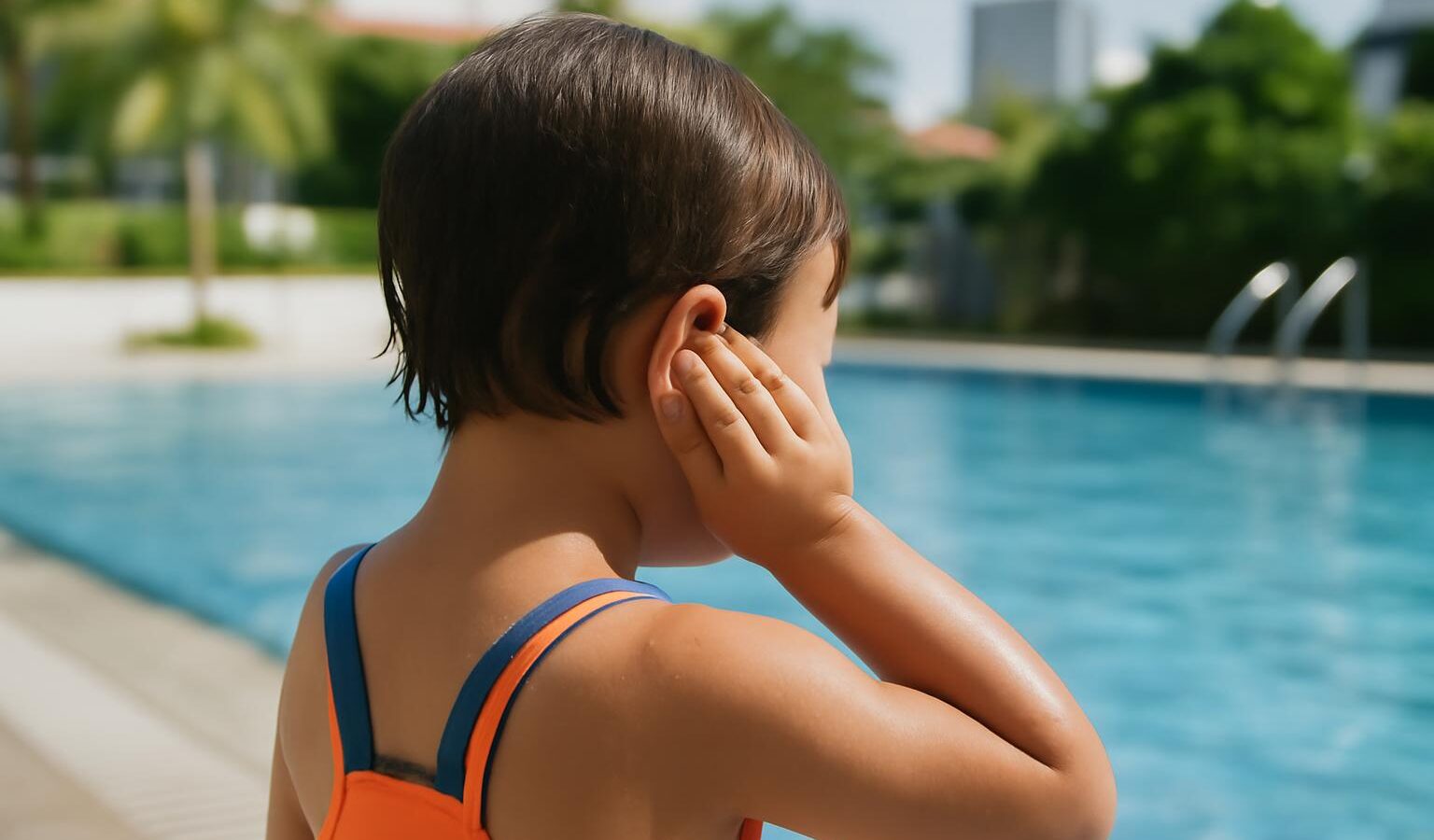
Swimmer’s ear is one of the most common complaints among children who swim regularly, yet it is also one of the most preventable. With a few simple habits, your child can swim several times a week in Singapore’s warm, humid climate without sore, itchy ears holding them back.
SwimSafer (swimsafer.sg) is an independent private swim school that coaches and prepares students for the national SwimSafer syllabus. We are not the official programme and are not affiliated with SportSG, Singapore Aquatics or the National Water Safety Council. We are, however, in the pool with children every week, so we see how often ear discomfort interrupts lessons — and how easily good habits prevent it. This guide is general information for parents, not medical advice; for any ear pain or infection, please see a doctor.
What is swimmer’s ear?
Swimmer’s ear is the everyday name for otitis externa — inflammation or infection of the outer ear canal, the passage between the eardrum and the outside world. It happens when water sits in the ear canal, softening the skin and washing away the natural protective wax. That damp, less-protected environment lets bacteria grow, leading to itching, pain and sometimes discharge.
It is different from a middle-ear infection (otitis media), which sits behind the eardrum and is often linked to colds rather than swimming. Swimmer’s ear specifically affects the outer canal and is closely tied to water exposure — which is why frequent swimmers, especially children, are more prone to it.
Why children in Singapore are especially prone
Singapore’s climate is a perfect storm for swimmer’s ear. Year-round warmth and high humidity mean ears do not dry out quickly after a swim. Children also tend to swim often — often several times a week — giving the ear canal little chance to recover between dips. Add narrow children’s ear canals that trap water more easily, and you can see why parents ask us about ear care so often.
None of this means your child should swim less. It simply means a short drying routine after every session is well worth building into the habit, just like rinsing off chlorine.
How to recognise the symptoms
Catching swimmer’s ear early makes it much easier to manage. Watch for:
- Itching inside the ear canal — often the first sign.
- Ear pain that worsens when you gently tug the outer ear or press the small flap in front of it.
- A feeling of fullness or blocked hearing.
- Redness or mild swelling at the ear opening.
- Clear or cloudy fluid draining from the ear.
If your child complains of ear pain, has discharge, a fever, or muffled hearing that does not clear, see a doctor. Swimmer’s ear usually responds well to prescribed ear drops, but it needs proper diagnosis — never try to treat a suspected infection with cotton buds or home remedies pushed into the canal.
How to prevent swimmer’s ear
Prevention is mostly about keeping ears clean, dry and protected. These habits make a real difference.
Dry the ears thoroughly after every swim
This is the single most important step. After your child leaves the pool, tilt the head to each side to let water run out, then gently dry the outer ear with a soft towel. Encourage a little jiggle or wiggle of the earlobe to coax trapped water free. Do not push anything into the canal.
Tip and hop to clear trapped water
If water feels stuck, have your child tilt the affected ear down towards the shoulder and hop gently on one foot, or pull the earlobe in different directions while tilting. These simple moves often release the last bit of water that towels cannot reach.
Consider a low-heat hair dryer
Holding a hair dryer on its lowest, coolest setting about a hand’s width from the ear for a few seconds can help evaporate residual moisture. Keep it gentle and never hot or close — comfort first.
Use earplugs or a swim cap if your child is prone
For children who get swimmer’s ear repeatedly, well-fitting swim earplugs can keep water out of the canal during lessons. A snug swim cap pulled over the ears adds another barrier. These are optional aids, not requirements — many children never need them.
Leave earwax alone
Earwax is protective. Cotton buds remove that natural defence and can scratch the canal, both of which raise infection risk. Clean only the outer ear with a towel and let the canal look after itself.
What to do if your child gets swimmer’s ear
If symptoms appear, keep the ear dry and see a doctor, who may prescribe medicated ear drops. While recovering, your child should usually stay out of the pool until cleared, and avoid getting the ear wet in the shower. Most cases settle within a few days of treatment. Once healed, the prevention habits above help stop it returning.
We are always happy to adjust lessons around a recovering ear — a short break or a focus on skills that keep the head drier can keep momentum without delaying healing. Talk to us and we will work with your family’s situation.
Keeping swimming safe and enjoyable
Ear care is part of the bigger picture of safe, confident swimming. Coach Umesh “U.K.” Singh is an AUSTSWIM-accredited swim teacher, a certified Singapore Armed Forces life-saver and an open-water swim trainer who has coached since 1999 — over 25 years. He works with kids, adults, babies, nervous beginners and learners with special needs, delivering patient private one-to-one and small-group lessons at your own condominium, landed-home or private pool island-wide — Coach U.K. travels to you — while a certified coach from our network can teach at a public swimming complex, and SwimSafer tests and assessments are conducted by certified assessors. Good habits like drying ears, rinsing off and warming up are built quietly into every session, so children learn to look after themselves in and around the water.
Frequently asked questions
Can my child still swim with swimmer’s ear?
Usually it is best to stay out of the water until a doctor confirms it has healed, as swimming keeps the canal wet and can slow recovery. Once cleared, your child can return with good drying habits in place.
Do earplugs really prevent swimmer’s ear?
Well-fitting earplugs reduce how much water enters the canal, which helps children who are prone to it. They are a useful aid for some swimmers but are not essential for everyone — drying the ears properly matters most.
Is swimmer’s ear contagious?
No. Swimmer’s ear is not passed from person to person. It develops from water and bacteria in an individual’s own ear canal, not from contact with others.
Should I use cotton buds to dry my child’s ears?
No. Cotton buds remove protective wax and can scratch the delicate canal, both of which increase infection risk. Dry only the outer ear with a towel and let trapped water drain naturally.
How long does swimmer’s ear take to clear up?
With proper treatment, most cases improve within a few days. Always follow your doctor’s advice on medication and when it is safe to return to the pool.
Can babies and toddlers get swimmer’s ear too?
Yes, though good drying habits and gentle handling help prevent it. If a young child seems to have ear pain or discharge after swimming, see a doctor promptly.
Keen for happy, confident swimmers?
If ear worries or anything else are making lessons feel daunting, we can help. WhatsApp Coach U.K. on +65 9021 1254 for friendly advice and to plan lessons around your child’s needs. Explore our kids swimming lessons, see how we support nervous beginners, or browse our full range of lessons for every age and stage.