
A Parent’s Guide to Public Swimming Pools in Singapore
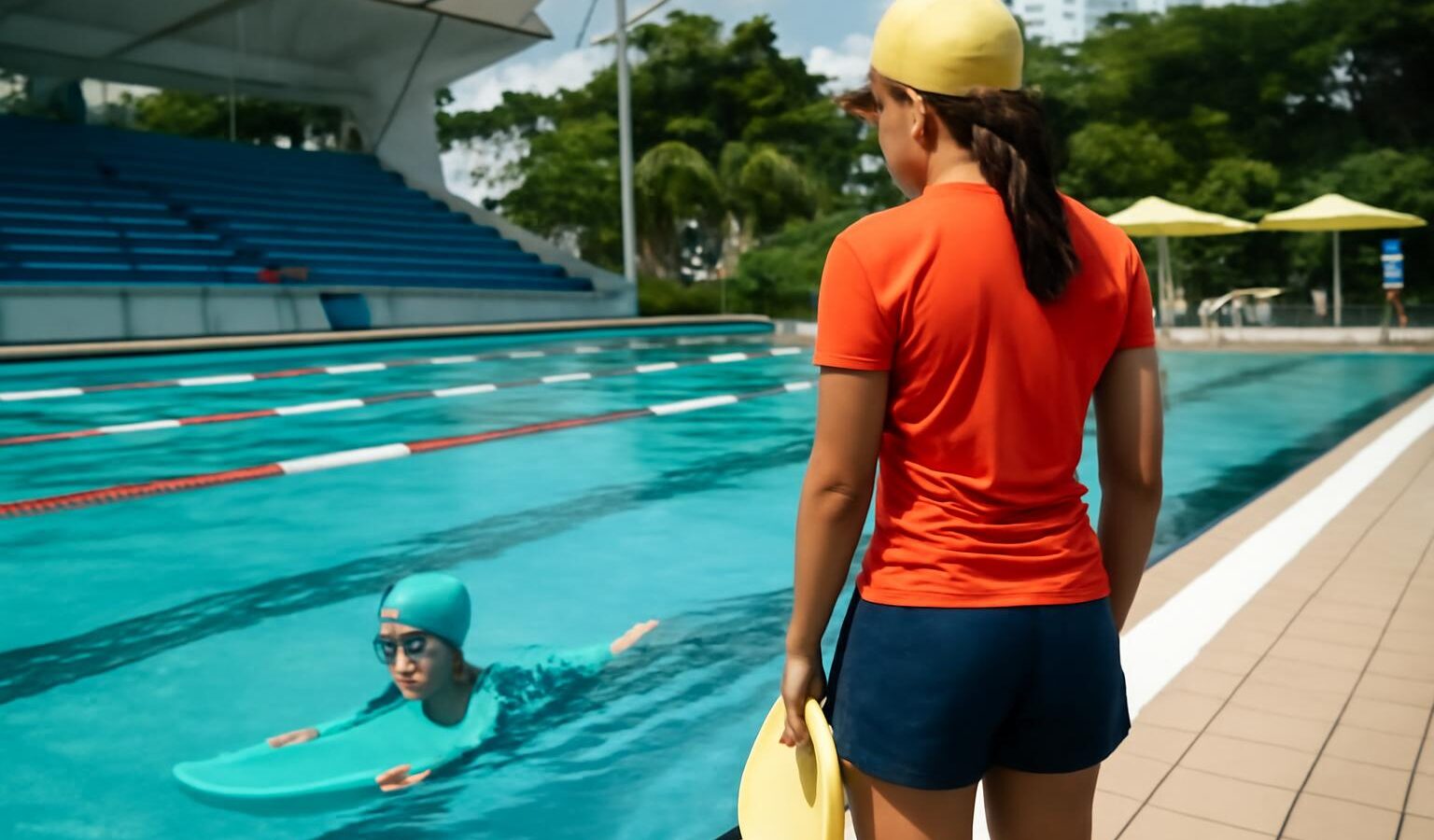
This public swimming pool guide is for Singapore parents who want their family to make the most of the island’s excellent network of community pools — knowing what to expect, what to bring, and how to keep a pool visit safe, smooth and fun. And if you would like proper lessons at one of these complexes, we can help with that too.
Singapore is well served by public swimming pools run as part of the national sport and recreation network, and they are one of the best-value family outings around. From learner pools for the very young to lap pools and lazy rivers, there is something for every age and ability. This guide walks through what to expect, the etiquette and safety basics, and how to plan a visit that everyone enjoys.
A note on who we are: SwimSafer (swimsafer.sg) is an independent private swim school. We coach and prepare students for the national SwimSafer syllabus, but we are not the official programme and are not affiliated with SportSG or Singapore Aquatics. Our head coach, Coach U.K. (Umesh “U.K.” Singh), is an AUSTSWIM-accredited swim teacher and certified Singapore Armed Forces life-saver, coaching since 1999. We coach in two ways: Coach U.K. teaches privately at your own condominium, landed-home or private pool, travelling to you; and at public swimming complexes across the island, we can pair your family with a certified, NROC-registered coach from Coach U.K.’s network. SwimSafer tests and assessments are handled by our certified assessors. So we know these community pools well — both as family venues and as places where real, structured lessons happen.
What to expect at a public pool
Public pools in Singapore are generally clean, well maintained and supervised by lifeguards. Many complexes offer a mix of facilities, which is part of what makes them so family-friendly. Typical features you may find include:
- A learner or wading pool with shallow water, ideal for toddlers and very young children.
- A teaching or training pool at a manageable depth for lessons and practice.
- A competition or lap pool for stronger swimmers and fitness lengths.
- Fun features at some venues, such as water slides, lazy rivers or splash play areas.
- Changing rooms, showers and lockers, plus seating and sometimes a small kiosk.
Facilities vary from venue to venue, and details such as opening hours, lane availability and any features can change, so it is always worth checking the specific pool’s current information before you go rather than assuming.
Entry, payment and admission
Public pools charge a modest admission fee that differs for adults and children, and entry is typically managed through the national booking and payment system. Because fees, booking arrangements and capacity rules can be updated, check the official ActiveSG channels for current details before your visit. Some pools require advance booking at busy times, so a quick check saves a wasted trip.
What to bring
- Proper swimwear. Most pools require appropriate swimming attire; ordinary clothing such as cotton T-shirts and shorts is often not allowed in the water.
- Goggles to help children see and feel comfortable.
- A towel and a change of clothes for each swimmer.
- A swim cap if your child has long hair, to keep it tidy and out of the way.
- Sun protection for outdoor pools — a rash vest, sunscreen and a hat for breaks.
- A coin or padlock for the lockers, plus water and a snack for after the swim.
- Appropriate swim aids for non-swimmers, used under close adult supervision and in line with the pool’s rules.
Safety and supervision
Lifeguards are on duty at public pools, but they are a backstop, not a substitute for a parent’s attention. The single most important rule is active, close supervision of young children at all times — within arm’s reach for non-swimmers and toddlers. Drowning is quick and silent, so keep your eyes on your child rather than on your phone.
- Stay within reach of young or non-swimming children. Do not rely on lifeguards or flotation aids to keep them safe.
- Match the pool to the child. Keep beginners in the learner or shallow pool until they are genuinely ready for deeper water.
- Watch the weather. If there is thunder or lightning, leave the water immediately and follow the lifeguards and NEA advisories. Public pools will clear the water and may close for storms.
- Walk, never run, on wet pool decks, which are slippery.
- Take regular breaks so children do not get over-tired or chilled.
Pool etiquette
A little courtesy keeps the pool pleasant for everyone. Shower before entering, do not enter if unwell or with an open wound, and avoid swimming straight after a stomach upset. In lap pools, keep to the appropriate lane for your speed and circle-swim where indicated. Keep an eye on younger children so they do not get in the way of swimmers doing lengths, and follow any instructions from the lifeguards and pool staff promptly — their rules exist for everyone’s safety.
Making the visit a positive one
For a child still learning, a public pool can be exciting or a little overwhelming because of the noise, splashing and other children. Start in the quieter learner pool, keep the first visits short and positive, and let your child set the pace. The goal is for them to associate the pool with fun and safety, which lays the groundwork for happy lessons later — whether those lessons happen at the complex with one of our certified coaches or privately at your own pool.
Lessons at a public pool — and private lessons too
A public pool is a wonderful place for your family to splash, play and practise together, and the visits you make on your own help your child grow comfortable in the water. It is also a real venue for structured learning. If you would like your child to take lessons at a public swimming complex near you, we can arrange a certified, NROC-registered coach from Coach U.K.’s island-wide network to teach there — following the same national SwimSafer syllabus, with water safety at the heart of every session. If you would prefer the calm of your own pool, Coach U.K. personally teaches private lessons at your condominium, landed-home or private pool, travelling to you, where a familiar setting suits every stage — from a toddler’s first bubbles to a stronger swimmer building distance. When your child is ready, SwimSafer tests and assessments are conducted by our certified assessors. Throughout, we coach towards the national SwimSafer syllabus as an independent school; because official requirements can change, please confirm current criteria with the official syllabus or Singapore Aquatics.
Frequently asked questions
How much does it cost to enter a public swimming pool in Singapore?
Public pools charge a modest admission fee that differs for adults and children, managed through the national booking and payment system. As fees and booking arrangements can change, check the official ActiveSG channels for current rates and any advance-booking requirements before you go.
What should my child wear to a public pool?
Proper swimwear is required at most pools; ordinary clothing such as cotton T-shirts is often not permitted in the water. Bring goggles, a towel, a change of clothes, and a swim cap for long hair. For outdoor pools, add sun protection such as a rash vest and a hat for breaks.
At what age can my child use a public pool?
There is no single age — even babies and toddlers can enjoy the learner pool with a parent in close, arm’s-reach supervision. The key is matching the pool to the child and never leaving young or non-swimming children unattended, regardless of age.
Are lifeguards enough to keep my child safe?
No. Lifeguards are an important backstop, but they cannot replace a parent’s close, active supervision. Stay within arm’s reach of young and non-swimming children, keep your full attention on them, and do not rely on flotation aids to keep them safe.
What happens at the pool if there is a thunderstorm?
Public pools clear the water and may close when thunder or lightning approaches. Leave the water immediately at the first sign of a storm, shelter in a substantial building, and follow the lifeguards’ instructions and NEA advisories before returning.
Can we take swimming lessons at a public pool?
Yes. We arrange lessons at public swimming complexes across Singapore with a certified, NROC-registered coach from our network, teaching the SwimSafer syllabus at the complex nearest you. If you would rather learn at your own pool, Coach U.K. teaches private lessons at your condominium, landed-home or private pool, travelling to you. Either way, SwimSafer tests are conducted by our certified assessors. Tell us where you live and we will help you plan the right path for your child’s level.
Want help getting your child swimming confidently?
For lessons at a public complex with a certified network coach, or private coaching at your own condo, landed-home or private pool with Coach U.K., WhatsApp Coach U.K. on +65 9021 1254. You may also find our kids swimming lessons, condo swimming lessons and locations pages helpful.