
Pool Safety Rules Every Child Should Know
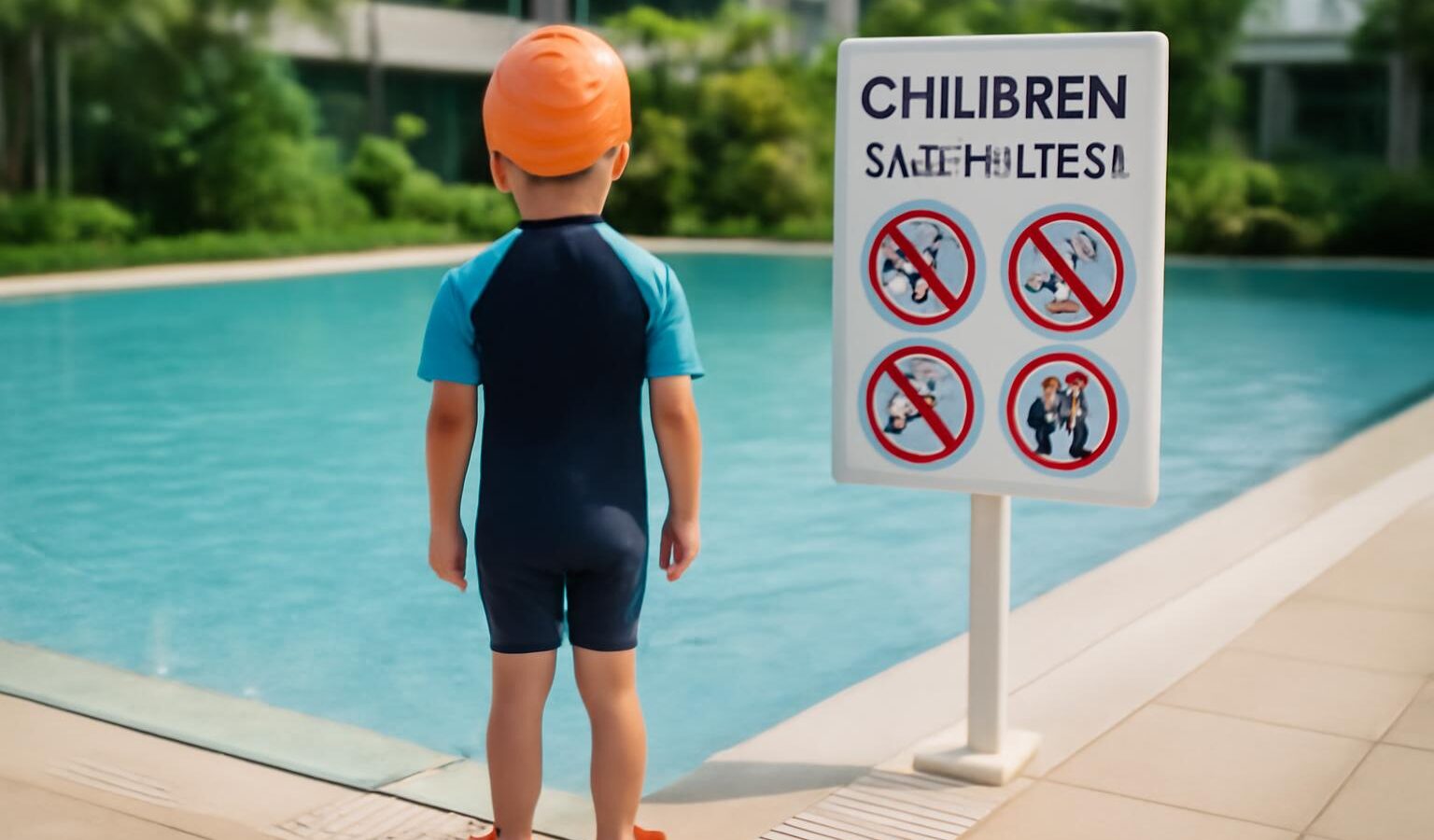
Teaching children clear, memorable pool safety rules is one of the simplest and most powerful ways to keep them safe in the water. A handful of well-understood habits — repeated until they become second nature — prevents the most common pool accidents in Singapore’s condo and public pools.
Children love the pool, and that excitement is exactly why rules matter. A pool deck is wet, slippery and crowded; the water hides sudden drops in depth; and a child’s confidence often runs ahead of their actual swimming ability. Good rules are not about taking the fun away — they are the framework that lets kids enjoy the water freely because the dangerous behaviours have been taken off the table. At our independent swim school, Coach U.K. reinforces these habits in every lesson, because a safe swimmer is a happy swimmer who can focus on learning.
Below is a practical set of pool safety rules you can teach at home, explain in age-appropriate language, and revisit each time you visit the pool. The goal is for children to know them so well they could recite them — and, more importantly, follow them without being told.
The core pool safety rules every child should know
1. Never swim alone — always have an adult watching
This is the golden rule. Children should only enter the water when a responsible adult is actively watching, not reading, scrolling on a phone or chatting with their back to the pool. Teach your child to ask “Is an adult watching me?” before they get in. For young or weaker swimmers, the adult should be within arm’s reach.
2. No running on the pool deck
Wet tiles around a pool are extremely slippery, and a slip can mean a knock to the head or a fall straight into the water. Teach children to walk — “wet feet, slow feet” is an easy phrase that sticks.
3. Always enter feet first unless you know it is safe to dive
Many condo and public pools have shallow ends and uneven depths. Diving or jumping head-first into water of unknown depth is a leading cause of serious neck injury. The rule: feet first, every time, unless an adult has confirmed the water is deep enough and diving is allowed.
4. Stay in water you can handle
Children should know which depth matches their swimming ability and stay there. A child who can only manage the shallow end must not drift toward the deep end “just to try”. Coloured wristbands or a clear “you may swim up to here” line help younger children understand their boundary.
5. No pushing, dunking or holding others under
Rough play that seems funny can quickly turn frightening. Holding a friend underwater, even briefly, or pushing someone in before they are ready can cause panic and water inhalation. Teach kids that hands stay to themselves in the pool.
6. Listen to the lifeguard and to your coach
Lifeguards and instructors give instructions for a reason. Children should learn to stop and listen the moment a whistle blows or an adult calls, and to follow pool signs even when they do not understand why.
7. Get out if you feel cold, tired or unwell
Tiredness is a hidden danger — a tired child is a weak swimmer. Teach children to recognise when their body needs a break and to get out, rest and warm up rather than pushing on.
Rules for the area around the pool
Safety does not stop at the water’s edge. A few habits around the pool prevent the situations that lead to trouble in the first place.
- Keep toys away from the water when not in use, so a child is not tempted to lean or reach in for them.
- Close gates and never prop them open at condo pools — barriers only work when they are shut.
- No glass near the pool; broken glass underwater is invisible and dangerous.
- Reapply attention, not just sunscreen, after breaks — most incidents happen during lapses in supervision, such as toilet trips or snack times.
How to teach the rules so they actually stick
Rules only protect children if they remember and follow them. A few teaching tricks make a real difference:
- Keep them short and positive. “Walk by the pool” is easier to follow than a long list of don’ts.
- Repeat them every visit. A quick “What are our pool rules?” before getting in turns knowledge into habit.
- Model the behaviour yourself. If you walk on the deck and never swim alone, your child learns it is simply how things are done.
- Praise good choices. Noticing when your child walks instead of runs reinforces the habit far better than only correcting mistakes.
Structured lessons are a natural place for these rules to become automatic. In a small-group or one-to-one setting, Coach U.K. links each rule to real swimming ability — a child who can confidently float, tread water and get themselves to the side is far better equipped to follow safety rules calmly, even if they get a fright.
Rules grow with the swimmer
As children become stronger swimmers, some boundaries can sensibly expand — they may be allowed in deeper water, or to dive where it is permitted — but the core rules never change. The aim is a child who respects the water, knows their own limits, and treats safety as part of the fun rather than a restriction on it. This mindset is exactly what the SwimSafer syllabus we coach towards aims to build, layering water-safety knowledge alongside swimming skill at each stage.
Frequently asked questions
At what age should I start teaching pool safety rules?
As soon as your child is old enough to understand simple instructions — often around two to three years for the very basics like “hold my hand near the water”. Rules can grow in detail as your child grows.
What is the single most important pool rule for kids?
Never swim without an adult actively watching. Constant, attentive supervision is the rule that prevents the most serious incidents, especially for young and weaker swimmers.
Is it safe for my child to dive into the condo pool?
Only if an adult has confirmed the water is deep enough and diving is permitted. Many condo pools are too shallow for safe diving, so the default rule should always be feet-first entry.
How do I stop my child from running on the pool deck?
Use a short, consistent phrase like “walk by the pool”, model it yourself, and praise them when they walk. Repetition every visit turns it into an automatic habit.
Do swimming lessons teach safety rules too?
Yes. Good lessons weave water-safety habits into every session, linking the rules to real skills like floating, treading water and reaching the side, so children both understand and can act on them.
My child is a strong swimmer — do the rules still apply?
Absolutely. Strong swimmers can be given a little more freedom in deeper water, but the core rules — supervision, no running, no rough play, knowing their limits — protect everyone regardless of ability.
Help your child become a safe, confident swimmer
The surest way to make pool safety rules stick is to pair them with real, confident swimming ability. To arrange independent private or small-group lessons that build both skill and safe habits — taught at your own condo or landed-home pool with Coach U.K. travelling to you, or at a public swimming complex with a certified, NROC-registered coach from our island-wide network — WhatsApp Coach U.K. on +65 9021 1254. Coach U.K. is an AUSTSWIM-accredited teacher and certified Singapore Armed Forces life-saver coaching children since 1999. Learn more about our kids swimming lessons, our condo swimming lessons, and the water survival and life-saving skills we teach. For indicative rates, visit our pricing page and message us to confirm details.