
Lightning & Pool Safety: When to Get Out
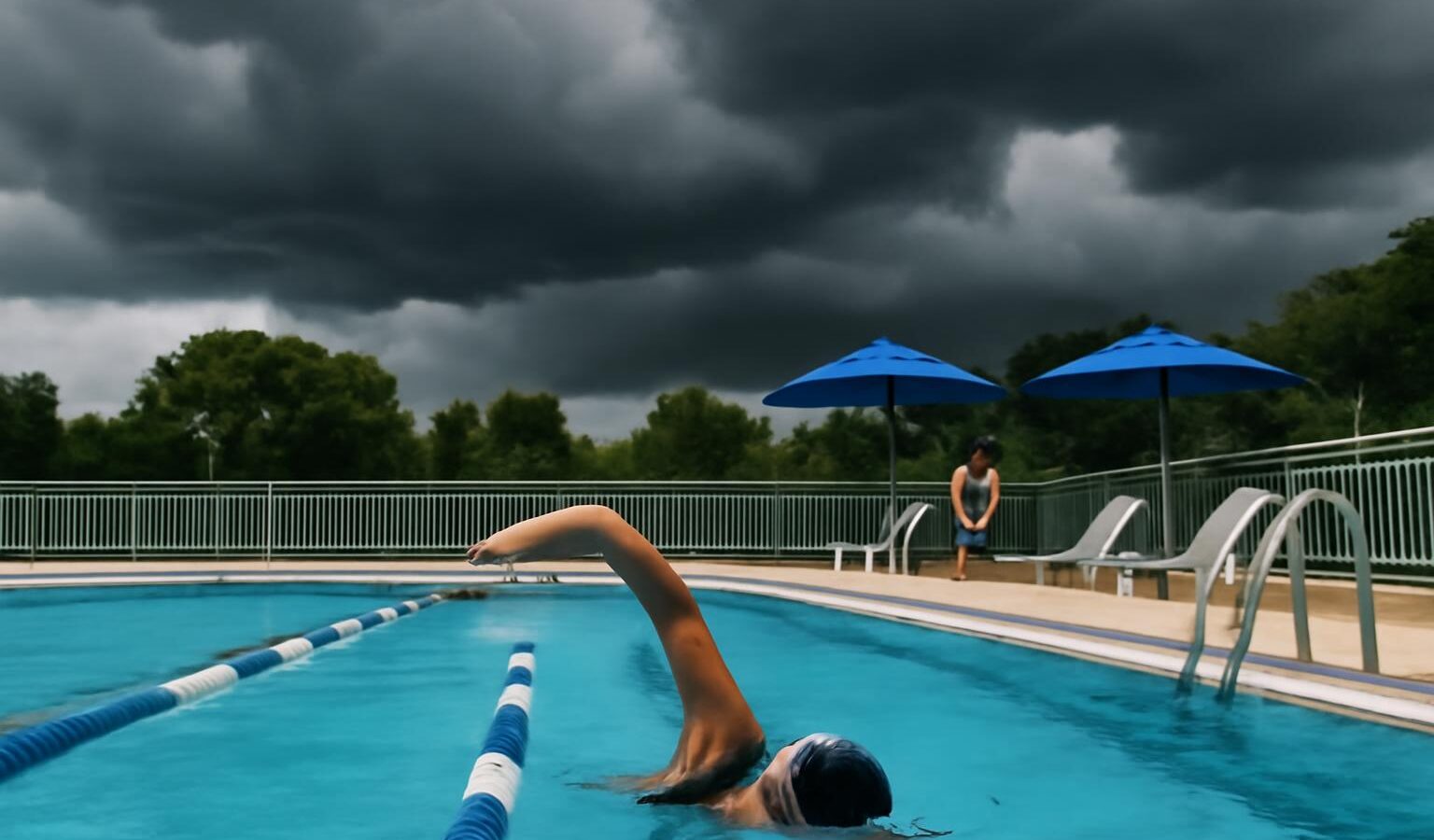
Lightning and pool safety is not a topic for guesswork: in a country as prone to thunderstorms as Singapore, the rule that keeps swimmers safe is simple — when thunder roars, get out of the water.
Singapore sees frequent afternoon thunderstorms, especially during the inter-monsoon periods, and lightning is one of the few genuinely serious hazards a swimmer can face at an otherwise well-run pool. The good news is that the risk is almost entirely avoidable with a clear plan and the discipline to follow it. This guide explains why lightning and water are a dangerous mix, when to leave the pool, when it is safe to return, and how to rely on official advisories and pool-operator rules.
A quick note on who we are: SwimSafer (swimsafer.sg) is an independent private swim school. We coach and prepare students for the national SwimSafer syllabus, but we are not the official programme and are not affiliated with SportSG, Singapore Aquatics or the National Water Safety Council. Our head coach, Coach U.K. (Umesh “U.K.” Singh), is an AUSTSWIM-accredited swim teacher and certified Singapore Armed Forces life-saver, coaching since 1999. Safety is the first thing we teach.
Why lightning and water do not mix
Lightning seeks the easiest path to the ground, and large bodies of water and the open areas around them can be exposed places during a storm. A swimmer in a pool is often the highest point in a wide, flat area, and being in the water leaves you with nowhere to shelter. Lightning does not need to strike you directly to cause harm. For these reasons, every credible water-safety body advises clearing the pool well before a storm arrives and staying out until it has clearly passed.
When to get out: the simple rule
You do not need to be a meteorologist to stay safe. The widely taught guidance is straightforward:
- If you can hear thunder, you are close enough to be at risk. Leave the water immediately, even if the sky overhead still looks clear.
- If you can see lightning, do not wait for the thunder. Get out and move to proper shelter.
- Do not wait for rain. Lightning can strike well ahead of, or after, the rain band, so a dry deck is not a sign of safety.
- Head for a substantial building, not a flimsy shelter. An enclosed building is far safer than a pool umbrella, gazebo or open pavilion.
The instinct to squeeze in “just a few more minutes” is exactly the instinct to resist. Storms in Singapore can build very quickly, and the cost of leaving early is only a slightly shorter swim.
When is it safe to go back in?
The danger does not end the moment the rain stops. A common and sensible practice taught in water safety is to wait a clear interval after the last thunder or lightning before returning to the water — often described as around 30 minutes after the final sign of the storm. If thunder or lightning returns during that wait, the clock starts again. The pool operator’s own all-clear, however, takes precedence: do not get back in until staff confirm it is safe.
Follow NEA advisories and pool-operator rules
You do not have to make these calls alone. Use the official tools and the people whose job it is to manage the venue:
- Check the forecast and lightning advisories. NEA’s weather forecasts and warnings, including heavy thunderstorm advisories, help you plan around the riskiest parts of the day. Many storms here are predictable afternoon events.
- Obey the lifeguards and facility staff. Public pools, ActiveSG venues, condominiums and schools have procedures for clearing the water when storms approach. When they sound a whistle or call swimmers out, get out at once without arguing.
- Respect pool closures. If a facility closes the pool for weather, that decision is final and is made for everyone’s safety.
As a private swim school, we apply the same discipline. At the first sign of thunder or lightning we end the in-water lesson, bring everyone to proper shelter, and we will reschedule rather than gamble on the weather. A delayed lesson is always better than an unsafe one.
Teaching children the habit early
Children learn safety habits best when the rule is simple and consistent. “When we hear thunder, we get out and go inside — every time, no exceptions” is something even young swimmers can understand and follow. We build this into how we coach, because a child who instinctively leaves the water at the first rumble has learned a habit that protects them for life, whether a coach is present or not.
A simple storm plan for families
- Check the forecast before heading to the pool, especially in the afternoon.
- Agree in advance where your shelter is and who calls time.
- At the first thunder or lightning, leave the water and head indoors calmly but promptly.
- Wait out a clear interval after the final thunder or lightning, and follow the operator’s all-clear before returning.
- If in doubt, end the session — there will always be another swim.
Frequently asked questions
Can lightning really strike a swimming pool?
Yes. Pools are often in open, exposed areas, and a swimmer can be the highest point around. Being in the water during a thunderstorm is dangerous, which is why the standard advice is to clear the pool at the first sign of thunder or lightning and shelter in a substantial building.
Is it safe to swim if it is raining but there is no thunder?
Rain on its own is not the hazard here — lightning is. That said, lightning can strike before or after the rain band, so stay alert. If you hear thunder or see lightning at any point, get out immediately, regardless of the rain.
How long should we wait before getting back in after a storm?
A commonly taught guideline is to wait a clear interval, often around 30 minutes, after the last thunder or lightning, and to restart the clock if either returns. Most importantly, follow the pool operator’s all-clear, as their decision takes precedence.
What if the sky looks clear but I can hear distant thunder?
Distant thunder still means lightning is close enough to be a risk, even under a blue sky directly overhead. The rule is “when thunder roars, go indoors.” Leave the water and shelter until the storm has clearly passed.
Will my swimming lesson be cancelled if there is a thunderstorm?
If there is thunder or lightning, we end the in-water portion immediately and move everyone to proper shelter, then reschedule if needed. We never continue a lesson through a storm. Safety always comes before completing a session.
Where can I check Singapore’s weather before swimming?
NEA publishes weather forecasts and thunderstorm advisories that help you plan around the riskiest times of day, which are often the afternoons here. Check these before heading out, and always defer to the lifeguards and facility staff at the pool itself.
Want lessons that put safety first?
If you would like coaching where water safety and good judgement are taught from day one, WhatsApp Coach U.K. on +65 9021 1254. You may also like our water survival and life-saving skills, kids swimming lessons and SwimSafer stages pages.