
Infant Swimming in Singapore: A Parent’s Guide
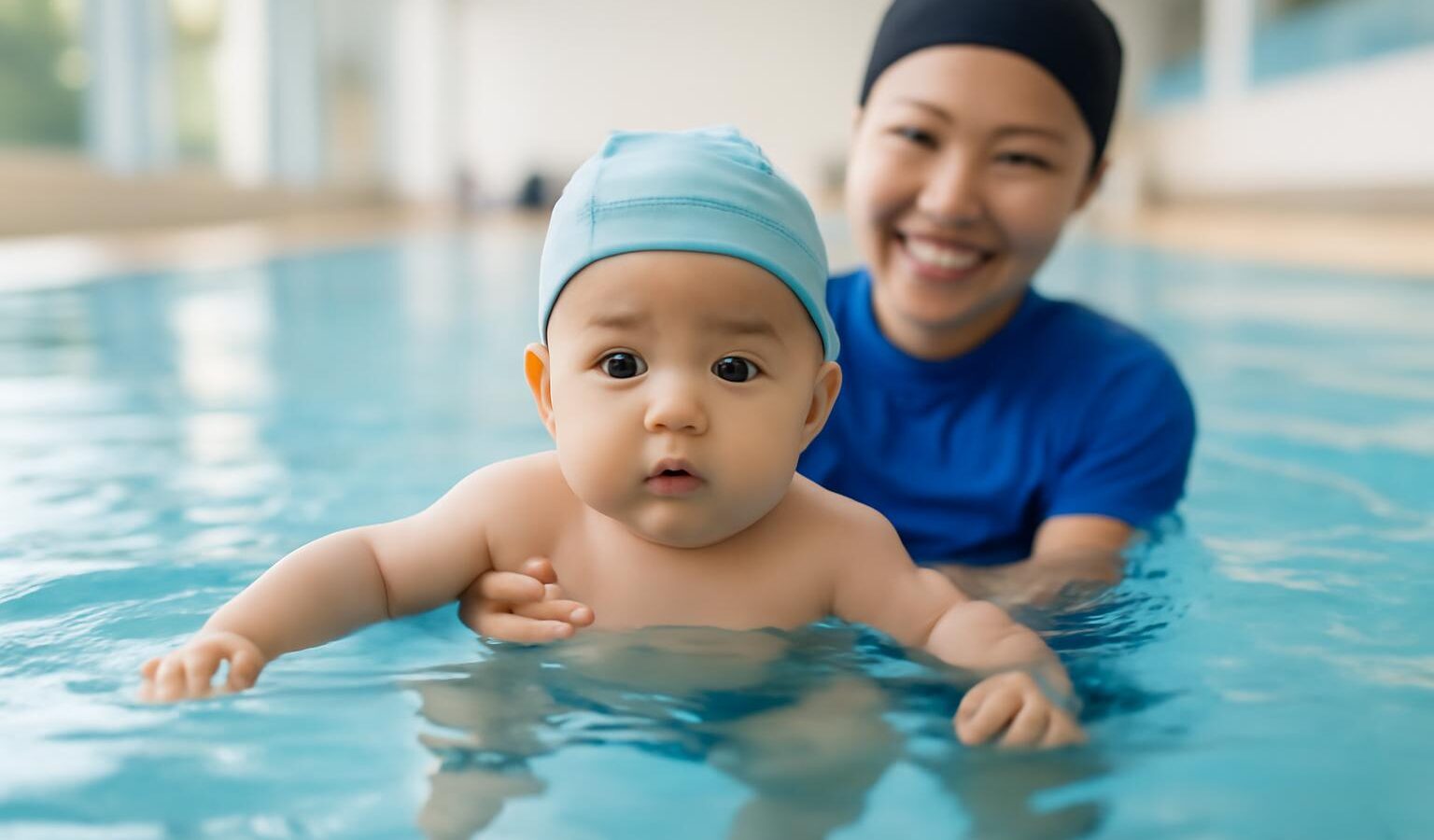
This practical guide to infant swimming in Singapore covers everything new parents want to know, from the right age and essential safety precautions to what a class actually involves and how early water play sets up a lifetime of confidence. Read on for clear, trustworthy advice from a coach who specialises in the very youngest swimmers.
Singapore is a city built around water. With countless condo pools, well-run public swimming complexes and a national emphasis on water safety, it is natural for parents to want their children comfortable in the water from an early age. Infant swimming is the gentle first chapter of that journey. It is not about teaching strokes or chasing milestones; it is about helping your baby feel safe, happy and at home in the water while bonding with you. As an independent swim school, we coach families from infancy right through to the national SwimSafer syllabus, and this guide reflects what we share with new parents every week.
When to begin infant swimming
Most structured infant programmes welcome babies from around six months of age. By this point many babies have steady head control, settled routines and have started their early immunisations. Some gentle parent-and-baby water familiarisation can happen earlier in warm, controlled conditions, but six months is a sensible, common reference point.
Because every baby is unique, and because medical situations differ, it is wise to discuss starting with your paediatrician, particularly if your baby was born prematurely or has any heart, respiratory or skin condition. The goal at this stage is comfort and enjoyment, not performance, so there is no rush and no “behind.”
Reading your baby’s readiness
- Reasonable head and neck control for safe, comfortable support in the water.
- Settled feeding so sessions sit comfortably between feeds.
- Good general health on the day, with no fever, infection or upset tummy.
- A calm, alert mood rather than overtired, so first impressions of the water are positive.
Safety and hygiene essentials
Infant swimming is wonderfully safe when a few sensible precautions are in place. The single most important rule is constant, hands-on supervision: a baby is never “water safe,” and an adult must always be within arm’s reach.
Water temperature
Babies lose body heat far faster than adults. Even in warm Singapore, pool water can feel cool to a small body, so keep early sessions short, around ten to twenty minutes, and watch for shivering, blue lips or unusual quietness. Wrap your baby warmly straight after and finish on a happy, cuddly note.
Hygiene and pool choice
Use a snug swim nappy to keep the pool clean, and choose well-maintained, properly treated pools. Avoid swimming when your baby is unwell or has an open skin condition. Rinse off after swimming and moisturise if your baby’s skin tends to dryness, as chlorinated water can be drying.
Feeding timing
Swimming immediately after a feed can cause discomfort, while a hungry baby will fuss. Many parents find a gap of around an hour after feeding works well. Bring water and, for older infants, a small snack for afterwards.
What happens in an infant swim class
Infant sessions are gentle, playful and parent-led with the coach guiding from beside you. A typical session weaves together holding and gliding through the water, songs and rhymes that build rhythm and predictability, gentle splashing, and the very first controlled experiences of water on the face. Submersion, if introduced at all, is gradual, gentle and never forced. The coach constantly reads your baby’s cues and adapts the pace.
This is where an experienced coach truly matters. Coach U.K. (Umesh “U.K.” Singh) is an AUSTSWIM-accredited swim teacher and certified Singapore Armed Forces life-saver who has coached since 1999, with particular expertise in babies, infants and toddlers as well as special-needs and nervous learners. Sessions can take place in the comfort of your own condo pool with Coach U.K. coming to you, or at a public swimming complex with a certified coach from our network — whichever suits your family — with flexible timings to suit a baby’s nap schedule. You can read more on our baby and toddler swimming lessons page.
The benefits of starting early
Beyond the obvious joy, early water familiarisation offers real, lasting advantages. Babies who associate water with warmth, play and a parent’s reassuring presence are far less likely to develop the fear that sometimes appears when a child first meets deep water at four or five. That early comfort tends to make the later transition into structured lessons, and eventually the SwimSafer stages, much smoother.
There are gentle developmental perks too: water supports movement that little bodies cannot yet manage on land, sessions encourage focus and listening, and the one-to-one closeness is wonderful for bonding. None of this, however, replaces supervision or makes a baby “drown-proof.” Early skills are about comfort and foundations, not independence in the water.
Building toward independence
Our philosophy is to grow genuine, age-appropriate independence step by step. In infancy that means happy familiarity. As a toddler, it becomes simple self-rescue concepts and confident movement. By preschool and primary years, it becomes real swimming and the structured progression of the SwimSafer syllabus. Each stage builds naturally on the last, which is why a positive start in infancy is such a gift.
Frequently asked questions
What age can infant swimming start in Singapore?
Most programmes welcome babies from around six months, with some gentle familiarisation possible a little earlier in warm, controlled settings. Check your baby’s readiness and raise any health concerns with your paediatrician before you begin.
Is chlorinated pool water safe for my baby’s skin?
Well-treated pool water is generally fine for short sessions. Rinse your baby afterwards and moisturise if their skin tends to dryness. If your baby has eczema or a skin condition, ask your doctor for tailored advice before swimming.
Do I get in the water with my baby?
Yes. Infant swimming is parent-led, with you providing the holding and reassurance while the coach guides from beside you. That closeness is central to building your baby’s comfort and trust in the water.
How often should my infant swim?
Even once a week builds familiarity and routine. Consistency matters more than frequency at this age, so a regular, enjoyable session your family can sustain is far better than occasional long visits.
Does infant swimming prevent drowning?
No. No lesson or skill makes any baby or child “drown-proof,” and constant adult supervision within arm’s reach is always essential. Early swimming builds comfort and foundations, not independence in the water.
Can infant swimming help with sleep and appetite?
Many parents notice their baby feeds and sleeps well after a gentle swim, likely from the gentle activity and warm water. Experiences vary from baby to baby, so treat it as a pleasant bonus rather than a guaranteed outcome.
Start your baby’s water journey with an expert
If you would like calm, expert-led infant swimming in Singapore, WhatsApp Coach U.K. on +65 9021 1254 for a friendly chat about your baby’s readiness and the best place to swim. Explore our baby and toddler lessons, see how we run lessons at condo pools, or browse all our services. We are an independent swim school dedicated to building water confidence that lasts a lifetime.