
How to Tread Water
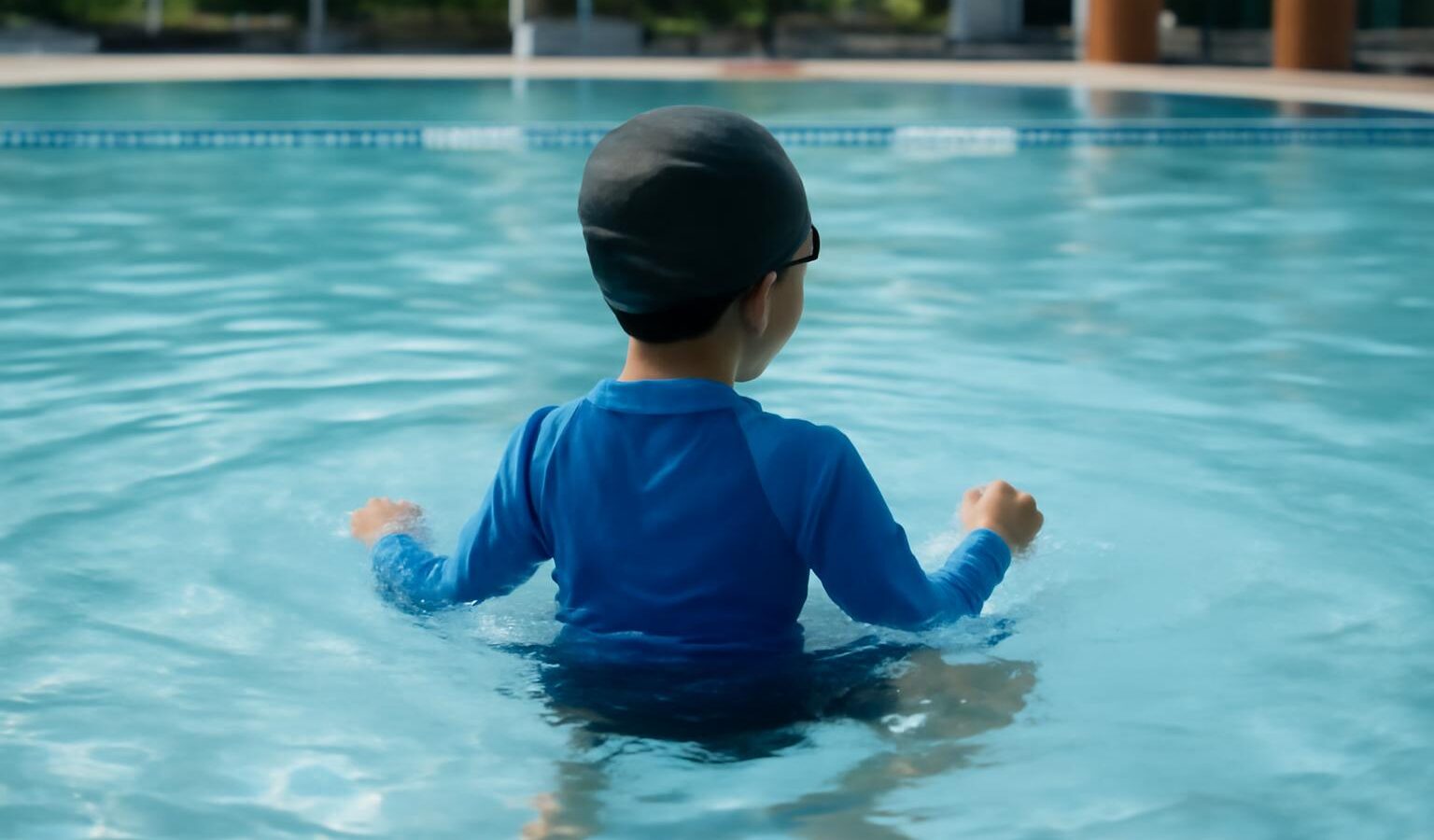
Knowing how to tread water is one of the most valuable safety skills any swimmer can have — it lets you stay upright, keep your head above the surface and catch your breath when you are out of your depth and cannot touch the bottom.
Treading water is the skill that keeps you in one spot, vertical and breathing, without swimming forwards. It is what allows you to rest in deep water, signal for help, or wait calmly until you can reach safety. For that reason it is a cornerstone of water competence and features in survival-skills training. This guide explains the techniques, the most efficient methods, and the mistakes that tire people out.
A note on who we are: SwimSafer (swimsafer.sg) is an independent private swim school. We coach and prepare students for the national SwimSafer syllabus, but we are not the official programme and are not affiliated with SportSG or Singapore Aquatics. Our head coach, Coach U.K. (Umesh “U.K.” Singh), is an AUSTSWIM-accredited swim teacher and certified Singapore Armed Forces life-saver, and an open-water swim trainer coaching since 1999.
What treading water actually involves
Treading water combines two things working together: your legs providing most of the lift, and your hands gently sweeping the water to help keep you balanced and stable. The aim is not to thrash hard and tire quickly, but to find an efficient, relaxed rhythm you can sustain. Good treading looks calm and almost effortless.
Arm movement: the scull
Your hands keep you balanced using a movement called sculling. Picture spreading butter on toast:
- Keep your arms out to the sides, roughly at shoulder depth, elbows slightly bent.
- Sweep your hands back and forth in a smooth figure-of-eight, palms angled slightly into the direction of movement.
- Keep the motion flat and horizontal — you are pressing outwards and inwards, not paddling up and down.
- Stay relaxed; the hands stabilise you while the legs do the lifting.
Leg movements: choose your kick
There are several leg techniques, and different people find different ones comfortable.
The eggbeater kick (most efficient)
Favoured by water-polo players and lifeguards, the eggbeater is the most efficient and sustainable. Each leg rotates in a circular motion, alternating, like the beaters of a whisk. One leg circles clockwise while the other circles anticlockwise, providing constant, smooth lift without an up-and-down bobbing. It takes practice but is well worth learning.
The flutter kick
The same kick used in front crawl, performed vertically. It is simple and intuitive but more tiring over time, so it suits short periods rather than long rests.
The scissor or breaststroke kick
A wider, frog-like kick that gives a strong push of lift with each stroke, with brief glides between. Many beginners find it powerful and reassuring, though it produces a slight bobbing rhythm.
Putting it together
- Stay vertical, with your body upright and your head comfortably above the surface.
- Keep your movements slow, smooth and continuous rather than frantic.
- Breathe steadily — calm breathing keeps you relaxed and helps you float higher.
- Let your legs do most of the work and your hands keep you balanced.
- Conserve energy: the goal is to sustain it, not to fight the water.
Common mistakes
- Panicking and thrashing. Rapid, tense movements burn energy fast and push you down. Slow down and breathe.
- Lifting the arms out of the water. Raising your hands above the surface removes their support and sinks you. Keep them under, sculling.
- Holding your breath. This causes tension and tiredness. Breathe steadily and continuously.
- Leaning too far forward or back. Stay upright and balanced.
- Trying to stay too high. You do not need your shoulders out of the water — just your mouth and nose. Aiming too high wastes energy.
Why treading water matters
Treading water is a genuine survival skill. If you ever find yourself in deep water — a pool, the sea, or a reservoir — being able to tread calmly buys you the time to assess your situation, rest, signal for help and make your way to safety. It is closely linked to other survival skills like floating and is an important part of becoming truly water-competent rather than just being able to swim a length.
An honest and important note: treading water is a skill best learned in person, under supervision, with a qualified coach who can support you in deep water and manage safety. Reading about technique is a useful start, but it is not a substitute for proper coaching and a certified water-safety course. Never practise treading in deep or open water without a coach or lifeguard present, and always swim where there is supervision.
Tips for learning safely
- Start where you can stand. Practise the arm scull and kicks in shallow water before moving deeper.
- Use the poolside. Stay near the wall so you can grab it if you tire.
- Build up gradually. Start with short periods and slowly extend as your confidence and stamina grow.
- Learn with a coach. A teacher can correct your technique in real time and keep you safe as you progress to deeper water.
Frequently asked questions
How long should I be able to tread water?
The right amount depends on your goals and the swimming standards you are working towards. The priority for most learners is being able to tread calmly long enough to rest and reach safety. We can set realistic targets based on your level, and for any official requirements, confirm current criteria with the SwimSafer syllabus or Singapore Aquatics.
What is the easiest way to tread water for a beginner?
Many beginners find the breaststroke (scissor) kick combined with a gentle hand scull the most intuitive to start with. As you improve, the eggbeater kick is the most efficient and least tiring for longer periods. A coach can help you find what works best for your body.
Why do I sink when I try to tread water?
Usually it is from thrashing, lifting your hands out of the water, or tensing up. Try to slow your movements, keep your hands sculling beneath the surface, breathe steadily and relax. Efficiency, not effort, keeps you up.
At what age can children learn to tread water?
Children typically learn to tread water once they are comfortable and confident in the water and have developed basic coordination. We introduce it at the right stage for each child as part of building water competence, always with close supervision.
Is treading water part of the SwimSafer syllabus?
Treading water and survival skills feature in water-competence training. As an independent school we coach students towards the national SwimSafer syllabus, but criteria can change, so please confirm current official requirements with the SwimSafer syllabus or Singapore Aquatics.
Can treading water really save my life?
It can be a vital part of staying safe in deep water, alongside floating and calling for help. However, water safety is best learned properly through a certified course and qualified coaching, not from an article alone — so treat this as background and learn the skill in person.
Ready to master treading water and survival skills?
Building real water competence takes proper coaching and practice — and we would love to help. WhatsApp Coach U.K. on +65 9021 1254 to start. You can also explore our water survival and life-saving skills, our adult swimming lessons and our kids swimming lessons.