
How to Teach Your Child to Swim
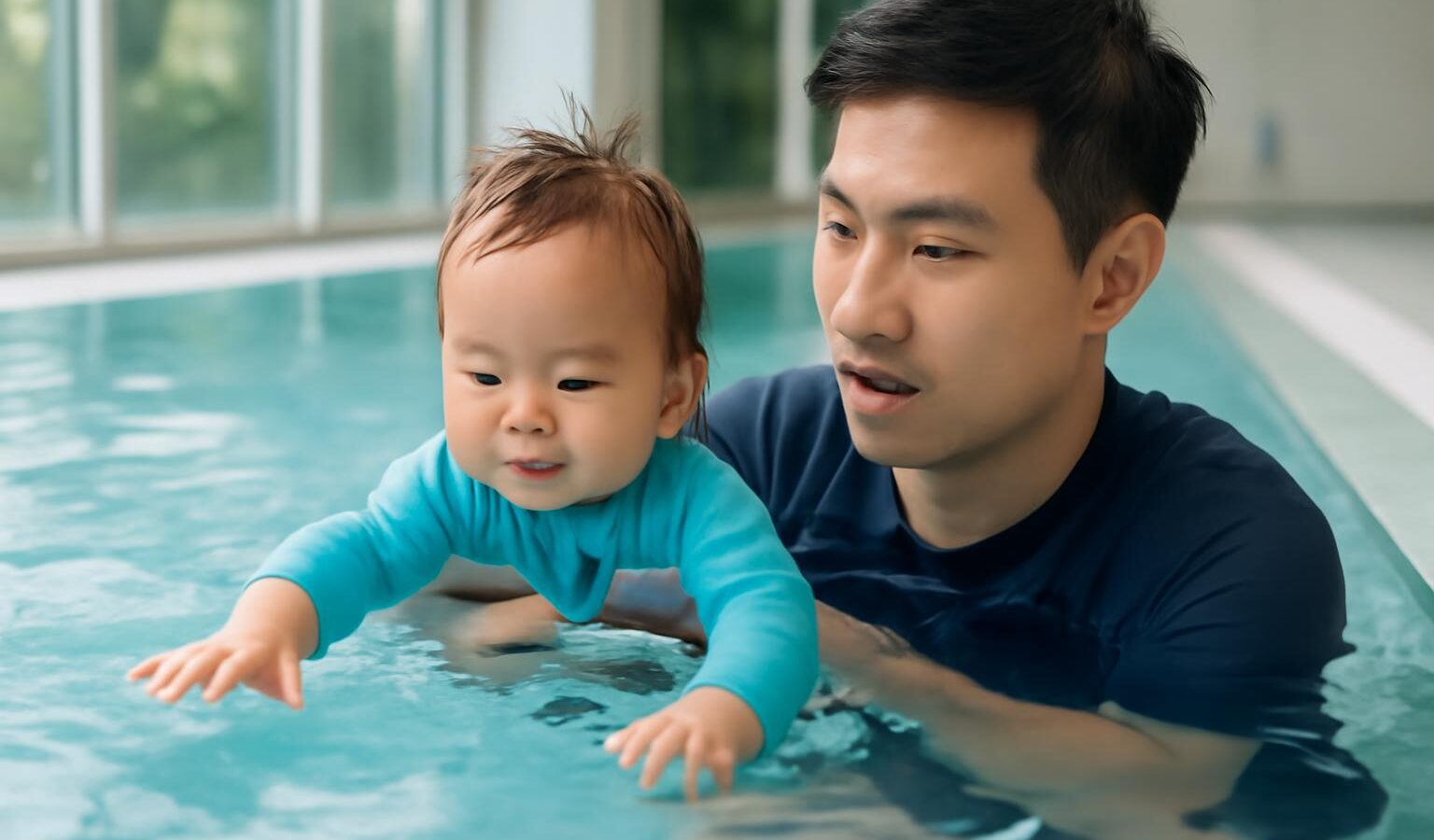
If you want to teach your child to swim, the most important thing to know up front is that patience beats pressure every single time. Confidence in the water is built one small, happy step at a time, and the journey matters far more than the speed.
In a country surrounded by water, with a swimming pool at nearly every condo and the national SwimSafer programme woven into childhood, helping your child become safe and happy in the water is one of the most valuable gifts you can give them. Many Singapore parents want to make a start themselves, whether at the condo pool on a weekend or simply to ease their child in before formal lessons. This guide gives you a calm, sensible roadmap, along with an honest note about where a parent’s role ends and a coach’s begins.
A quick independence note
In fairness to everyone: we are an independent private swim school. We are not the official SwimSafer programme and we are not affiliated with SportSG, Singapore Aquatics or the National Water Safety Council. We coach and prepare children for the SwimSafer syllabus, and this guide is meant to help you support your child’s first steps.
The golden rule: keep it fun and never force it
Before any technique, remember this. A child who associates water with fun, games and a relaxed parent will learn to swim. A child who is frightened, rushed or scolded in the water often develops a fear that takes years to undo. Your job in the early stages is not to coach strokes; it is to make the water a place your child loves. Smile, play, sing, and let progress come at your child’s pace. If a session turns tearful, end it on a happy note and try again another day.
Safety first: never compromise on supervision
This part is non-negotiable. Young children can get into difficulty in seconds and in very little water. Whenever you are teaching your child:
- Stay within arm’s reach at all times, giving the water your full attention, never your phone.
- Choose shallow, calm water where you can stand comfortably and hold your child securely.
- Treat armbands, floats and pool noodles as toys, not safety devices, and never rely on them to keep a child safe.
- Know your own limits in the water; you cannot help your child if you are out of your depth.
General water-safety advice like this is no substitute for proper training. We strongly encourage every parent to learn basic water rescue and first aid through a certified course, so you are genuinely prepared if something goes wrong.
Step by step: a simple home roadmap
1. Get comfortable and wet
Start with the simple business of being in the water happily. Walk around the shallow end together, splash, pour water over shoulders and tummies, and play games that involve getting the face wet gradually. Never splash water at a child’s face by surprise.
2. Blow bubbles and breathe out
Teach your child to blow bubbles in the water, first with the mouth, then nose and mouth together. Make it a game: blowing out birthday candles, humming a tune underwater. This is the single most important early skill, because breathing out underwater is the foundation of all swimming and it calms the instinct to panic.
3. Floating with support
Support your child on their back, your hands under their head and back, encouraging them to look up at the sky, ears in the water, tummy up. Do the same on the front with their face in and bubbles blowing. Reassure them constantly and let them feel the water hold them. Gradually, as trust builds, you can ease your support.
4. Kicking and gliding
Holding your child or a kickboard, encourage long, gentle kicks from the hips with relaxed legs, splashing the surface. Then try short glides: a gentle push from the wall into your waiting arms, body long and face in, even just for a second or two. These little glides are the seed of real swimming.
5. Putting it together
Over time, combine bubbles, floats, kicks and glides into longer and longer moments of independent movement. This is usually the point where many parents find a professional coach helps the most, taking a water-confident child and shaping proper, efficient strokes.
Where a coach takes over
Teaching the early water-confidence steps is something many parents can do beautifully. But shaping correct stroke technique, building safe deep-water skills, and preparing a child for SwimSafer assessment is specialist work. A qualified coach sees faults you cannot, knows how to progress a child safely into deeper water, and removes the emotional complications that sometimes come with a parent teaching their own child. There is no failure in handing over; the best outcome is a child who is both safe and genuinely skilled.
How this connects to SwimSafer
SwimSafer is Singapore’s national water-safety and swimming programme, organised in stages from basic water confidence through to stronger swimming and survival skills. The exact distances and assessment criteria can change, so we keep any figures approximate and recommend confirming current requirements with the official SwimSafer syllabus or Singapore Aquatics. Everything you do at home to build confidence gives your child a head start on that path.
Common mistakes parents make
- Rushing: pushing a nervous child too fast can plant a lasting fear. Slow down.
- Over-relying on floats: armbands can give false confidence and teach an upright, sinking body position.
- Forcing the face under: let face-in-water come gradually through bubble games, never by force.
- Lapses in supervision: never look away, even for a moment.
Frequently asked questions
At what age can I start teaching my child to swim?
You can begin gentle water familiarisation very young, with you holding your baby or toddler in the water. Structured skills come later as your child develops, and the right starting point depends on the individual child.
Can I teach my child to swim myself, or do I need a coach?
Parents can absolutely lead the early water-confidence stage. For proper stroke technique, safe deep-water skills and SwimSafer preparation, a qualified coach usually makes a big difference and removes the emotional tangles of teaching your own child.
Are armbands and floats a good idea?
They can be fun toys under close supervision, but they are not safety devices and can encourage a poor, upright body position. Never rely on them to keep your child safe, and always stay within arm’s reach.
My child is scared of the water. What should I do?
Go slowly, keep everything playful, and never force it. Build trust with splashing and bubble games before anything else. Coaching nervous young beginners is one of Coach U.K.’s specialities if you would like calm, expert help.
How long will it take for my child to learn to swim?
It varies enormously with age, temperament and how often they practise, so we avoid promising a fixed timeline. After meeting your child, Coach U.K. can give you an honest, realistic estimate.
How do I keep my child safe while teaching them?
Stay within arm’s reach with full attention, use shallow calm water, do not depend on floats, and consider taking a certified water-rescue and first-aid course so you are properly prepared in an emergency.
Ready to give your child a confident start?
Whether you would like to hand over to an expert or simply get advice on your first steps, we are happy to help. WhatsApp Coach U.K. on +65 9021 1254 for a friendly chat about goals, timings and the right pool. While you are deciding, explore our kids swimming lessons, our baby and toddler swimming lessons and the full SwimSafer stages explained roadmap.