
How to Swim Backstroke
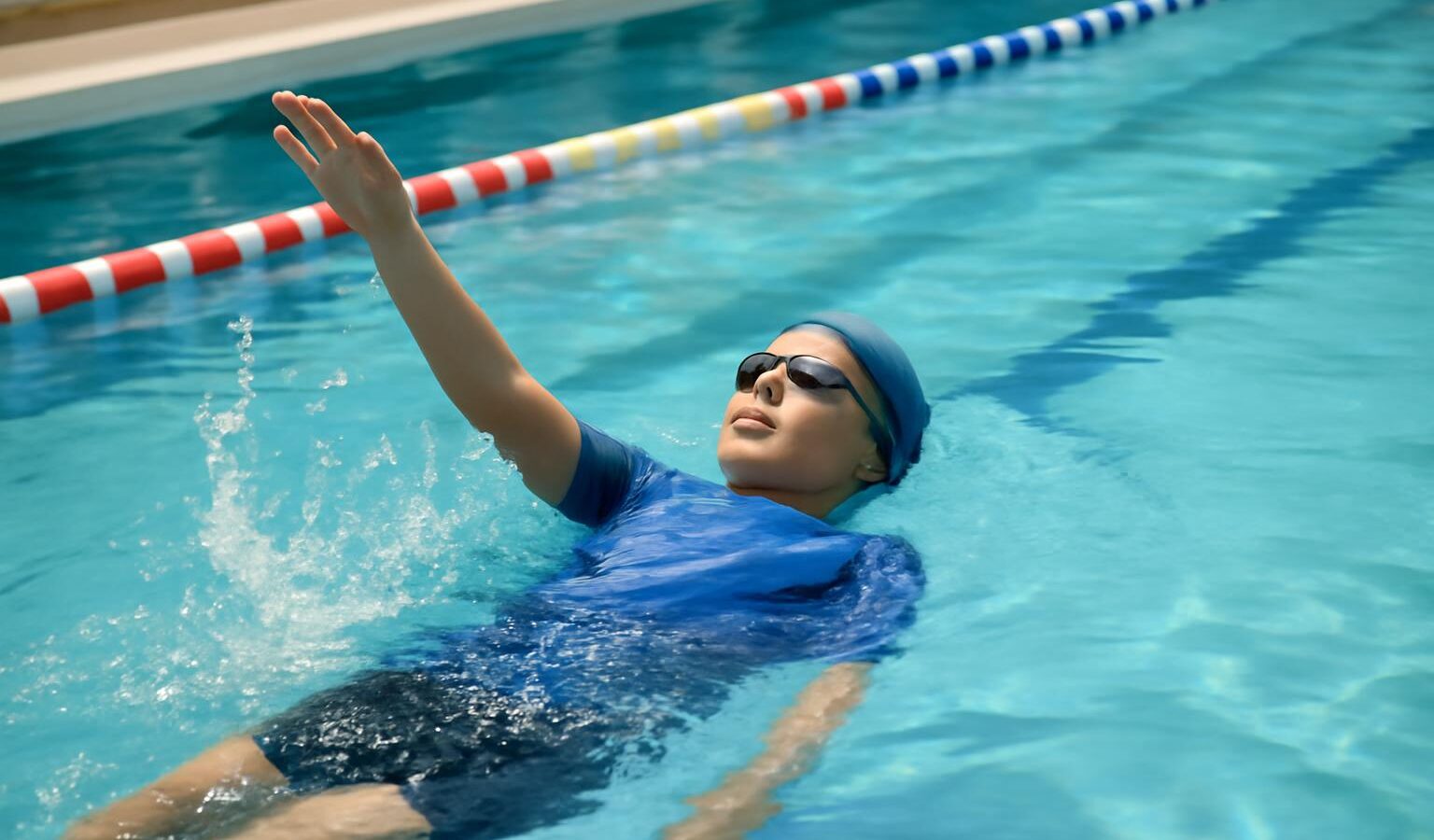
Learning how to swim backstroke starts with a single, freeing idea: your face never goes under, so you can breathe whenever you like. Get your body position flat and your kick steady, and backstroke becomes one of the calmest, most enjoyable strokes to swim.
Backstroke is the only competitive stroke swum on your back, and that changes everything. Because your nose and mouth stay above the surface, breathing is no longer a source of anxiety, which makes backstroke a wonderful confidence builder for nervous swimmers and a relaxing change of pace for stronger ones. The challenge is different instead: you cannot see where you are going, and staying flat on your back takes a little faith. This guide walks through body position, kick, arms, breathing and the drills that pull it all together.
A quick independence note
First, in the interest of fairness: we are an independent private swim school. We are not the official SwimSafer programme and we are not affiliated with SportSG, Singapore Aquatics or the National Water Safety Council. What we do is coach and prepare students for the SwimSafer syllabus, and backstroke is one of the strokes you may meet along the way.
Start with a confident back float
Everything in backstroke is built on a relaxed back float, so this is where to begin. Many learners feel a flicker of panic lying on their back because they cannot see the wall and water laps near their ears. That feeling fades with practice. Lie back, let your ears sink into the water, push your hips and tummy up towards the sky, and look straight up rather than down towards your feet. Keep your breathing slow and steady; a lungful of air helps you float higher.
A safety note before you go further. Practise in shallow water where you can simply stand up to recover, or with a qualified coach beside you. A guide like this can explain the shapes, but it cannot watch your hips or catch you if you tip, which is why in-person coaching matters so much for a stroke swum blind.
Body position: flat and high
Good backstroke looks almost effortless because the swimmer lies long and flat near the surface. Aim for these cues:
- Head still: rest your head back so the waterline sits around your ears, eyes looking up. Resist the urge to lift your head to look for the wall, as that sinks your hips instantly.
- Hips up: gently press your chest and tummy towards the surface so your body stays long, not folded in the middle.
- Toes near the top: a small, fast kick keeps your legs near the surface where they belong.
The backstroke kick
The legs use a flutter kick, similar to freestyle but on your back. The motion should come from the hips with relatively straight but relaxed legs, the knees bending only slightly. Keep your ankles loose and floppy so your feet “boil” the surface, making a small splash rather than a big knees-out churn. A common image coaches use is kicking the water up into a gentle fountain. Practise this holding a kickboard on your tummy, or arms by your sides, focusing on keeping your toes near the top of the water.
The backstroke arm action
The arms alternate in a continuous windmill, one pulling while the other recovers over the top. Break it into pieces:
- Exit: the arm leaves the water thumb-first or with the back of the hand leading, lifting straight up.
- Recovery: the straight arm swings over in a clean arc, rotating so it enters the water little-finger first, directly in line with the shoulder.
- Catch and pull: once in the water, bend the elbow and press the water down towards your hip, finishing past your thigh.
- Roll: let your body roll slightly from side to side with each stroke. This rotation is what gives backstroke its power and reach.
Keep the arms relaxed and the rhythm steady, like the slow turning of a wheel. Stiff, hurried arms tire you quickly and break your body position.
Breathing and where you are going
Because your face stays clear, you can breathe naturally, but it helps to settle into a rhythm, for example breathing in on one arm and out on the other, so you do not unconsciously hold your breath. As for steering, since you cannot see ahead, sight off the ceiling, the lane ropes or the pool edge in your peripheral vision, and learn roughly how many strokes it takes to reach the wall. In a pool with backstroke flags, those become your cue to prepare for the end.
How backstroke fits the SwimSafer journey
Backstroke commonly appears as swimmers progress through the SwimSafer stages, alongside front crawl, breaststroke and water-safety skills. The exact distances and assessment criteria can change, so we keep figures approximate and always recommend confirming current requirements with the official SwimSafer syllabus or Singapore Aquatics before a test. The aim is a swimmer who is genuinely ready, not just drilled for a single attempt.
Common backstroke mistakes to fix
- Sitting in the water: lifting the head and bending at the hips makes you plough rather than glide. Lie back and trust the float.
- Bicycle kick: kicking with big bent knees creates drag. Kick from the hips with loose ankles.
- Crossing the centre line: hands entering behind the head cause you to snake. Enter in line with the shoulder.
- No body roll: a flat, rigid body has no reach. Let your shoulders rotate with each arm.
Frequently asked questions
Is backstroke good for beginners?
Yes, because the face stays out of the water, breathing is never a worry, which makes backstroke a great confidence builder. The only hurdle is trusting the back float and swimming without seeing ahead, both of which come quickly with practice.
Why do my hips sink in backstroke?
Almost always because the head is lifting to look for the wall, or the kick has gone quiet. Rest your head back, look straight up, keep your tummy near the surface and maintain a small, steady kick.
How do I stop swimming into the lane rope?
Use your peripheral vision and the lane ropes or backstroke flags to track your line, and make small corrections by pulling a touch harder on one side. With practice you will swim straighter almost automatically.
Can adults learn backstroke easily?
Many adults find backstroke one of the friendliest strokes to learn because there is no breathing pressure. Private lessons let you work on the back float and timing calmly, with no audience.
How long does it take to learn backstroke?
It depends on water confidence, age and practice, so we avoid promising a fixed number of lessons. After an initial session, Coach U.K. can give you an honest estimate.
Should I learn backstroke or freestyle first?
There is no universal rule, and SwimSafer swimmers commonly meet several strokes. A coach can watch you in the water and suggest the order that builds confidence fastest for you.
Ready to learn backstroke with a coach?
A stroke you swim looking at the ceiling is far easier to learn with an experienced eye watching your body position. WhatsApp Coach U.K. on +65 9021 1254 for a friendly chat about goals, timings and the right pool. In the meantime, explore our kids swimming lessons, our adult swimming lessons and the full SwimSafer stages explained guide.