
How to Relax in the Water
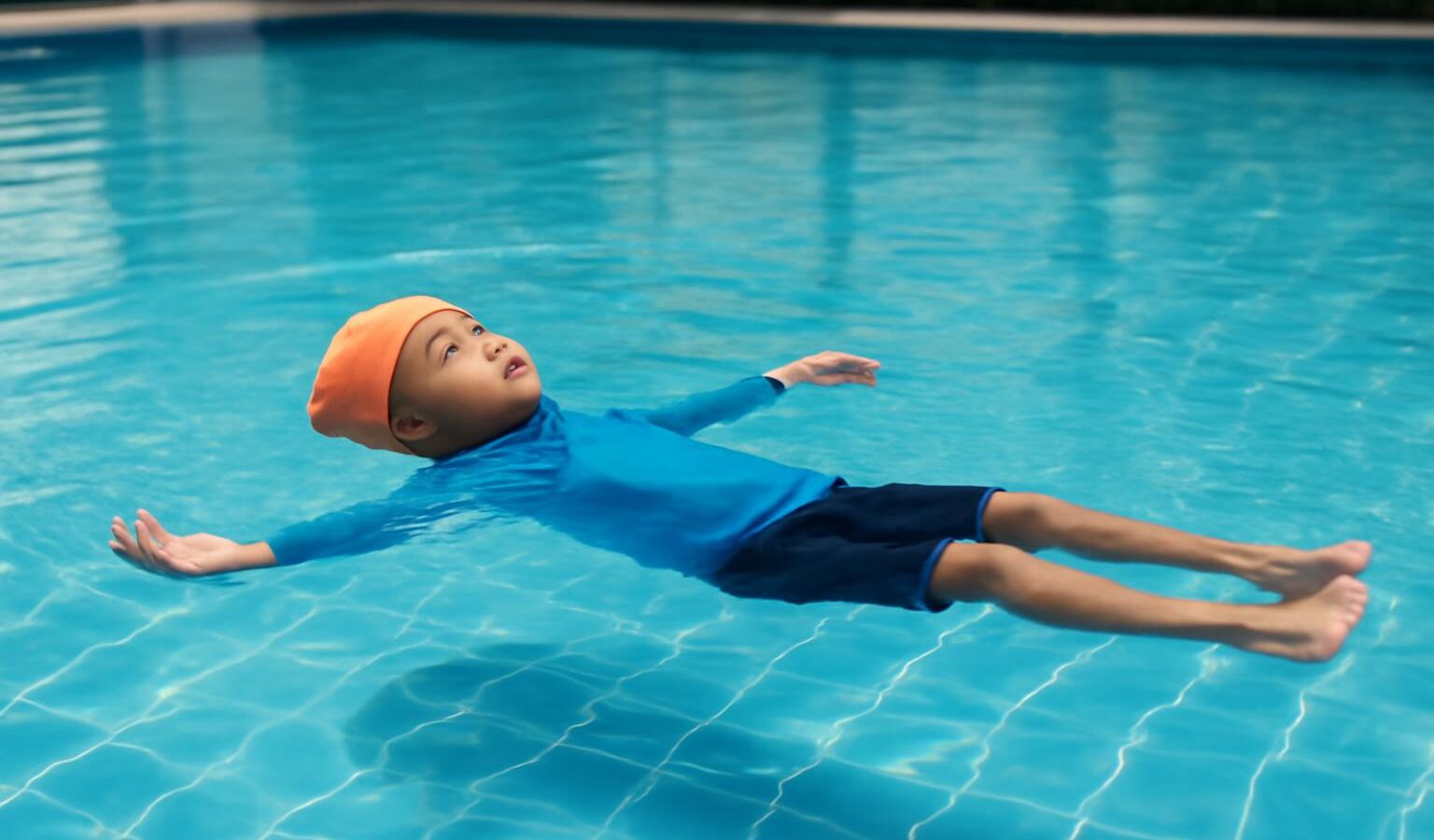
Learning how to relax in water is the foundation of everything in swimming — when your body lets go of tension, floating, breathing and every stroke suddenly become easier. For nervous swimmers, relaxation is not a luxury; it is the skill that unlocks all the others.
Tension is the swimmer’s biggest enemy. A stiff, anxious body sinks, tires quickly and panics easily, while a calm body floats high and moves smoothly. Yet “just relax” is the least helpful advice anyone can give a frightened beginner. Relaxation in the water is a skill you build step by step, and this guide explains exactly how to do it — for nervous adults and for children alike.
A note on who we are: SwimSafer (swimsafer.sg) is an independent private swim school. We coach and prepare students for the national SwimSafer syllabus, but we are not the official programme and are not affiliated with SportSG or Singapore Aquatics. Our head coach, Coach U.K. (Umesh “U.K.” Singh), is an AUSTSWIM-accredited swim teacher and certified Singapore Armed Forces life-saver who has coached since 1999 and specialises in nervous beginners and aqua phobia.
Why relaxing in water feels so hard
Water is an unfamiliar environment. Your instincts — built for solid ground — tell you to stiffen up, grab for the bottom and lift your head when water touches your face. These reactions are completely normal, but every one of them makes swimming harder. The aim is not to fight your instincts head-on, but to gently retrain them through calm, repeated, positive experiences until the water starts to feel safe.
Start where you feel safe
Relaxation begins in water you can comfortably stand up in. Never start somewhere that frightens you. In shallow water, you stay in control, which means your nervous system can settle. Only when one step feels genuinely easy do you move to the next. This “go at your own pace” approach is the single most important principle for nervous swimmers.
- Begin by simply standing in the water and getting used to how it feels around your body.
- Walk slowly across the shallow end, letting your hands trail through the surface.
- Lower your shoulders under the water and notice that nothing bad happens.
- Progress only when each step feels calm and ordinary.
Breathe slowly to calm your body
Breathing is your direct line to relaxation. When you breathe slowly and deeply, you tell your nervous system that you are safe. Practise this even before you try to float:
- Slow breaths: breathe in gently through the mouth, then breathe out slowly and steadily.
- Bubble blowing: lower your mouth to the surface and hum or blow long, slow bubbles. This both calms you and teaches breath control.
- Keep your lungs comfortably full: full lungs help you float, which in turn helps you relax.
Blowing bubbles is deceptively powerful: it stops you holding your breath in fear, it keeps water out of your nose, and the slow exhale physically lowers tension. We return to it constantly with nervous learners.
Let the water hold you
Once your breathing is calm, you can begin to let the water support your weight. Floating is where relaxation becomes visible — a tense body sinks, a relaxed body rises.
Supported floating
Have a coach or trusted adult gently support your head and back as you lean into a back float. Feeling supported lets your body soften without fear. As trust grows, the support is reduced little by little until you are floating on your own — often without quite noticing the moment it happened.
The starfish
Spreading your arms and legs wide like a starfish, on your back, spreads your weight and helps you float flat and calm. Keep breathing slowly, let your head rest back with your ears in the water, and simply notice the water holding you. This is one of the most reassuring sensations in all of swimming.
Get comfortable with water on your face
For many nervous swimmers, the real fear is water on the face. Build comfort gradually: splash water on your cheeks, then your forehead, then dip your chin, then your mouth, then your nose, and finally lower your whole face for a moment while blowing bubbles. Each tiny step that ends calmly teaches your body that water on the face is safe. Goggles help enormously here, because being able to see underwater removes a huge amount of anxiety.
Practical relaxation tips
- Keep sessions positive and short at first. End on a success, not on a struggle.
- Never let anyone rush, dunk or “throw you in”. Force destroys trust and sets progress back.
- Use warm, calm water. Cold or crowded conditions raise tension.
- Celebrate small wins. Every calm breath and float is real progress.
- Be patient with yourself. Fear of water is common and nothing to be embarrassed about.
Helping a nervous child relax
Children take their emotional cues from the adults around them, so stay calm and upbeat yourself. Make it playful, never force a frightened child underwater, and praise effort rather than results. Games — blowing bubbles, “catching” floating toys, gentle splashing — turn relaxation into fun. A patient, experienced coach can often help a child relax in ways an anxious parent understandably finds hard.
A note on safety
Relaxation makes you a safer swimmer, but reading about it is not the same as being able to stay calm under pressure in deep water. Genuine confidence comes from in-person coaching with a qualified teacher who can support you and manage safety. Always practise in a supervised setting and never test yourself in deep or open water without a coach or lifeguard present.
Frequently asked questions
I am an adult who is scared of water — is it too late to learn?
Not at all. Plenty of adults learn to swim later in life, and many were once very frightened. With a patient coach, a gentle pace and lessons that start in shallow water, fear of water can absolutely be overcome. It often takes adults a little longer to relax than children, and that is perfectly normal.
How do I stop panicking when water touches my face?
Build up gradually rather than forcing it. Splash small amounts on your face first, then dip your chin, then your mouth, blowing slow bubbles each time. Goggles help because being able to see calms many people. Each small, calm step retrains your instincts.
Why do I tense up the moment I get in the pool?
It is a natural protective reflex in an unfamiliar environment. The fix is slow, positive, repeated exposure in water you can stand in, combined with slow breathing. As your body learns that nothing bad happens, the reflex fades.
Does breathing really make a difference to relaxation?
A great deal. Slow, steady breathing signals safety to your nervous system and keeps your lungs full so you float more easily. Blowing slow bubbles is one of the most effective calming tools we use with nervous swimmers.
How can I help my anxious child relax in the water?
Stay calm yourself, keep it playful, never force them under, and praise every small effort. Games and a gentle pace work far better than pressure. An experienced coach who specialises in nervous learners can make a big difference.
How long until I feel comfortable in the water?
It varies from person to person. Some relax within a few sessions; others need longer to feel calm, and both are fine. We follow each learner’s pace rather than a fixed timetable, because rushing a nervous swimmer usually slows them down.
Ready to feel calm and confident in the water?
If fear of water has held you or your child back, we will help you relax one gentle step at a time. WhatsApp Coach U.K. on +65 9021 1254 to get started. You might also explore our lessons for nervous beginners, adult swimming lessons and our kids swimming lessons.