
How to Open Your Eyes Underwater
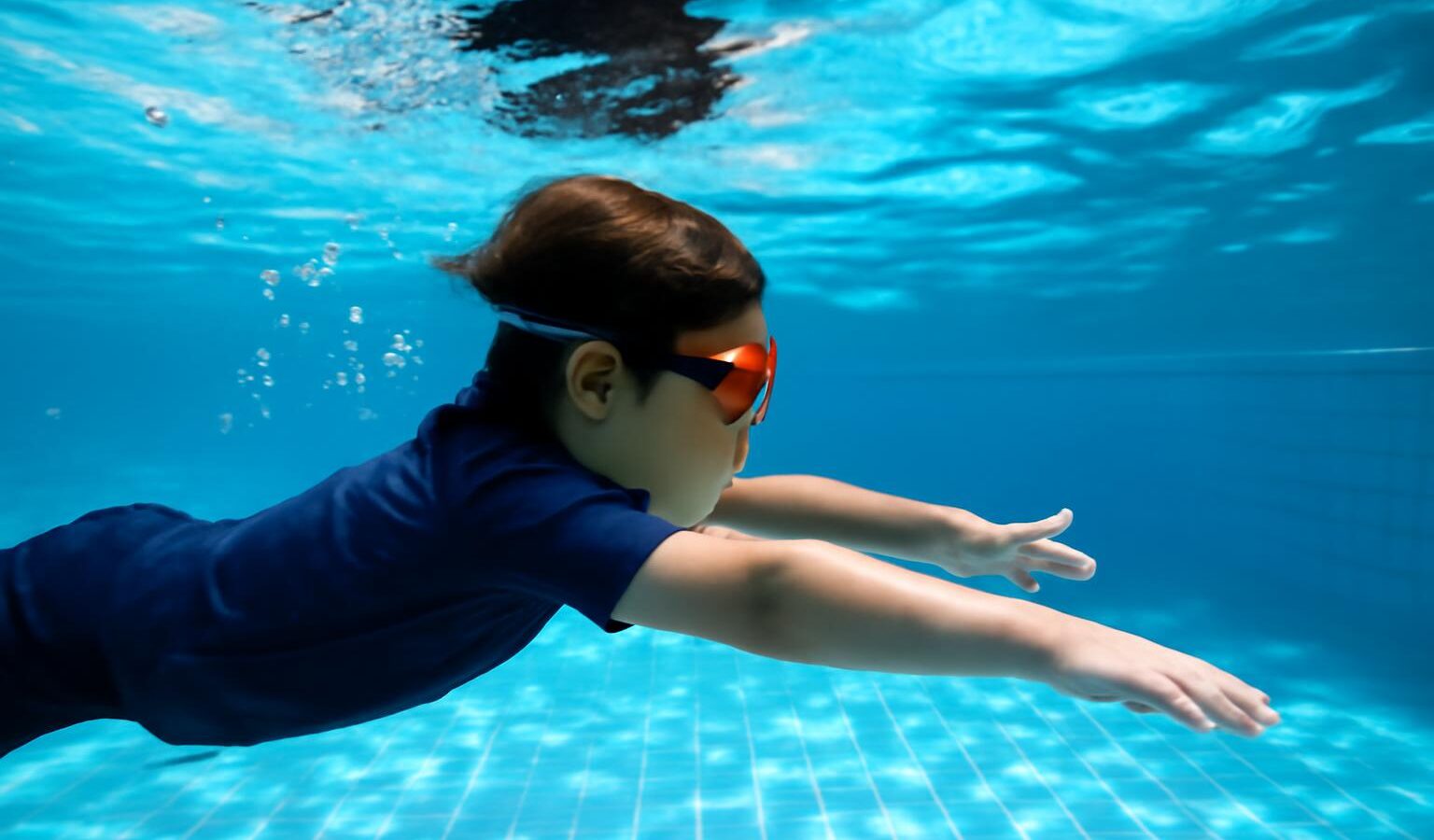
Learning to open your eyes underwater removes one of the biggest sources of fear for new swimmers, and with the right approach, and ideally a pair of goggles, almost anyone can do it calmly and comfortably.
For many children and adults, the instinct to clamp the eyes shut underwater is powerful. Yet being able to open your eyes, even briefly, makes the water far less frightening: you can see where you are, find the wall, judge depth and stay oriented instead of feeling lost in a blur. This guide explains how to do it gently, why goggles are so helpful, and how to build the confidence step by step.
First, a quick note on who we are: SwimSafer (swimsafer.sg) is an independent private swim school. We coach and prepare students for the national SwimSafer syllabus, but we are not the official programme and are not affiliated with SportSG or Singapore Aquatics. Our head coach, Coach U.K. (Umesh “U.K.” Singh), is an AUSTSWIM-accredited swim teacher and certified Singapore Armed Forces life-saver, coaching since 1999, with a particular gift for nervous beginners.
Why opening your eyes underwater helps
Vision is reassurance. When you can see underwater, the pool stops being a disorienting blur and becomes a place you can navigate. Being able to open your eyes lets you locate the wall, see the bottom, keep track of a coach or parent, and stay calm if water surrounds your face. For confident swimming and for water safety, it is a genuinely useful skill rather than a party trick.
Goggles first: the comfortable way to see
The easiest and most comfortable way to open your eyes underwater is to wear well-fitting goggles. They keep chlorinated water off your eyes entirely, giving you clear, sting-free vision, and for almost all everyday swimming, goggles are the right answer.
- Fit matters most. Press the goggles gently to your eye sockets without the strap, they should stick briefly through suction. If they do, the fit is good.
- Adjust the strap snugly but not painfully. Too loose lets water in; too tight is uncomfortable and unnecessary.
- Set the nose bridge correctly. The right width stops leaks and pressure marks.
- Reduce fogging. A gentle rinse and a quality anti-fog lens keep your view clear, so there is no reason to squint.
For children especially, a good pair of goggles transforms the experience and removes most of the fear about water in the eyes. Our kids swimming lessons page shows how we settle young swimmers in.
Opening your eyes without goggles
There are still moments, a goggle strap snapping mid-lap, or a real-life situation, when being able to open your eyes without goggles is valuable. Pool water can sting a little because of chlorine and its chemistry, but brief eye-opening is generally fine for most people. Build up gently:
- Start in the shallows. Stand where you can easily stand up, take a breath and lower just your face.
- Blink, don’t stare. Open your eyes for a second, look at your hand or the bottom, then come up. Short and repeated beats one long stare.
- Try counting fingers. A simple game, hold up fingers underwater and count them, gives the eyes a friendly task and distracts from the urge to shut them.
- Expect a little blur. Without goggles, vision underwater is naturally fuzzy because the eye is built to focus in air, not water. That blur is normal, not a problem with your eyes.
- Rinse afterwards if needed. If your eyes feel mildly irritated, a splash of clean water usually settles them.
Gentle steps for nervous swimmers and children
For an anxious child or adult, never force the face under. Pressure creates fear; patience builds trust. A kinder progression looks like this:
- First, get comfortable putting just the mouth, then the nose, then the eyes near the water.
- Practise blowing bubbles with the face in the water before worrying about the eyes.
- With goggles on, dip under for a single second and pop straight back up, celebrating each go.
- Make it playful, retrieving a brightly coloured sinking toy gives a reason to look that overrides the instinct to shut the eyes.
- Build duration slowly, always at the swimmer’s pace.
This patient, confidence-first approach is exactly how Coach U.K. works with nervous learners. Our lessons for nervous beginners page explains it further.
When to be cautious
A few sensible cautions: avoid opening your eyes underwater repeatedly without goggles if you wear contact lenses, as lenses can wash out or trap irritants. If your eyes are very sensitive, prone to infection, or already sore, stick to goggles. And remember that practising eye-opening, like every swimming skill, should happen in a supervised pool within your depth, never alone in deep or open water.
Why coaching makes this easier
Reading these steps is one thing; doing them calmly when water is on your face is another. The instinct to panic and shut the eyes is strongest precisely when you most want to overcome it, and a reassuring coach beside you in the water changes everything. A qualified teacher can pace the progression, hold your child securely, read the early signs of fear, and turn a daunting moment into a small, celebrated win. Genuine, lasting water confidence, including the calm to open your eyes underwater, comes from in-person coaching with safety always managed, not from an article alone.
Frequently asked questions
Is it safe to open your eyes underwater in a pool?
For most people, briefly opening the eyes in pool water is fine, though chlorine can cause mild, temporary stinging or redness. Wearing goggles avoids this entirely and is recommended for everyday swimming.
Why does pool water sting my eyes?
It is usually a mix of chlorine and the water’s chemistry interacting with your eyes. Well-fitting goggles prevent it. If your eyes are often very sore after swimming, avoid prolonged eye-opening without goggles and rinse with clean water afterwards.
Why is everything blurry when I open my eyes underwater?
Your eyes are designed to focus in air, not water, so without goggles, vision underwater is naturally blurry for everyone. Goggles restore a clear, air-filled space in front of your eyes, so you see sharply again.
How do I help my child open their eyes underwater?
Go gently and never force it. Start with goggles, keep dips to a single second, make it a game with sinking toys, and celebrate every attempt. Building bubble-blowing and face-in-water confidence first makes it much easier.
Can I open my eyes underwater with contact lenses in?
It is best avoided, as water can wash lenses out or trap irritants against the eye, raising the risk of irritation or infection. If you wear lenses, use goggles, ideally prescription ones if you need clear vision.
Do I really need to open my eyes underwater?
With goggles you will see clearly anyway, but being able to open your eyes briefly without them is a useful confidence and safety skill, since it helps you stay oriented if your goggles ever fail. It supports the water confidence the early SwimSafer stages build; confirm current requirements with the official syllabus or Singapore Aquatics, as criteria can change.
Ready to build water confidence with a patient coach?
If you or your child finds putting the face in the water daunting, gentle, expert coaching makes all the difference. WhatsApp Coach U.K. on +65 9021 1254 to get started. You might also explore our lessons for nervous beginners, kids swimming lessons and the SwimSafer stages guide.