
How to Do a Flip Turn
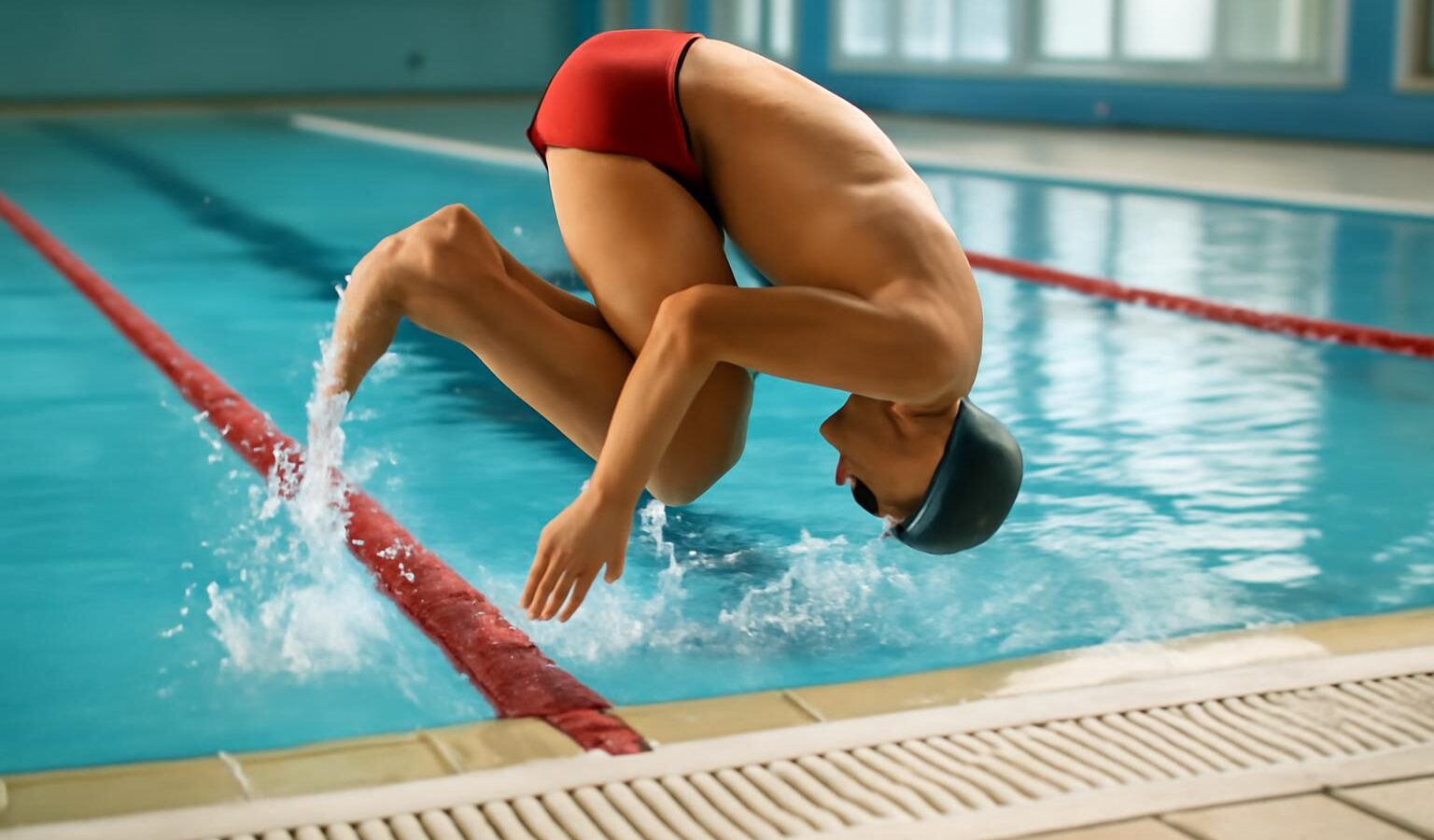
Learning how to do a flip turn is the moment many swimmers feel they have crossed from “can swim” to “swims properly”. This tumble turn lets you change direction at the wall without stopping, keeping your rhythm and speed through every length.
A flip turn — also called a tumble turn — looks impressive, but it is really a sequence of simple movements stacked together: a forward somersault, a twist, a foot plant on the wall, and a powerful streamlined push-off. This guide breaks the turn down step by step, with drills to practise and safety points to respect. Because it involves disorientation underwater near a solid wall, it is best learned with a coach beside you.
What a flip turn is and why it helps
A flip turn is used in freestyle (front crawl) and backstroke to reverse direction at the end of a length without grabbing the wall. Instead of touching with your hand and turning slowly, you somersault forwards, plant your feet on the wall, and spring off underwater in a tight streamline.
The benefits are real:
- Continuous rhythm: you keep your breathing and stroke flowing instead of breaking at every wall.
- Speed: a strong push-off underwater is faster than any swimming stroke, so a good turn carries momentum.
- Fitness: swimming continuous lengths without long pauses builds stamina.
- Confidence: being comfortable upside down and underwater makes you a more relaxed, capable swimmer.
Before you start: the basics you need
A flip turn is an intermediate skill. You will find it far easier if you are already comfortable with the following:
- Confident freestyle swimming over several lengths.
- Steady breath control and the ability to breathe out through your nose underwater — this stops water rushing up your nose as you roll.
- Being relaxed when upside down and disoriented in the water.
- A solid streamline push-off from the wall.
If any of these feel shaky, it is worth firming them up first. Trying to learn a flip turn before you can comfortably blow bubbles out of your nose underwater usually leads to a face full of water and a lot of frustration.
How to do a flip turn, step by step
1. Approach the wall
Swim in at a steady pace. Judge your distance so that you start your somersault about one body length — roughly an arm’s reach plus a little — from the wall. Take your final breath a stroke or two before the wall, because you will be breathing out through the whole turn. Do not breathe right as you tumble.
2. Tuck and somersault
As your leading hand finishes its pull, stop reaching, drop your chin to your chest, and throw both arms back towards your hips. Tuck your knees in tightly to start a forward somersault. The tighter the tuck, the faster you rotate. Begin breathing out gently through your nose the moment your head goes down.
3. Plant your feet
As you come over, aim the soles of both feet at the wall. Your knees should be bent, ready to spring. Your feet should land flat on the wall, a comfortable distance below the surface — not too deep, not right at the top.
4. Push off in streamline
Push off the wall explosively, extending your legs while bringing both arms over your head, one hand on top of the other, with your head tucked between your arms. This tight streamline is the secret to a fast turn. You will be on your side or back at this point.
5. Rotate and resume swimming
As you glide, twist your body so you end up face down (for freestyle). Begin a few dolphin or flutter kicks underwater to carry your speed, then start your first stroke as you break the surface. Resist the urge to breathe on that very first stroke — settle back into rhythm first.
Drills to practise
- Standing somersaults: practise forward rolls in the water away from the wall, breathing out through your nose, until rolling feels natural and you stay oriented.
- Push-off streamlines: push off the wall on your front in a tight streamline and glide as far as you can, to build a powerful, narrow shape.
- Somersault then push-off: combine a roll near the wall with a foot plant and push-off, without worrying about timing your approach yet.
- Full turn at slow speed: put it all together swimming in slowly, then gradually build pace as the sequence becomes smooth.
Common mistakes and safety
The most common errors are misjudging the distance to the wall (landing too close and cramped, or too far to reach), breathing in instead of out during the roll, and a loose, untidy streamline that kills your speed. Patience and repetition fix all of these.
Safety matters too. Practise flip turns only in a pool deep enough that you will not hit the bottom, and be aware of swimmers behind you. Misjudging the wall can mean knocking your feet or, occasionally, your head, so learn in a controlled lane. Because a flip turn involves being upside down, disoriented and holding your breath near a hard wall, it is genuinely best learned with a qualified coach watching and correcting you in person. Videos cannot see when your timing is off or step in if you misjudge the wall — a coach beside you can, which makes learning both faster and safer.
Frequently asked questions
How long does it take to learn a flip turn?
It varies. A confident swimmer who is already comfortable somersaulting underwater might grasp the basics in a few sessions, while others need several weeks to make it smooth and reliable. Breaking it into drills and building up gradually is the fastest route.
How do I stop water going up my nose during a flip turn?
Breathe out gently and continuously through your nose from the moment your head goes down to start the somersault. That steady stream of air keeps water out. If this is hard, practise nose-breathing during simple underwater rolls first.
Do I need a flip turn to swim well?
No. Flip turns are mainly for swimmers wanting to swim continuous laps efficiently or train competitively. Plenty of recreational swimmers use a simple touch-and-turn at the wall and enjoy swimming perfectly well without ever tumbling.
What age can a child learn flip turns?
There is no fixed age — readiness matters more. A child should be a confident freestyle swimmer, comfortable underwater and able to breathe out through the nose before attempting flip turns. Many children pick them up once these foundations are solid, with proper supervision.
Is it safe to practise flip turns alone?
It is best not to. Flip turns involve disorientation near a hard wall, so practise in a supervised pool deep enough to avoid the bottom, ideally with a coach. Never practise demanding new skills when swimming alone.
Why do my feet land too high or too low on the wall?
This usually comes down to misjudging your distance from the wall or rolling too early or late. Practising your approach and the timing of your tuck, with a coach giving feedback, quickly sharpens your accuracy.
Ready to master your flip turn?
If you or your child want to learn flip turns safely and refine your stroke, message Coach U.K. on WhatsApp at +65 9021 1254 to arrange in-person coaching. With AUSTSWIM accreditation, life-saving certification and coaching experience since 1999, he will build your technique step by step beside you in the water. Explore our kids swimming lessons, adult swimming lessons, convenient condo pool lessons, and indicative rates on the pricing page.