
How Swimming Helps Child Development
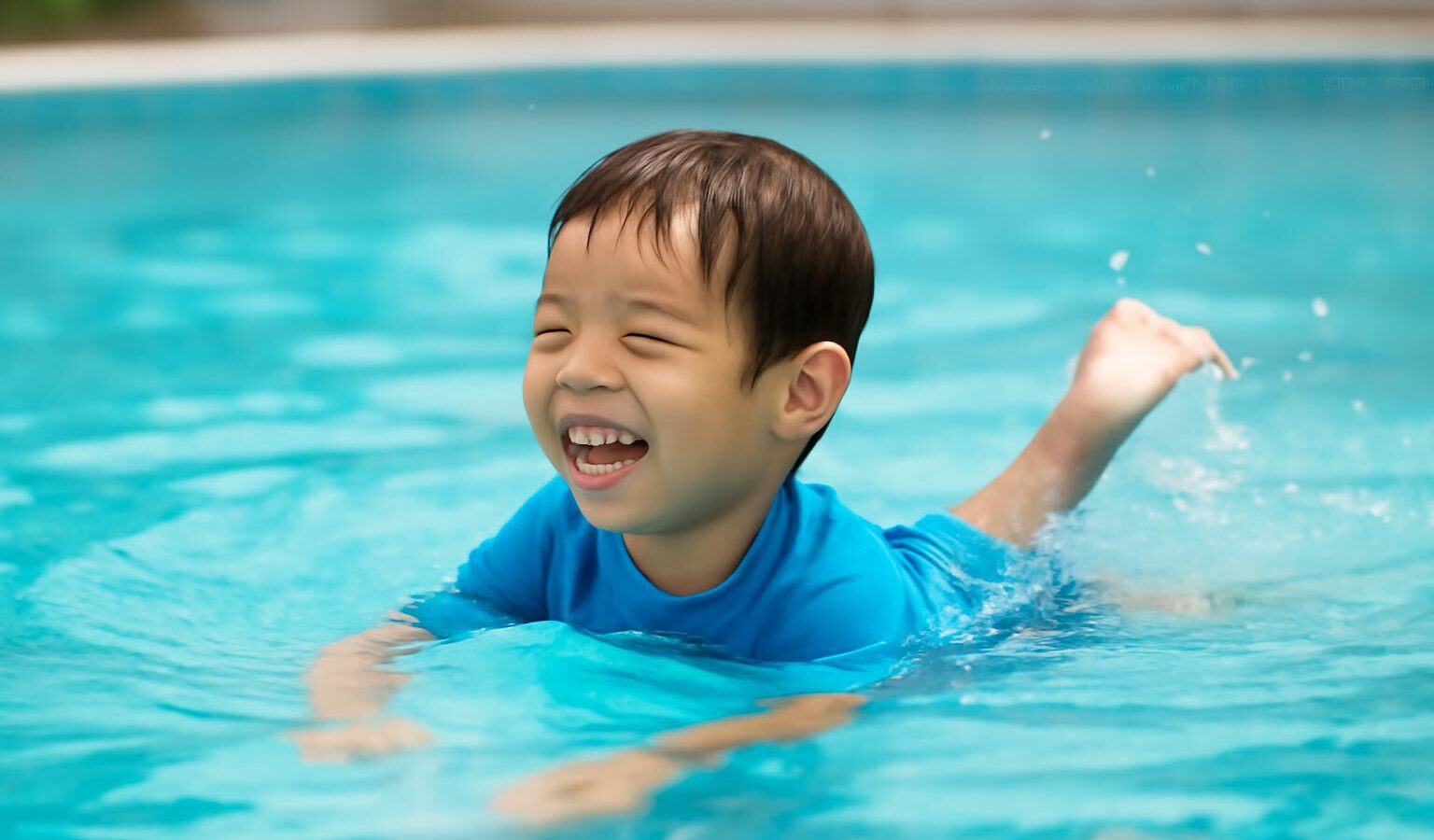
When it comes to swimming child development, the pool offers far more than a way to stay safe in the water. Swimming nurtures a child’s body, brain, confidence and social skills all at once, making it one of the richest activities you can give them.
Parents often sign their children up for swimming with a single, sensible goal: water safety. That goal alone is reason enough in a water-surrounded country like Singapore. Yet over more than 25 years of teaching, Coach Umesh “U.K.” Singh has watched swimming quietly shape children in ways that reach far beyond the pool, from steadier coordination to braver, more sociable little people. This guide explores how swimming supports the whole child.
Physical development and coordination
Swimming is a uniquely complete physical activity for a growing body. Unlike many land sports that emphasise one set of movements, swimming asks a child to coordinate arms, legs, breathing and body position all at the same time, against the gentle resistance of water.
- Gross motor skills develop as children learn to kick, pull and glide in rhythm
- Balance and body awareness grow from floating and changing position in the water
- Strength and stamina build steadily through sustained, low-impact movement
- Bilateral coordination improves as the two sides of the body work together
Because water supports body weight, swimming builds these skills gently, with very little risk of the impact injuries that come with some land-based sports. Our kids swimming lessons are designed to develop these foundations step by step.
Brain development and learning
The coordination swimming demands is not only physical; it is deeply cognitive. To swim, a child must process instructions, sequence movements, and adjust in real time, all while managing their breathing. This rich, multi-sensory challenge supports the developing brain.
Focus and following instructions
Lessons gently stretch a child’s ability to listen, concentrate and follow a sequence of steps, skills that transfer directly to the classroom. A child who learns to focus through a swimming drill is practising the same attention they will use at school.
Problem-solving and memory
Remembering how to coordinate a stroke, then refining it lesson by lesson, exercises memory and problem-solving. Mastering each new skill also teaches a powerful lesson in itself: that effort and practice lead to progress.
Confidence and emotional growth
Perhaps the most visible change parents notice is in confidence. Learning to swim involves facing something that can feel genuinely daunting, the water, and overcoming it step by brave step. Each milestone, from the first face in the water to the first independent glide, gives a child concrete proof that they can do hard things.
This earned confidence tends to spill over into the rest of life. Children who conquer their nerves in the pool often become more willing to try new things elsewhere. For naturally cautious or anxious children, this is transformative, and gentle, patient coaching is the key. Coach U.K. always builds trust before technique, which is the heart of our approach for nervous beginners.
Social skills and routine
Swimming, whether in small groups or one-to-one with a coach, helps children practise valuable social habits: listening to an adult who is not a parent, taking turns, encouraging others and coping with the small frustrations of not getting something right the first time. The regular rhythm of lessons also teaches commitment and routine, gently showing children that showing up and practising leads to real reward.
Swimming for children with additional needs
The developmental benefits of swimming are not reserved for typically developing children. The water can be a wonderfully supportive environment for children with autism, Down syndrome, ADHD and physical disabilities. The sensory qualities of water can be calming, the gentle resistance supports motor development, and the one-to-one structure allows pace, language and sensory load to be carefully adapted. Coach U.K. specialises in this area, as our special needs swimming lessons page explains.
The foundation of water safety
Of course, the original reason most parents start, water safety, remains profoundly important, and it is itself a form of healthy development. Learning to be calm, capable and sensible around water equips a child with judgement and self-reliance that lasts a lifetime. In Singapore, where pools and open water are everywhere, this is a genuine life skill. The national SwimSafer syllabus reflects this priority, and our SwimSafer stages explained guide shows how water-safety skills build across the levels. Because the specific criteria can change, we keep figures approximate and recommend confirming current requirements with the official SwimSafer syllabus or Singapore Aquatics.
Frequently asked questions
At what age can swimming start helping my child’s development?
Very early. Even gentle baby and toddler water familiarisation supports sensory and motor development, while structured lessons from the preschool years build coordination, focus and confidence. The earlier a child enjoys the water, the stronger the foundation.
Is swimming better than other sports for young children?
Swimming is unusually complete because it develops the whole body with very little impact, while also being a life-saving skill. Many activities aid development; swimming simply combines physical, cognitive and safety benefits in one.
Can swimming really build my child’s confidence?
Yes. Overcoming the natural challenge of water and mastering new skills gives children concrete proof of their own capability, and that confidence often carries over into school and other areas of life.
How does swimming help children with special needs?
The water can be calming and supportive, aiding motor development and sensory regulation. With one-to-one coaching, pace and sensory load are adapted to each child. Coach U.K. specialises in coaching children with a range of additional needs.
How often should my child swim to see these benefits?
Regular, consistent practice matters more than intensity. Even one well-structured lesson a week, with some free play in between, builds steady developmental gains. After an assessment, Coach U.K. can suggest a realistic rhythm.
Is this the official SwimSafer programme?
No. We are an independent private swim school that coaches and prepares students for the SwimSafer syllabus. We are not affiliated with SportSG, Singapore Aquatics or the National Water Safety Council, and official details should be confirmed with them.
Ready to support your child’s development in the water?
Give your child the gift of a skill that grows their body, brain and confidence together. WhatsApp Coach U.K. on +65 9021 1254 for a friendly chat about goals and timings. While you decide, explore our kids swimming lessons, our special needs swimming lessons, and the full SwimSafer stages roadmap.