
How Long Is a Swimming Lesson?
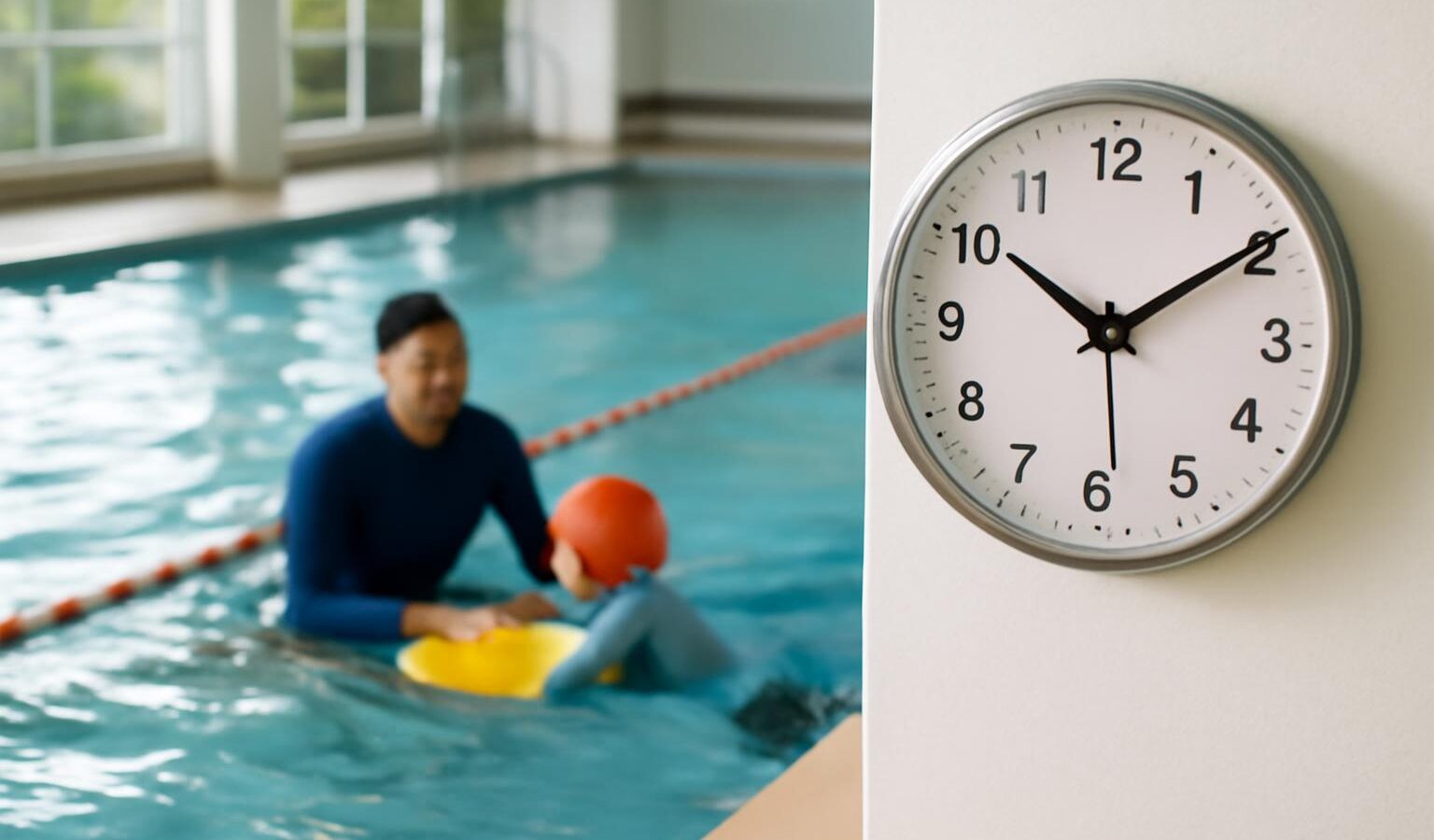
If you are wondering how long is a swimming lesson before you book, the short answer is that most run somewhere between half an hour and an hour, but the right length depends far more on your swimmer’s age, focus and stamina than on the clock.
It is a practical question every parent and adult learner asks when planning their week around a lesson: how much time should we set aside, and is longer actually better? In Singapore’s heat and humidity, with chlorine, sun and physical effort all in play, the answer is more nuanced than a single number. A four-year-old and a fit adult simply cannot make good use of the same session length. This guide walks through typical lesson durations by learner type, explains why quality matters more than quantity, and helps you choose a length that leads to real progress rather than a tired, shivering child.
Typical swimming lesson lengths
While there is no universal rule, lessons in Singapore generally fall into a few common bands.
- Babies and toddlers: often around 30 minutes. Tiny children tire and chill quickly, and their attention spans are short, so brief, playful sessions work best.
- Young children (roughly 3 to 6): commonly 30 to 45 minutes. Long enough to learn, short enough to stay engaged and warm.
- Older children and confident swimmers: often 45 minutes to an hour, especially when building distance, stroke technique and SwimSafer skills.
- Adults: typically 45 minutes to an hour, depending on fitness, goals and comfort in the water.
These are general guides rather than fixed rules. A skilled coach adjusts to the individual, and a private lesson can flex to the day’s energy and mood.
A quick independence note
To be clear and fair to everyone: we are an independent private swim school. We are not the official SwimSafer programme, and we are not affiliated with SportSG, Singapore Aquatics or the National Water Safety Council. We coach and prepare students for the SwimSafer syllabus, and lesson length is something we tailor to each learner rather than a national requirement.
Why longer is not always better
It is tempting to assume that a 60-minute lesson teaches twice as much as a 30-minute one. For young children, that is rarely true. Several factors put a natural ceiling on useful lesson time.
Cold and fatigue
Even in warm Singapore, children lose body heat in the water and start to shiver. A cold, tired child stops absorbing anything and starts to associate swimming with discomfort. Ending while they are still warm and keen protects their love of the water.
Attention span
Concentration is finite, especially for preschoolers. The most productive learning usually happens in the first stretch of a lesson. Beyond a certain point, a young child is simply going through the motions.
Diminishing returns
For beginners, a focused 30 to 45 minutes of genuine engagement beats an hour of fading attention. Quality of coaching and the swimmer’s readiness matter far more than raw minutes in the pool.
When a longer lesson makes sense
That said, there are good reasons to extend sessions for the right swimmer. Older children and adults building stamina and refining strokes can benefit from a full hour. Swimmers working towards a SwimSafer stage that involves distance and endurance need time to actually practise those swims. And during intensive holiday courses, slightly longer or more frequent sessions can suit a motivated, confident learner. The key is matching length to the swimmer’s physical capacity and goals, not defaulting to “more is better”.
Frequency matters as much as length
How long each lesson lasts is only half the picture; how often you swim matters just as much. A child who has one focused 45-minute lesson a week, with a little gentle practice in between, often progresses beautifully. Two shorter sessions a week can beat one long one because skills stay fresh and water confidence keeps building. If you are weighing this up, our companion guide on kids swimming lessons explains how we structure a child’s overall journey, and for the bigger picture our SwimSafer stages explained page shows how skills accumulate over time.
Practical tips for getting the most from each lesson
- Arrive ready. Swimwear on under clothes, goggles to hand and a quick toilet trip beforehand means the lesson time is spent learning, not changing.
- Feed lightly and early. A small snack well before, not a big meal just before, keeps energy up without discomfort.
- Bring warmth for after. A towel, dry clothes and perhaps a warm drink help your child finish on a happy note, especially after pool time.
- Let the coach manage the clock. If your child is shivering or flagging, a good coach will wind down rather than push to fill every minute.
For more on getting ready, see our guide to preparing for a first lesson within our kids swimming lessons resources.
Private lessons flex to your swimmer
One advantage of private one-to-one or small-group coaching is that the lesson genuinely bends to the student. On a day when a nervous child is anxious, the focus might be calm trust-building; on a confident day, the same length can pack in far more skill work. Coach U.K. has taught since 1999 and reads the swimmer in front of him, using the time well rather than watching the clock. Adults, too, get sessions paced to their fitness; explore our adult swimming lessons to see how.
Frequently asked questions
How long is a typical swimming lesson in Singapore?
Most lessons run between 30 minutes and an hour. Toddlers and young children usually do best with 30 to 45 minutes, while older children and adults often suit 45 minutes to an hour, depending on stamina and goals.
Is a longer lesson better for my child?
Not necessarily. Young children tire and get cold, and their attention fades, so a focused shorter session often teaches more than a long one. Quality of coaching and the child’s engagement matter more than total minutes.
How long should a toddler’s swimming lesson be?
Around 30 minutes is common for babies and toddlers. They chill quickly and have short attention spans, so brief, playful sessions keep the experience positive and effective.
Should we do one long lesson or two shorter ones a week?
For many learners, two shorter sessions beat one long one because skills stay fresh and confidence keeps building between visits. The best pattern depends on your child’s age, stamina and schedule.
Are you the official SwimSafer programme?
No. We are an independent private swim school that coaches and prepares students for the SwimSafer syllabus. We are not affiliated with SportSG, Singapore Aquatics or the National Water Safety Council, and official details should be confirmed with them.
Can lesson length be adjusted to my child?
Yes. Because lessons are private one-to-one or small-group, Coach U.K. tailors the length and intensity to your child’s age, mood and stamina on the day, ending while they are still warm and keen.
Ready to book a lesson that fits your swimmer?
Let’s find the right length, frequency and pool for your child or you. WhatsApp Coach U.K. on +65 9021 1254 for a friendly chat about goals and scheduling. While you decide, explore our kids swimming lessons, adult swimming lessons and the full SwimSafer stages roadmap.