
Swimming for Children with Down Syndrome
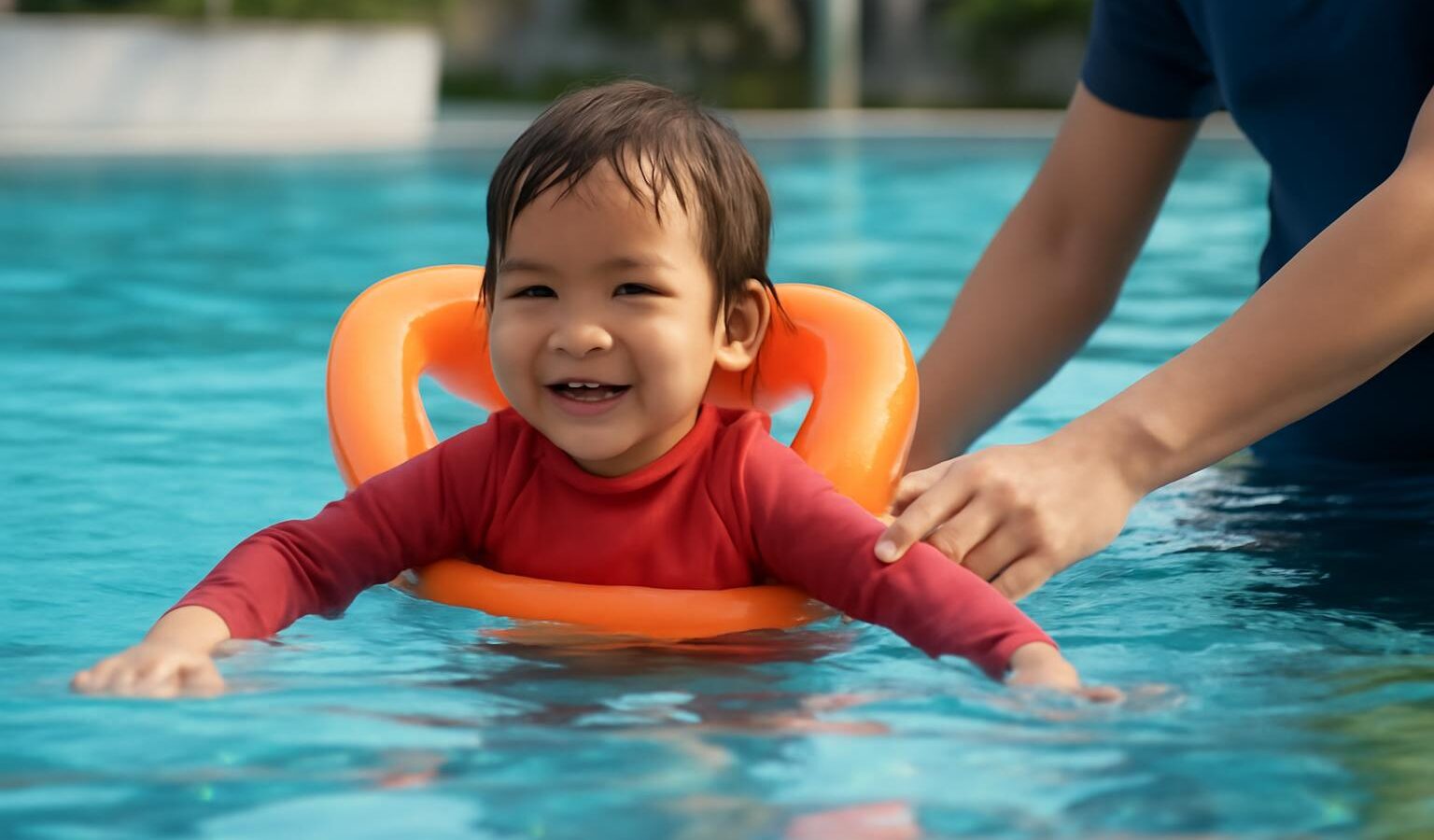
Down syndrome swimming is one of the most rewarding activities a family can choose: the water builds strength, confidence and independence while feeling like play rather than therapy. With the right coach and a patient, structured approach, most children with Down syndrome can learn to be safe, capable and genuinely happy swimmers.
For many parents in Singapore, the pool can feel daunting at first. You may worry about low muscle tone, joint flexibility, communication, or how your child will cope with a busy public pool. These are fair concerns — and they are exactly the kind of thing an experienced, specialised coach plans around. This guide explains why swimming suits children with Down syndrome so well, what good lessons look like, and how to set your child up for steady, lasting progress.
Why swimming is so good for children with Down syndrome
Water does something a classroom or playground cannot: it supports the body, reduces the impact on joints, and gives gentle, all-over resistance. For a child with Down syndrome, that combination is close to ideal.
- Builds muscle tone and core strength. Many children with Down syndrome have hypotonia (low muscle tone). The constant, low-impact resistance of water encourages muscles to work without the strain of land-based exercise.
- Improves balance and motor planning. Floating, kicking and reaching all develop coordination and body awareness in a forgiving environment.
- Supports the heart and lungs. Rhythmic swimming and breath control are excellent gentle cardiovascular exercise.
- Grows confidence and independence. Mastering a new skill — blowing bubbles, floating, a first glide — is a powerful boost to self-esteem.
- Water safety can be life-saving. Children who are drawn to water deserve to be safe around it. Learning to be calm and capable in the pool is a genuine protective skill.
Just as importantly, swimming is sociable and fun. Lessons become something your child looks forward to, not another appointment.
Safety first: what a good coach considers
Children with Down syndrome can have specific health considerations, and a responsible coach plans lessons around them in partnership with you and your child’s doctors.
Atlantoaxial instability
A proportion of children with Down syndrome have instability in the upper neck (atlantoaxial instability). This is why activities involving forceful neck flexion — diving, deep tumble turns, certain head-first entries — should be approached with caution or avoided unless cleared by your child’s doctor. Always speak to your paediatrician about your child’s specific situation before starting, and share any guidance with the coach.
Ears, sinuses and infections
Some children are more prone to ear infections. Well-fitting goggles, a gentle approach to submersion, and good after-swim drying routines all help. If your child has grommets or recurring ear issues, ask your doctor what is suitable.
Temperature and stamina
Lower muscle tone can mean a child tires or feels cold more quickly. Shorter, warmer sessions and plenty of rest breaks keep things positive. A warm, quiet condo or home pool — where our lessons take place — is often gentler for a child than a large, cool, busy public pool.
What lessons actually look like
The best down syndrome swimming lessons are private or very small group, so the pace and the language fit your child exactly. At SwimSafer, sessions are built around the individual rather than a fixed timetable of drills.
- Predictable routines. Starting each lesson the same way — the same warm-up song or game — gives a sense of safety and control.
- Clear, simple cues. Short instructions, lots of visual demonstration, and consistent words for each skill (“big arms”, “kick-kick-kick”).
- Lots of repetition and praise. Skills are broken into small steps and celebrated often, so confidence compounds.
- Play-based learning. Toys, games and songs turn breath control, floating and kicking into fun rather than instruction.
- Gradual independence. Flotation aids and a coach’s hands are reduced slowly as your child becomes ready, never rushed.
Progress may look different from a neurotypical child’s, and that is completely fine. The goal is steady forward movement and a child who loves the water — not a race to a certificate.
Coaching experience that matters
SwimSafer is an independent private swim school, and lessons are led by founder and head coach Umesh “U.K.” Singh (Coach U.K.). He is an AUSTSWIM-accredited swim teacher, a certified Singapore Armed Forces life-saver and an open-water swim trainer who has been coaching since 1999 — more than 25 years. A large part of that work has been with children who have special needs, including Down syndrome, autism, ADHD and physical disabilities, as well as nervous beginners.
That experience shows up in the small things: knowing when to push gently and when to pause, reading a child’s body language, and keeping a parent calm and informed throughout. Lessons run one-to-one or in small groups, with flexible timings to suit your family. Coach U.K. teaches privately at your own condo, landed-home or private pool island-wide, travelling to you — a warm, quiet setting that many families find ideal for an early start. If you would prefer a public swimming complex, we can also arrange a certified, NROC-registered coach from our network to teach there. When the time comes, SwimSafer assessments are conducted by our certified assessors.
How parents can help at home
- Make water normal. Bath time, water play and gentle pouring games build comfort with water on the face and ears.
- Practise the routine. Use the same words the coach uses so skills transfer between lessons.
- Keep sessions positive. End on a win, even a small one, so your child leaves wanting to come back.
- Celebrate effort, not just outcomes. Trying a new thing is worth as much praise as doing it perfectly.
- Stay consistent. Regular lessons beat occasional intensive bursts for children who thrive on routine.
What about the SwimSafer syllabus?
Many families ask whether their child can work towards the national SwimSafer programme. We coach and prepare students for the SwimSafer syllabus, and many children with Down syndrome can progress through its early stages at their own pace. As an independent school we are not the official programme and are not affiliated with SportSG, Singapore Aquatics or the National Water Safety Council — but we can prepare your child for it. Because official requirements and criteria can change, please confirm current details with the official SwimSafer syllabus or Singapore Aquatics. If you would like an overview, see our SwimSafer stages explained guide.
Frequently asked questions
Can children with Down syndrome learn to swim independently?
Many can, with patient, consistent teaching. Timelines vary from child to child, but a great number of children with Down syndrome become safe, confident swimmers. The key is small steps, lots of repetition and a coach who adapts to your child.
At what age should we start?
Earlier is generally easier because water becomes familiar and unthreatening, but it is never too late. Gentle water play can begin in the toddler years, with structured lessons following when your child is ready.
Is it safe given concerns about the neck?
Swimming itself is low-impact and gentle. The main caution is around forceful neck movements such as diving. Always check with your paediatrician first about atlantoaxial instability and share any guidance with your coach, who will plan lessons accordingly.
Should we choose private or group lessons?
Private or very small group lessons usually work best, because the pace, language and routine can be tailored precisely to your child. As confidence grows, some children enjoy small-group sessions for the social side.
What should we bring to the first lesson?
Well-fitting goggles, a swim cap, a warm towel, and any medical information or doctor’s advice relevant to the water. Most importantly, come relaxed — your calm helps your child feel safe.
Do you offer lessons in our condo pool?
Yes. Lessons can be held at condo or home pools island-wide, which many families find warmer, quieter and more comfortable for early sessions.
Are first-aid emergencies covered?
For any concern about a medical emergency, seizures or breathing, please follow your doctor’s advice and consider a certified CPR and first-aid course for caregivers. Your coach keeps safety central to every lesson, but general first-aid training for the family is always worthwhile.
Ready to get your child started?
Every child deserves to feel safe, capable and joyful in the water. To talk through your child’s needs and arrange a relaxed first lesson, WhatsApp Coach U.K. on +65 9021 1254. You can learn more about our special needs swimming lessons, explore options for kids swimming lessons, or contact us with any questions. We would love to help your child thrive in the water.