
Intensive & Crash-Course Swimming in Singapore
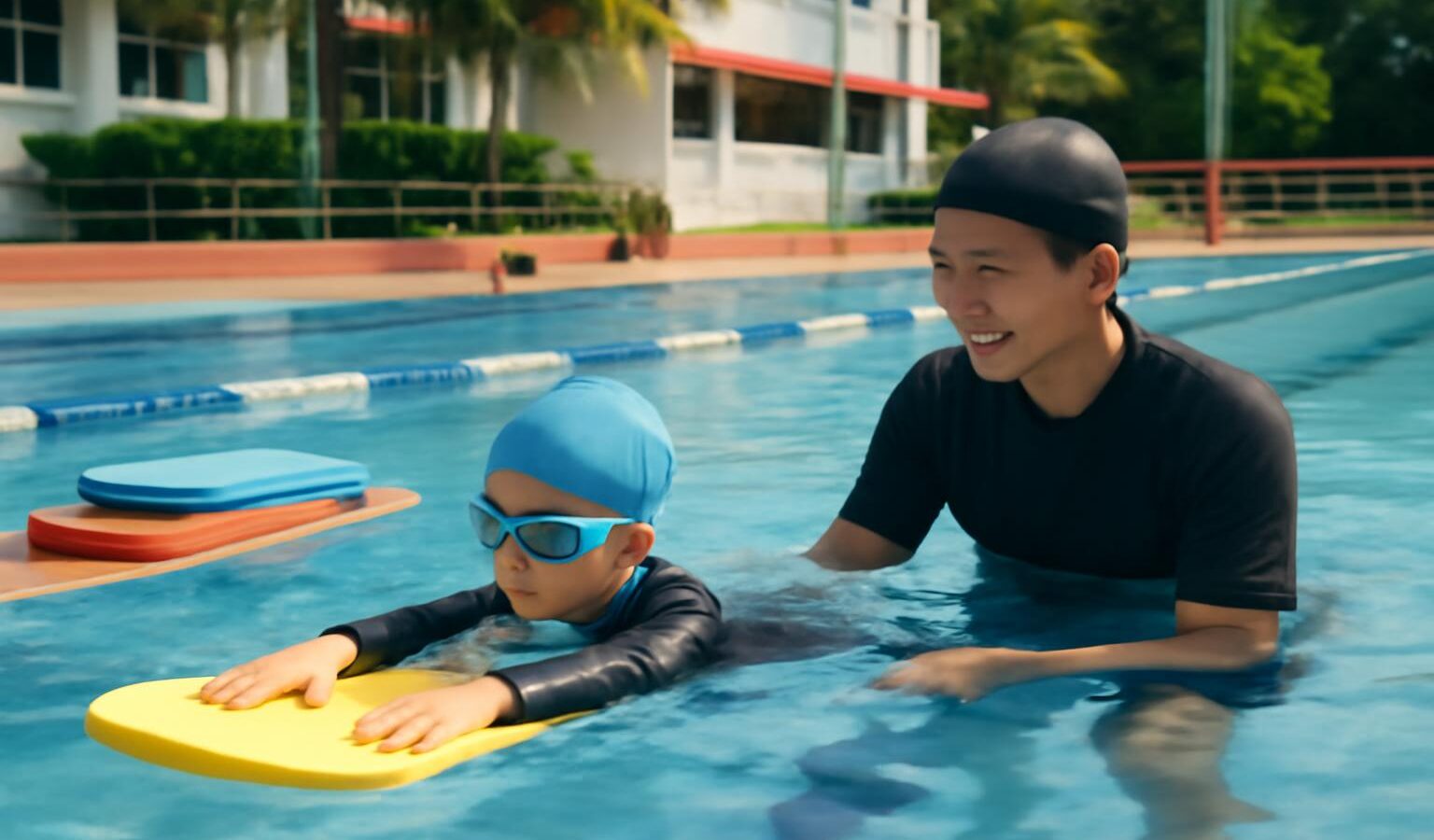
An intensive swimming course can be a brilliant way to make fast progress during the school holidays or before a trip, but only if you understand what crash-course coaching can realistically deliver and where its limits lie.
Every June and December, Coach Umesh “U.K.” Singh fields the same hopeful question from Singapore parents: “Can my child learn to swim over the holidays?” Sometimes there is a beach holiday coming up, sometimes a SwimSafer assessment looming, sometimes simply a free month and a desire to make it count. Intensive or crash-course swimming, where lessons are clustered close together over days or a couple of weeks rather than spread weekly across months, is a genuinely effective approach for the right learner. But it is not magic, and selling it as a guaranteed shortcut would be dishonest. This guide explains how intensive courses work, who they suit, and how to plan one so the time and money are well spent.
What is an intensive or crash-course swimming programme?
In a normal arrangement, a swimmer takes one lesson a week, and progress builds gradually over a term or more. An intensive course compresses that timeline: instead of one session a week, a learner might swim several times a week, or even daily, over a holiday block. The idea is that frequent repetition keeps skills fresh, momentum high and water confidence rising before it has a chance to fade between sessions.
For motor skills like swimming, this frequency can genuinely accelerate learning. A child who practises floating and breathing three days running often retains more than one who waits seven days between attempts. Muscle memory and water comfort both reward consistency.
A quick independence note
To be clear and fair to everyone: we are an independent private swim school. We are not the official SwimSafer programme, and we are not affiliated with SportSG, Singapore Aquatics or the National Water Safety Council. We coach and prepare students for the SwimSafer syllabus, and an intensive course is simply a faster schedule, not a different or official assessment.
When an intensive course works well
Crash-course coaching shines in specific situations:
- School holidays. The June and December breaks free up time for several sessions a week, which is ideal for building momentum.
- An upcoming trip or pool holiday. Families heading to a beach or resort often want a burst of water confidence and safety before they go.
- Breaking through a plateau. A swimmer who has stalled at weekly lessons can sometimes leap forward with a short, focused block.
- Adults on a deadline. Adult learners with a specific goal or limited window often prefer to concentrate their effort. See our adult swimming lessons for how we tailor this.
- Maintaining hard-won confidence. A nervous child who finally relaxed in the water can consolidate that gain before a long gap erodes it.
When intensive lessons are not the answer
Honesty matters here. An intensive course is not a guaranteed “learn to swim in a week” button, and a few situations call for caution.
- Very nervous or fearful children. Fear cannot be rushed. A deeply anxious child may need patience and trust-building that no compressed schedule can force. Our lessons for nervous beginners deliberately move at the child’s pace.
- Very young toddlers. Tiny children tire quickly and have short attention spans, so daily long sessions can overwhelm rather than help.
- Expecting full mastery. A week of lessons can build real foundations, but becoming a strong, safe all-round swimmer still takes ongoing practice over time.
Beware anyone who promises that an intensive course guarantees your child will swim independently or pass a stage by the final day. Progress depends on age, confidence, swimming aptitude and practice, and no honest coach can promise a fixed outcome.
How to plan an intensive course well
Keep sessions appropriately short
More frequent does not mean longer. Young children learn best in focused sessions before fatigue and cold set in. Frequency, not marathon lessons, is what drives intensive progress.
Build in rest and recovery
Swimming is physically demanding, and chlorine, sun and exertion add up. A sensible intensive plan allows rest days or lighter sessions so your child stays fresh and keen rather than burnt out.
Set realistic, specific goals
Agree with your coach on what success looks like: perhaps “comfortable putting the face in and floating”, or “swimming a short distance with confidence”, rather than a vague “learns to swim”. Clear goals make the block productive.
Practise gently between blocks
If you have your own condo pool, light, fun practice between sessions, never unsupervised, helps lock in skills. Our condo swimming lessons make this especially convenient.
Intensive courses and the SwimSafer syllabus
Many parents use a holiday block to prepare for a SwimSafer stage. An intensive course can absolutely help a swimmer get genuinely ready, but readiness is about real competence, not just rehearsal. Because the exact distances, times and assessment criteria can be updated, we keep figures approximate and recommend confirming current requirements with the official SwimSafer syllabus or Singapore Aquatics before any test. Coach U.K.’s goal is a swimmer who is safe for life, not one who scrapes through a certificate and then forgets it. To understand the full ladder, see our SwimSafer stages explained guide.
Frequently asked questions
Can my child really learn to swim in a week?
A week of intensive lessons can build strong foundations and noticeable confidence, but full mastery still takes ongoing practice. Outcomes vary with age, confidence and aptitude, so we avoid guaranteeing that any child will swim independently by a fixed day.
Are intensive lessons better than weekly ones?
For many learners, clustering sessions during a holiday accelerates progress because skills stay fresh between attempts. For very nervous children, though, a steadier pace can be kinder. The best choice depends on the individual swimmer.
How often are lessons in an intensive course?
Typically several times a week or even daily over a holiday block, rather than once weekly. Sessions stay appropriately short for the child’s age, with rest built in so they do not become overtired.
Is a crash course good preparation for a SwimSafer stage?
It can be, by building genuine competence rather than just rehearsal. Always confirm current SwimSafer requirements with the official syllabus or Singapore Aquatics, as criteria can change, and aim for real readiness rather than a last-minute cram.
Are you the official SwimSafer programme?
No. We are an independent private swim school that coaches and prepares students for the SwimSafer syllabus. We are not affiliated with SportSG, Singapore Aquatics or the National Water Safety Council, and official assessment details should be confirmed with them.
Do you run intensive courses for adults?
Yes. Adults with a deadline or a specific goal often prefer a concentrated block of private lessons. We tailor the pace and intensity to your fitness and comfort in the water.
Ready to plan an intensive swimming course?
If the holidays or a deadline are coming up, let’s make the time count. WhatsApp Coach U.K. on +65 9021 1254 to discuss goals, scheduling and a realistic plan for your swimmer. While you think it over, explore our kids swimming lessons, adult swimming lessons and the full SwimSafer stages roadmap.