
Condo Pool Safety for Children
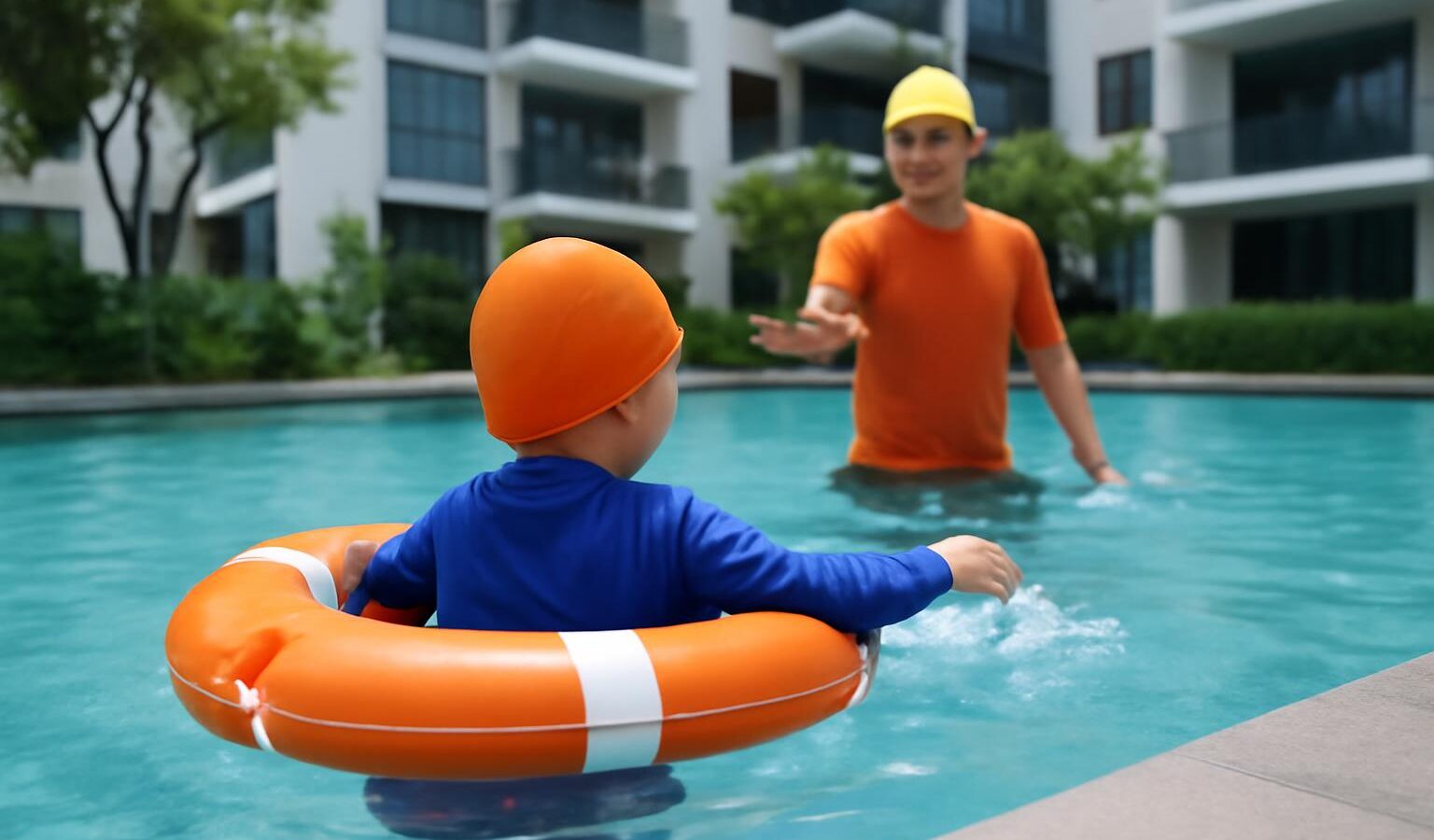
Condo pool safety is one of the most overlooked aspects of family life in Singapore, because the pool downstairs feels so familiar and convenient that it is easy to forget it has no lifeguard and demands the same care as anywhere else.
For most Singapore families living in a condominium, the pool is part of daily life. Children swim before dinner, parents do laps in the morning, and weekends revolve around the deck. That convenience is a wonderful thing, but it comes with a quiet catch: condo pools almost never have a lifeguard, and the responsibility for safety sits entirely with parents and carers. This guide sets out the practical habits that keep children safe at the condo pool, and explains why genuine water competence is the foundation beneath all of them.
The condo pool blind spot
Because the condo pool is so close and so familiar, families can become casual about it in a way they never would at a public pool or the beach. The water is right there, the children know it well, and there is always something else to attend to. Yet familiarity does not reduce risk; it can hide it. Most condo pools have no professional supervision, varying depths, slippery decks and easy access for a curious toddler. Treating the home pool with the same respect you would give any open water is the mindset that prevents accidents.
Coach Umesh “U.K.” Singh has taught swimming in Singapore since 1999, more than 25 years in the water, and a great deal of that teaching happens in condo and home pools island-wide. As an AUSTSWIM-accredited swim teacher, a certified Singapore Armed Forces life-saver and an open-water swim trainer, he sees daily how small habits make condo pools safe. The advice here is general safety guidance; for rescue and first-aid skills we always recommend a certified course.
A quick independence note
To be clear and fair to everyone, we are an independent private swim school. We are not the official SwimSafer programme, and we are not affiliated with SportSG, Singapore Aquatics or the National Water Safety Council. What we do is coach and prepare students for the SwimSafer syllabus and for safe, confident swimming.
The golden rule: active supervision
With no lifeguard on duty, supervision is everything. An adult must be actively watching whenever children are in or near the pool, staying within arm’s reach of young or weaker swimmers. That means no phone, no reading and no long conversations with neighbours. Drowning is usually silent and fast, so you are watching for trouble, not waiting to hear it. If several families are at the pool together, do not assume someone else is keeping an eye out; agree clearly on a “water watcher” who has no other task, and swap the role so attention never lapses.
Securing the pool area
Most condo pools are fenced with a self-closing, self-latching gate for a reason. These barriers are a key line of defence, especially against toddlers who can reach water in seconds.
- Always ensure the pool gate closes and latches behind you, and never prop it open.
- Keep the latch out of a small child’s reach and report any faulty gate to management.
- At home, keep balcony and patio doors that lead towards the pool secured when young children are around.
- Remove tempting toys from the water and deck after swimming, so nothing draws a child back unsupervised.
Understand your pool’s layout
Take time to learn your particular condo pool. Where does the floor slope from the shallow end to the deep end, and is the change gradual or sudden? Many condo pools have an infinity edge, a separate wading pool, a jacuzzi or steps that can surprise a small child. Decide which areas your children may use based on their ability, and make those boundaries clear and consistent. Wet decking and tiled surrounds are slippery, so the simple rule of walking, never running, prevents a lot of bumps and falls.
Teach children the pool rules
Children keep rules they understand and rehearse every visit. Keep them few and clear.
- Never enter the pool without an adult, even for a moment.
- Stay in the depth an adult has agreed.
- Walk on the deck, never run.
- No pushing, dunking or pulling friends under.
- Get out and rest the moment you feel tired or cold.
- If a friend is in trouble, call an adult immediately rather than jumping in.
Competence is the real safety net
All the rules and barriers in the world work best alongside a child’s own ability in the water. A child who can hold their breath, float, roll over, tread water and swim to the side has a genuine safety margin if they ever slip in unexpectedly. This is exactly why we teach survival-focused skills from early on, and why learning in the very pool your child uses every day is so valuable. Lessons in your own condo pool mean the environment is familiar, travel is zero, and a nervous child relaxes faster. We bring the structure and the SwimSafer roadmap; you provide the water and the towels.
Frequently asked questions
Are condo pools safe for children?
They can be very safe with the right habits. Because most have no lifeguard, the key is active adult supervision within arm’s reach of young swimmers, a secure pool gate, clear depth boundaries and children who know the rules. The convenience is a real benefit when paired with care.
How closely should I supervise my child at the condo pool?
For young or weaker swimmers, stay within arm’s reach and watch them constantly, with no distractions. Even strong young swimmers should be actively supervised. Nominate a dedicated “water watcher” if several adults are present, and swap the role so attention never drifts.
My condo pool has no lifeguard. What does that mean for me?
It means you are the lifeguard. There is no professional watching the water, so responsibility for your child’s safety rests fully with you. Treat the pool with the same respect you would give any open water, and keep your own first-aid skills current.
At what age can my child swim in the condo pool with friends but without me in the water?
There is no fixed age; it depends on competence and maturity. A child should be a confident, capable swimmer who follows safety rules reliably before swimming with less direct supervision, and even then an adult should still be present and watching. When in doubt, stay closer.
Should toys be left at the poolside?
No. Remove floats and toys from the water and deck after swimming, because they can tempt a young child back to the pool unsupervised. Clearing them away is a simple habit that removes a real risk.
Can my child learn to swim in our own condo pool?
Yes, and many families prefer it. Coach U.K. teaches privately at condo and home pools island-wide, which means familiar surroundings, no travel and a faster path to confidence for nervous children. The lesson brings the structure and the SwimSafer progression to the pool you already use. If you would rather have lessons at a public swimming complex instead, a certified coach from our network can teach there too — so either setting works.
Make your condo pool a place of confidence, not worry
The surest way to relax at your condo pool is to know your child is genuinely competent in it. WhatsApp Coach U.K. on +65 9021 1254 for a friendly chat about lessons in your own pool. Learn more through our condo swimming lessons and kids swimming lessons, build real safety skills with our water survival and life-saving skills coaching, and ease an anxious child in gently with our lessons for nervous beginners.