
Common Swimming Mistakes (and How to Fix Them)
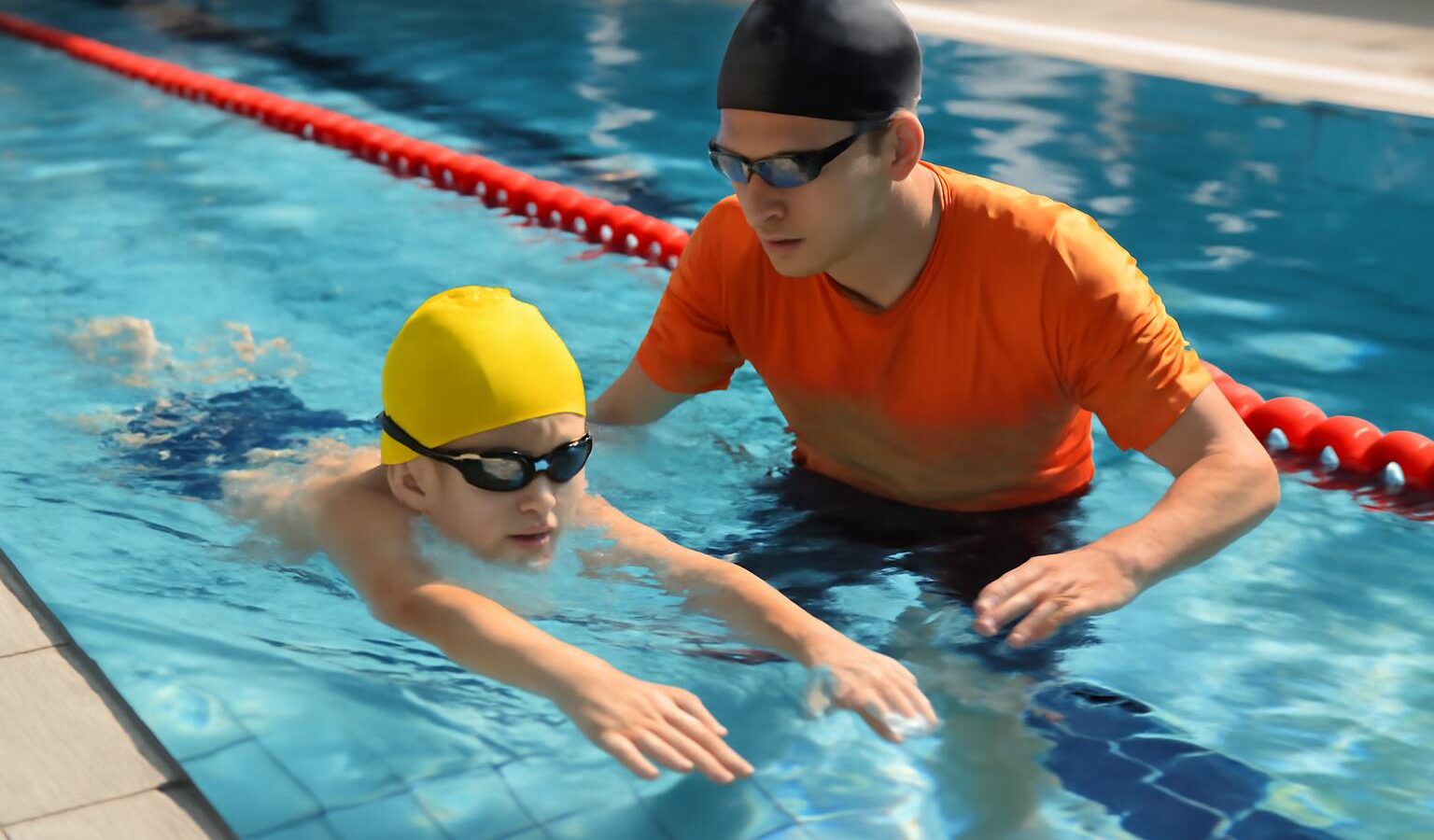
Most swimmers unknowingly repeat the same handful of common swimming mistakes, and these small faults are exactly what hold them back from swimming smoothly, breathing comfortably and covering distance without exhaustion. The encouraging news is that nearly every one of them has a simple, well-understood fix once you know what to look for.
Whether you are a self-taught adult who never quite shook off a rushed beginner habit, or a parent watching your child plateau, recognising these faults is the first step to faster progress. Below are the errors Coach U.K. sees most often on the pool deck, with practical corrections you can start applying on your very next swim.
1. Holding your breath
This is the most widespread mistake of all. Many swimmers take a big breath, hold it underwater, then try to breathe out and in during the brief moment their mouth clears the surface. The result is a build-up of carbon dioxide that makes you feel breathless and panicked even when you have plenty of oxygen.
The fix: breathe out continuously and steadily through your nose and mouth whenever your face is in the water. When you turn to breathe, you should only need to inhale. Practise blowing a slow, steady stream of bubbles to make this automatic.
2. A low, sinking body position
If your hips and legs hang low, your body becomes a wall ploughing through the water instead of a hull slicing through it. Drag skyrockets and every stroke costs far more energy than it should.
The fix: keep your body long and flat with your eyes looking down. Gently press your chest into the water — this naturally lifts your hips and legs towards the surface. A relaxed, horizontal posture is the foundation of efficient swimming.
3. Lifting the head to breathe
Closely linked to body position, lifting the head forward to breathe causes the hips to drop and the legs to sink, killing momentum with every breath.
The fix: rotate your head to the side rather than lifting it, keeping one goggle in the water. Think of resting your head on an outstretched arm and breathing into the small pocket of air your body creates as it rolls.
4. Over-kicking and stiff ankles
Beginners often kick frantically from the knee with rigid ankles, churning up white water for very little forward movement — and exhausting their largest muscles in the process.
The fix: kick from the hips with relaxed, floppy ankles and a gentle bend in the knee. For distance swimming, a smaller, steadier kick conserves the oxygen your arms need.
5. Pulling with a straight arm or crossing the centre line
In freestyle, pulling with a stiff straight arm wastes power, while letting your hand cross under your body causes you to snake from side to side.
The fix: reach forward fully, then bend the elbow and pull water back towards your hip along a straight line beneath your shoulder. Imagine reaching over a barrel and pressing the water all the way past your thigh.
6. Rushing the stroke and over-gripping
Trying to swim fast by spinning the arms quickly usually means short, choppy strokes that move little water. Tense, splayed fingers leak energy too.
The fix: slow down and lengthen each stroke, gliding slightly as your hand extends. Keep your fingers relaxed and lightly together so your hand and forearm act as one big paddle.
7. Poor pacing
Sprinting the first length and then fading is a classic endurance-killer. It leaves you breathless with nothing left for the rest of the swim.
The fix: start easy and aim to finish as strong as, or stronger than, you began. Controlled, even pacing lets you swim far further with the same effort.
8. Skipping the basics in a rush to “real” swimming
Many self-taught swimmers never master floating, gliding and exhaling, then wonder why their stroke feels like a struggle. These foundations are not optional extras — they are what every stroke is built on.
The fix: spend time on floating, streamlined glides and bubble breathing. A little patience with the fundamentals pays off in every length you ever swim.
Why a coach spots what you cannot
The tricky thing about these mistakes is that they feel normal from inside the water — you cannot see your own dropped hip or snatched breath. A coach watching from the deck identifies the exact fault and gives you a targeted drill to correct it, often saving months of frustration. Coach U.K. is AUSTSWIM-accredited and has coached since 1999, working with everyone from nervous beginners to adults polishing their technique. Because stroke correction relies on real-time feedback, it is best done with hands-on, in-person coaching. As an independent swim school, we also coach and prepare students for the SwimSafer syllabus, though we are not the official programme.
Frequently asked questions
What is the most common swimming mistake?
Holding your breath underwater is the most common and most limiting mistake. It causes breathlessness and panic even when you are otherwise fit. Learning to exhale continuously while your face is in the water transforms how comfortable and how far you can swim.
Why do my legs sink when I swim?
Usually because you are lifting your head, holding your breath, or not pressing your chest down. Tension makes the lower body heavy. Relaxing, looking down and leaning gently onto your chest brings the hips and legs back up towards the surface.
Can I fix these mistakes on my own?
You can make real progress with breathing and body-position drills by yourself. However, stroke faults are hard to feel and self-diagnose, so a few sessions of in-person coaching often correct in minutes what you might struggle with for months alone.
How long does it take to correct a bad habit?
It varies. A breathing fix can click in a single session, while ingrained stroke patterns take consistent, focused practice over several weeks to replace. Frequent short, mindful sessions work better than occasional long ones.
My child has picked up bad habits already. Is it too late?
Not at all. Children adapt quickly with the right guidance and plenty of encouragement. A coach can rebuild their technique on solid foundations, and the earlier you address it, the easier the habit is to replace.
Do these mistakes affect SwimSafer progress?
Yes — clean fundamentals make the stages much easier to achieve. SwimSafer is Singapore’s national water-safety programme, and we coach and prepare students for its syllabus as an independent school. Always confirm current stage requirements with the official SwimSafer syllabus or Singapore Aquatics, as criteria can change.
Ready to fix your stroke for good?
If you are tired of fighting the water, WhatsApp Coach U.K. on +65 9021 1254 for personalised stroke correction at a public or condo pool island-wide. Discover our adult swimming lessons and kids’ swimming lessons, or see how clean technique supports the SwimSafer stages.