
Beach & Sea Water Safety in Singapore
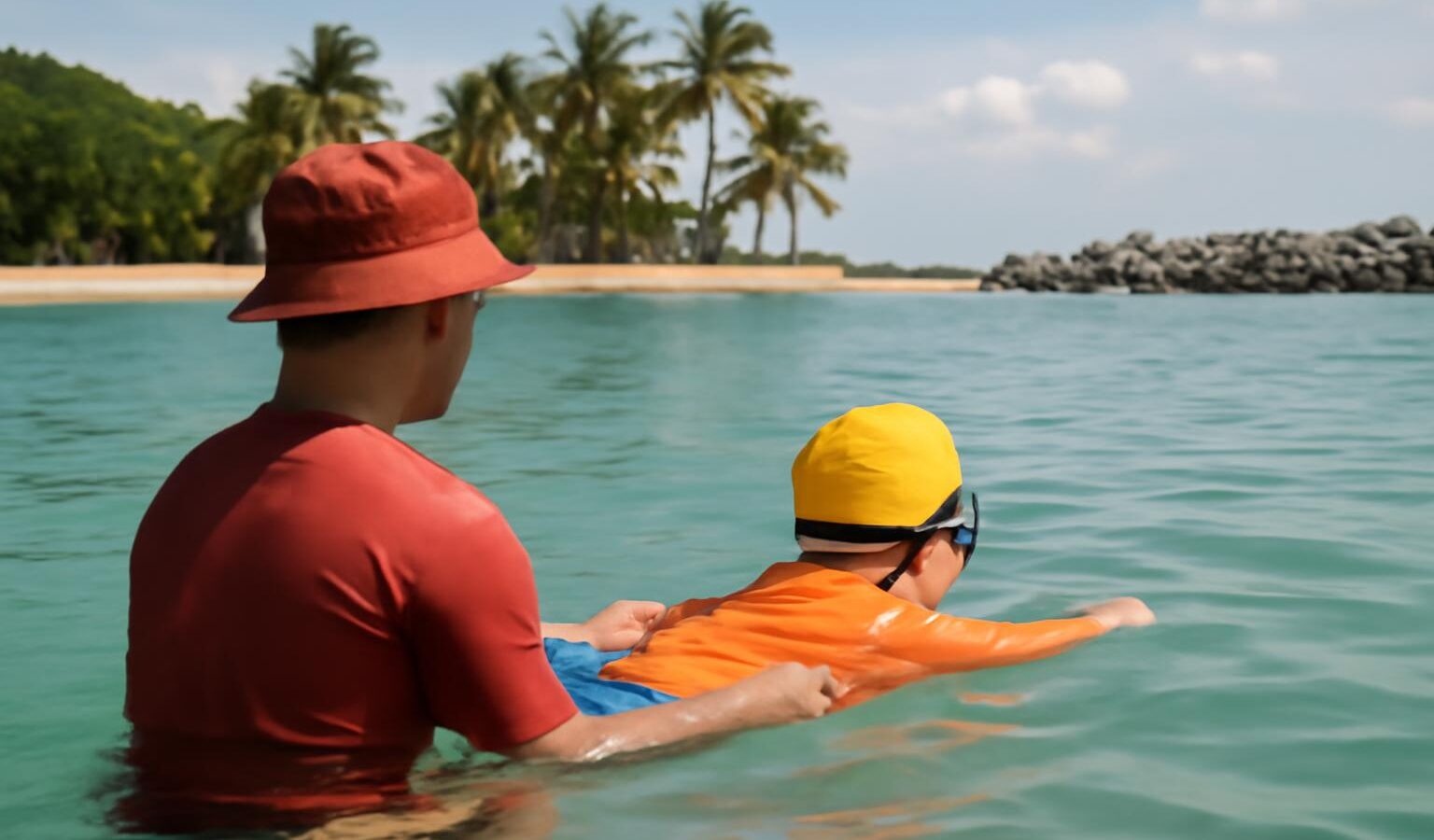
Beach safety in Singapore is about understanding that the sea behaves very differently from a swimming pool, so a calm, prepared family can enjoy our coastline while keeping a sensible eye on tides, currents and supervision.
From East Coast Park to Sentosa’s Siloso, Palawan and Tanjong beaches, Singapore’s coast is a much-loved playground for families. The water is warm, the sand is inviting, and a beach day feels relaxed in a way a pool session never quite does. That relaxed feeling is exactly why a little knowledge matters. The sea has moods, depths and currents that no pool ever has, and children who are confident in a pool can still be caught out by them. This guide helps parents enjoy the beach with their eyes open.
Why the sea is different from a pool
In a pool, the water is clear, the depth is marked, the edges are close, and there is no current. The sea offers none of these certainties. The bottom shelves unevenly, the depth changes with the tide, visibility can be poor, and gentle-looking water can carry a surprising pull. A child who swims well in a condo pool is not automatically safe in the sea, because the skills are the same but the conditions are not.
Coach Umesh “U.K.” Singh has taught swimming and open-water skills in Singapore since 1999, more than 25 years in the water. As an AUSTSWIM-accredited swim teacher, a certified Singapore Armed Forces life-saver and an open-water swim trainer, he has spent a great deal of time in real conditions, not just teaching pools. The guidance here is general beach-safety advice for families; for rescue and first-aid skills we always recommend a certified course.
A quick independence note
To be clear and fair to everyone, we are an independent private swim school. We are not the official SwimSafer programme, and we are not affiliated with SportSG, Singapore Aquatics or the National Water Safety Council. What we do is coach and prepare students for the SwimSafer syllabus and for safe, confident swimming.
Before you get in the water
A safe beach day starts on the sand, with a few quick checks and decisions.
- Read the signs and flags: Many beach areas post information about conditions and safe swimming zones. Respect them, and choose designated swimming areas where available.
- Check the tide: Tides change depth and exposure significantly. A sandbar that is dry now may be cut off later, so know which way the tide is moving.
- Look at the water: Note where it is calm and where it churns, and avoid areas near rocks, breakwaters and channels where currents concentrate.
- Set boundaries: Agree with children exactly how far out they may go, usually no deeper than waist height for younger ones, and stick to it.
Supervision at the beach
Supervision is even more important at the beach than at the pool, because the sea gives fewer visual cues and offers more distractions. Stay within arm’s reach of young or weaker swimmers. Nominate a “water watcher” whose only job is to watch the children in the water, and swap the role so attention never drifts. Remember that drowning is usually quiet, so you are watching, not listening, for trouble. Crowded beaches can lull adults into thinking someone else is keeping an eye out, when in fact no one is. Decide clearly who is responsible.
Currents and how to respond
The biggest open-water hazard is being pulled away from shore by a current. The instinct is to swim straight back against it, which exhausts even strong swimmers. The general advice is to stay calm, conserve energy, float, raise an arm to signal for help, and if you are able to swim, move parallel to the shore rather than fighting directly against the pull until you are out of it. The most important thing you can teach a child is not to panic and to float, because a floating swimmer can breathe and think. We cover these calm-water responses in our survival and open-water coaching, but every family should also know to call for trained help immediately.
Sun, jellyfish and other coastal realities
Beach safety is not only about the water itself. Singapore’s sun is strong, so apply and reapply water-resistant sunscreen, use rash guards and hats, and take shade breaks. Stay hydrated, because children rarely notice they are overheating until they feel unwell. Jellyfish do appear in our waters, so teach children to look before they leap and to tell an adult immediately if they are stung. Wear footwear on rocky or shelly stretches, and watch for boats and watercraft near busier shores.
Preparing children for the sea
The best preparation is genuine water competence built first in a controlled setting. A child who can float calmly, tread water, control their breathing and swim to a fixed point has the core skills that the sea demands, plus the calm temperament that conditions reward. From there, gentle, supervised exposure to open water builds judgement. We never throw a child into challenging conditions; we layer skill onto confidence, then confidence onto experience.
- Build floating and breath control until they are second nature.
- Practise treading water so the child is comfortable when they cannot touch the bottom.
- Teach the calm response: float, signal, do not fight the water.
- Start in calm, shallow, supervised conditions and progress slowly.
Frequently asked questions
Is it safe for children to swim at Singapore beaches?
Yes, with sensible precautions. Choose designated swimming areas, supervise closely within arm’s reach of young swimmers, set clear depth boundaries, and pay attention to tides and posted information. The sea is enjoyable when families respect that it behaves differently from a pool.
My child swims well in the pool. Are they ready for the sea?
Pool ability is a strong foundation but not the whole picture. The sea adds currents, changing depth and reduced visibility. Introduce open water gradually and under close supervision, and keep early sea outings to calm, shallow conditions while your child builds judgement.
What should you do if caught in a current?
Stay calm and do not exhaust yourself fighting straight back to shore. Float to keep breathing, raise an arm to signal for help, and if you can swim, move parallel to the beach until the pull eases, then angle back in. Teaching children to float and signal rather than panic is the priority.
How do I protect my child from the sun at the beach?
Use water-resistant sunscreen and reapply it regularly, dress children in rash guards and hats, take shade breaks, and keep everyone hydrated. Singapore’s sun is intense even on cloudy days, so do not skip protection.
What about jellyfish?
Jellyfish are present in our waters from time to time. Teach children to look before entering, to avoid touching anything floating, and to tell an adult straight away if stung. Seek help for any sting that causes a strong reaction.
Should I still learn first aid for beach days?
Absolutely. We strongly recommend every parent completes a certified first-aid and CPR course. Beaches often have fewer immediate resources than pools, so confident, trained adults are invaluable in an emergency.
Build sea-ready confidence with proper coaching
If you want your child or yourself to be calm and capable in open water, start with strong foundations. WhatsApp Coach U.K. on +65 9021 1254 for a friendly chat about your goals. Explore our water survival and life-saving skills coaching, build core ability through our kids swimming lessons or adult swimming lessons, and ease an anxious swimmer in gently with our lessons for nervous beginners.