
Baby Swim Float Aids: A Safety Guide
From armbands to seats and vests, baby swim float aids fill the shelves of every pool shop — but choosing and using them safely matters far more than which one you buy. This honest, brand-neutral guide explains the common types, their limits, and the one rule that overrides everything: nothing replaces hands-on adult supervision.
Float aids can help a baby or toddler feel secure and enjoy the water, and they have a place in early, playful swimming. But they are comfort and confidence tools, not safety devices. No float aid prevents drowning, and some carry real risks if misused. The most important thing any parent can do at the pool is stay within arm’s reach of their child at all times, float aid or not.
The golden rule: supervision first
Before discussing any product, the single most important point bears repeating: a float aid is never a substitute for an adult. Drowning is silent and fast, and it can happen in seconds and in very shallow water. A baby in armbands or a float seat can still tip, slip out, or flip face-down. Always keep your child within arm’s reach, give them your full attention, and never rely on a flotation product to keep them safe. With that firmly in mind, here is how the common aids compare.
Common types of baby float aids
Armbands (water wings)
Inflatable bands worn on the upper arms are among the most familiar aids. They keep a young child’s head above water in an upright position and allow free leg and partial arm movement. Their limitations are important: they can deflate, slip off wet arms, and they hold a child in an upright, vertical posture that is the opposite of the horizontal position needed for real swimming. Used for short, supervised play they are fine; relied upon as safety gear they are not.
Float seats and baby boats
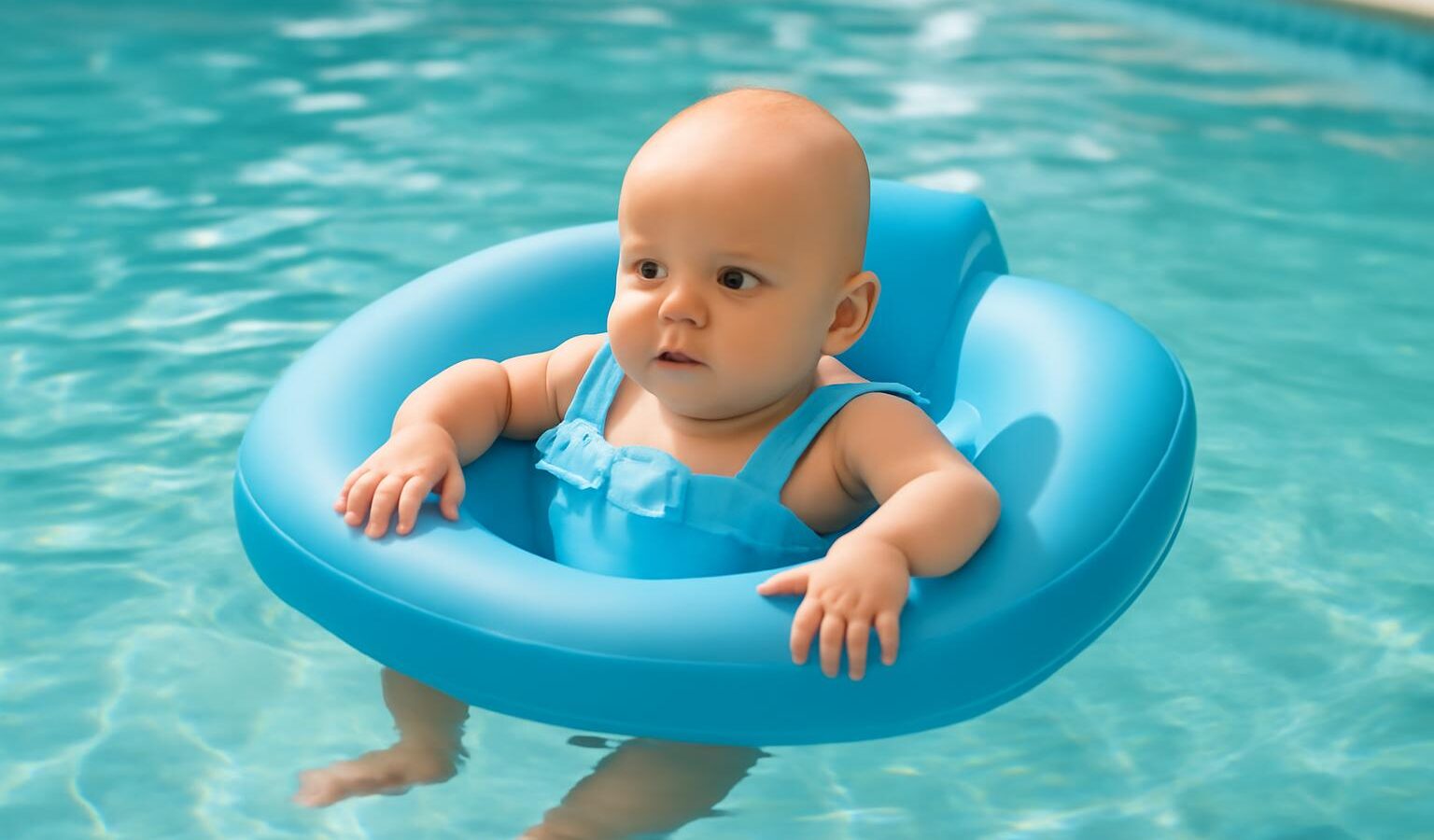
These are floating rings with a built-in seat, designed for babies who cannot yet sit or swim independently. They can be a gentle way to introduce a baby to the water, but they tip easily if a baby leans or reaches, and a child must never be left unattended in one for even a moment. Keep them in shallow water and keep your hands close.
Neck rings
Inflatable rings worn around a baby’s neck are heavily marketed but widely cautioned against by health and safety bodies. They can place strain on a baby’s delicate neck, may deflate or fail, and can give a dangerous false sense of security. Many professionals advise avoiding them altogether; if considering one, research the warnings carefully and prioritise hands-on holding instead.
Swim vests and floatation suits
Vests and buoyancy suits distribute support across the torso and tend to hold a child in a more natural, horizontal position than armbands, which makes them a more swim-friendly option for older babies and toddlers building confidence. They are still not lifesaving devices, but for supervised practice they are often preferable to upright aids.
What float aids can and cannot do
Used thoughtfully, float aids offer genuine benefits — but only within clear limits.
- They can help a hesitant baby feel secure and enjoy the water.
- They can give parents a confident, playful way to introduce the pool.
- They cannot prevent drowning or replace your supervision.
- They cannot teach genuine swimming, and over-reliance can actually slow real water skills by holding a child in an unnatural position.
The healthiest approach is to use aids sparingly for fun and confidence, while spending plenty of time holding your baby directly and letting them experience natural buoyancy with your support.
Choosing and using aids safely
If you do use a float aid, a few sensible habits keep it as safe as possible:
- Check it fits snugly and suits your child’s age and weight before use.
- Inspect inflatable aids for leaks, worn seams or faulty valves every time.
- Use them only in shallow water and only while you are within arm’s reach.
- Never leave a child unattended in or near water, even for a second, whatever they are wearing.
- Treat the aid as a toy, not as protection — your hands and attention are the real safety net.
Building real water confidence instead
The best foundation for a water-safe child is not equipment but gentle, hands-on experience. Holding your baby securely, letting them splash, blow bubbles and feel supported floating teaches them far more than any float aid. Structured baby and toddler classes build this safely and progressively. Coach U.K. has coached babies, infants and toddlers since 1999, and a calm, parent-and-child approach grounded in supervision and natural water confidence sets the strongest base for swimming later on. Always keep every session supervised, and treat float aids as occasional fun rather than the heart of your child’s water safety.
Frequently asked questions
Are baby float aids safe?
Float aids can be used safely for short, supervised play, but none of them prevents drowning or replaces an adult. They are comfort and confidence tools, not safety devices, so you must always keep your child within arm’s reach regardless of what they are wearing.
Are baby neck rings safe to use?
Many health and safety bodies caution strongly against neck rings, as they can strain a baby’s delicate neck, may deflate or fail, and create a false sense of security. If you are considering one, research the warnings carefully and favour hands-on holding instead.
Do float aids help a baby learn to swim?
Not really. Aids like armbands hold a child upright, which is the opposite of the horizontal position needed for swimming, and over-reliance can slow genuine progress. Direct, supported time in the water teaches real water confidence far better.
Which float aid is best for a baby?
For supervised confidence-building, swim vests and buoyancy suits tend to hold a child in a more natural position than armbands or neck rings. Whatever you choose, it must fit snugly, be used only in shallow water, and never replace your hands-on supervision.
Can I leave my baby in a float seat while I step away?
Never. Float seats tip easily if a baby leans or reaches, and drowning can happen silently in seconds. Keep your hands close and your full attention on your child at all times, even in shallow water.
When can my baby start swimming lessons?
Babies can begin gentle, parent-and-child water activities from a young age, focused on comfort, supervision and natural buoyancy rather than formal strokes. Structured baby and toddler classes build confidence safely and progressively — feel free to ask us about the right starting point for your child.
Give your baby a safe, confident start in the water
For gentle, supervision-first baby and toddler swimming that builds real water confidence, message Coach U.K. on WhatsApp at +65 9021 1254. With AUSTSWIM accreditation and experience since 1999, he creates calm, reassuring sessions for your little one. Explore our baby and toddler swimming lessons, kids swimming lessons, convenient condo pool lessons, or reach us via our contact page.